What is the weather like during May in Namibia
May opens Namibia’s dry season. Expect 23–31°C by day, 5–13°C at night and under 10 mm of rain. Game returns to the waterholes, the air is exceptionally clear, and rates are still below the June peak.
What is the weather like during May in Namibia
May is the first proper month of the Namibian dry season. Rain has effectively stopped countrywide, the air is exceptionally clear, and the temperature swing between dawn and mid-afternoon becomes the defining feature of the day. Interior highs run roughly 22°C to 27°C, and nights drop to between 8°C and 13°C.
It is the month experienced visitors quietly book. The scenery still carries some colour from the summer, the game viewing has begun to concentrate, the days are comfortable rather than punishing, and the peak-season rates have not yet arrived.
Namibia in May – Weather Conditions
Dry, clear and increasingly cold at night. May is the month the country stops being a summer destination and starts being a winter one, and it does so quickly — the first week and the last week of May can feel like different seasons.
Temperatures in Namibia in May
The daytime figures are pleasant and the night-time figures are the ones that catch people out. A 26°C afternoon in the Namib is followed by an 8°C dawn, and in an open vehicle at 06:30 that is genuinely cold.
Rainfall is effectively finished. Central Namibia averages under 10 mm for the whole of May, the south and the coast close to nothing, and only the Zambezi records anything meaningful. The historical series is published on the World Bank Climate Change Knowledge Portal.
May nights. Sossusvlei and the Kalahari can fall to 5–8°C before dawn, and the Kalahari sees its first frost in a normal year. Visitors arriving from a European spring routinely bring nothing warmer than a jumper.
Namibia in May – Wildlife and Safari Experiences
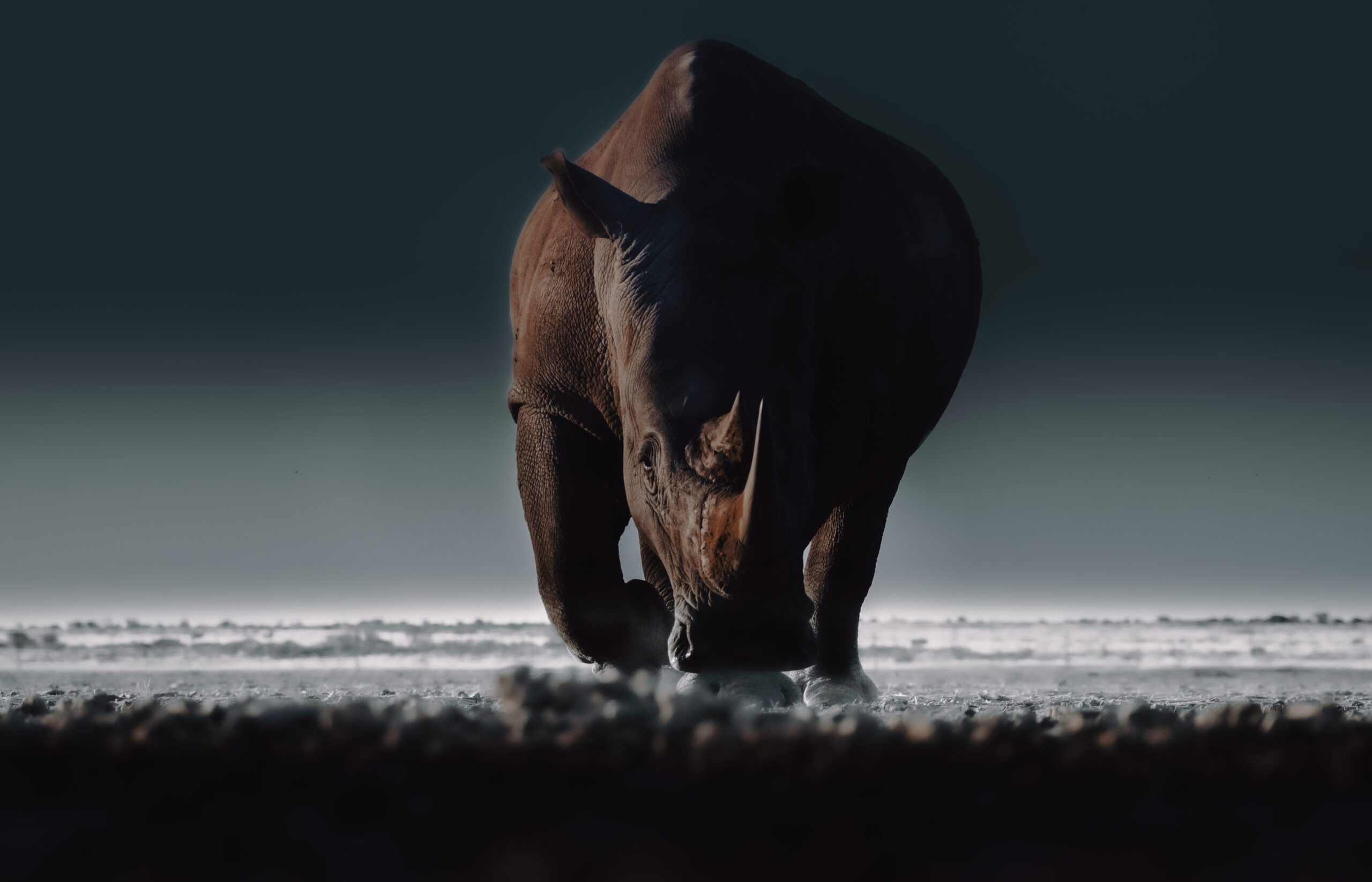
May is where the dry-season safari experience genuinely begins. Standing water from the rains has largely gone, the grass has stopped growing and started to fall, and animals are moving back onto the permanent water.
Game Viewing in Etosha National Park
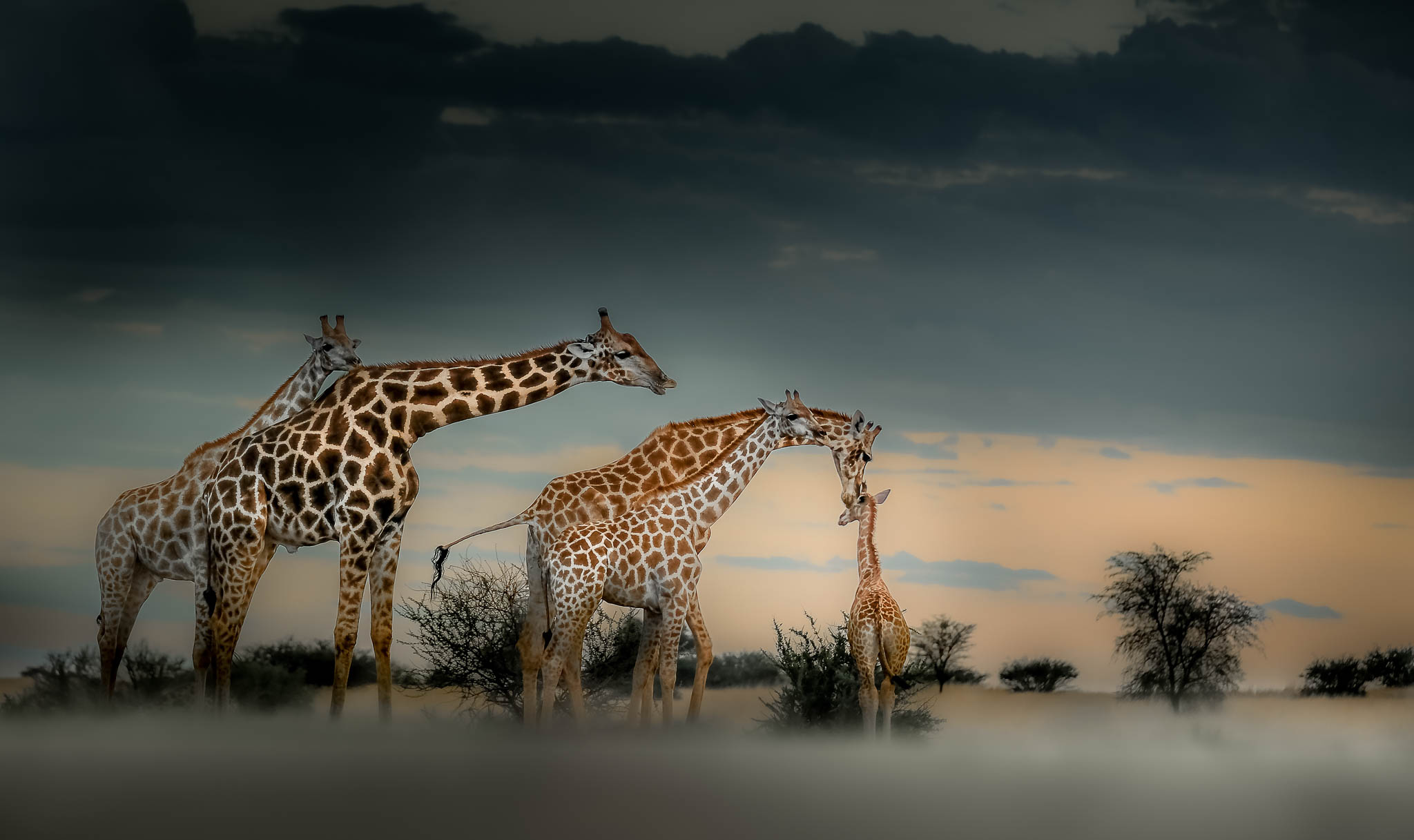
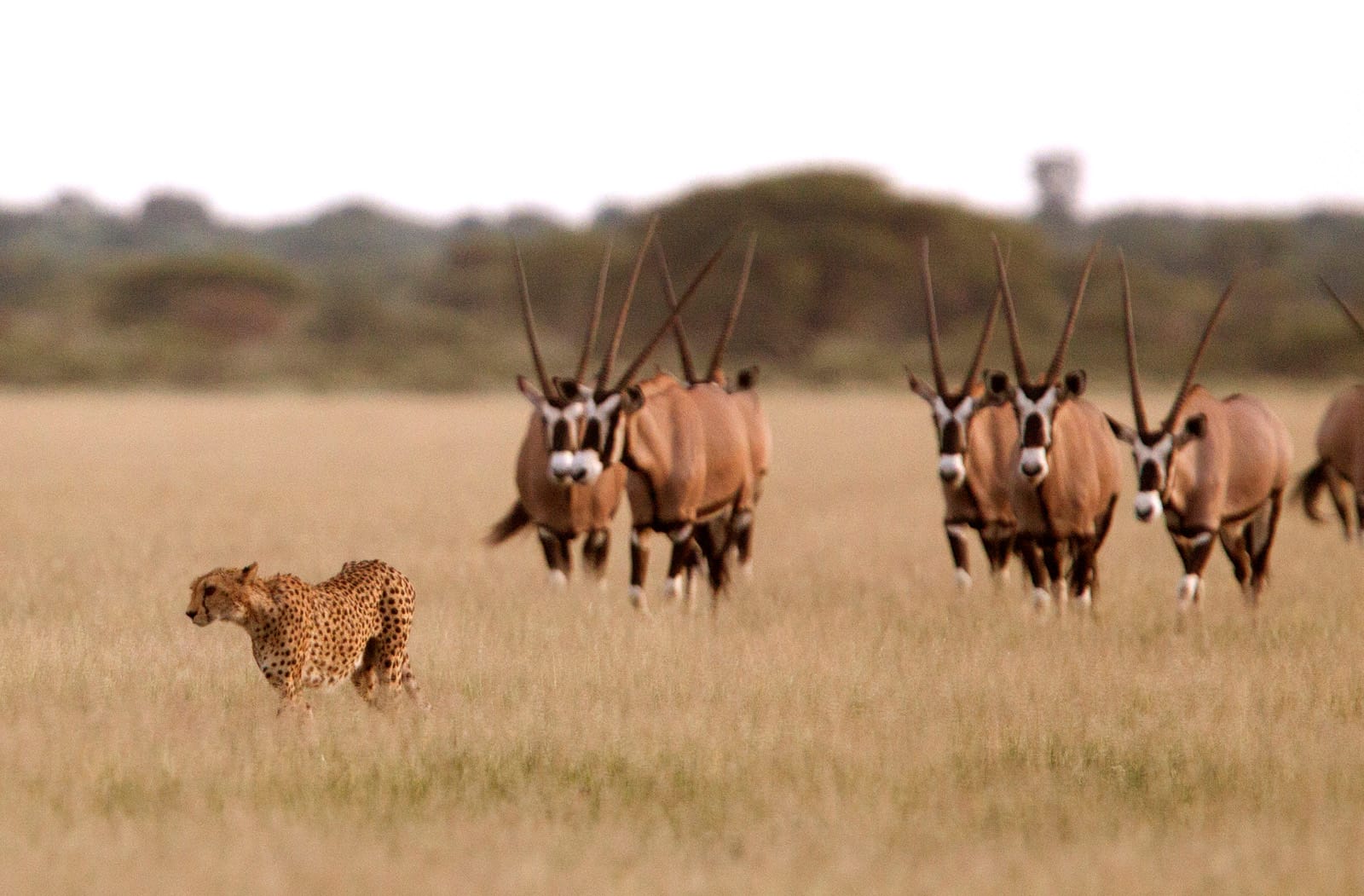
Noticeably better than April and improving weekly. Ephemeral pans have dried, so the permanent waterholes along the southern edge of the pan start to do their work — elephant, zebra, springbok, oryx and giraffe all coming to the same handful of places. Grass is short enough that predators are visible at distance. It is not yet July, when everything is forced onto the water, but the pattern is established. Park camps are run by Namibia Wildlife Resorts and May is the last month you can book them at short notice.
Birdwatching in Namibia in May
The weakest month of the year for birds, and worth saying plainly. The summer migrants have gone, the resident species are not breeding, and the pans that held flamingo in February are dry. Raptors and resident specials are still there, and visibility through thin cover is excellent, but if birding is the purpose of the trip, come between December and March instead.
Wildlife Beyond Etosha
Damaraland’s desert-adapted elephant become easier to find as they settle into the ephemeral river courses. The Kalahari’s plains game is spread across gold grass with far better visibility than in March. In the Zambezi the floodwaters from Angola are receding, and the floodplain game starts to move back.

Namibia in May – Best Regions to Visit
The Namib Desert
May at Sossusvlei is close to ideal. Highs around 28°C mean the dunes are climbable well past sunrise, the air is clear enough to see the far side of the valley sharply, and there is no dust haze yet. Take the cold dawn seriously: it is often below 10°C when the gate opens.
The Skeleton Coast
Unchanged, as always. The Benguela Current holds this coastline in a narrow band all year, so May looks like April looks like October. Access permits and fixed gate times remain the constraint, not the weather.
Swakopmund and Walvis Bay
Nineteen to twenty-two degrees, quiet and fogbound in the mornings. May is a comfortable month on the coast, and the lagoon at Walvis Bay holds resident flamingo year-round even after the summer birds have left.
Central Highlands and Windhoek
Clear and mild by day, properly cold at dawn. The highlands have lost most of the summer green by late May, and the light through the thin dry air is exceptional.
The Caprivi Strip
Floodwaters are receding from their April peak, so access improves through the month while the water-based activities remain good. May is arguably the best compromise month for the Zambezi: still wet enough for boating, dry enough to drive.
Namibia in May – Costs, Crowds, and Comfort
May is the last of the affordable months. Most lodges move to high-season rates in June, so May buys you dry-season conditions at shoulder prices — the same argument as April, with better game viewing and colder nights.
Crowds are moderate. Busier than March, well short of July and August. Booking two to three months ahead is usually enough in May; by July that becomes six.
April has more colour in the landscape and better birding. May has better game viewing and colder nights. Prices are similar. Neither is wrong.
Namibia in May – Highlights and Lowlights
Highlights
- Excellent daytime temperatures. Mid-twenties inland rather than mid-thirties.
- Game viewing concentrating. The dry-season pattern establishing itself.
- Shoulder-season rates. The last month before the peak.
- Very clear air. No humidity, minimal dust, superb photography and stargazing.
- Manageable crowds. The major sites are still calm.
Lowlights
- Cold nights and dawns. Single figures inland, frost possible in the Kalahari.
- The worst birding of the year. Migrants gone, residents quiet.
- The green is going. By late May the landscape has turned to gold and grey.
- Short days. Sunset before 18:00 shortens the useful game-viewing window.
- Waterholes not yet at their peak. That is June through October.
Namibia in May – Festivals and Events
Cassinga Day – May 4
A national public holiday commemorating the 1978 attack on the Cassinga camp in southern Angola. It is a day of remembrance rather than celebration, marked with official ceremonies and wreath-laying. Government offices, banks and many businesses close.
For a traveller the practical effect is limited to opening hours — plan fuel and shopping around it. Lodges, restaurants and park gates run normally.
Africa Day – May 25
Also a public holiday, marking the founding of the Organisation of African Unity in 1963. Windhoek and the larger towns hold cultural events, music and food, and it has a more festive character than Cassinga Day. Again, expect closures rather than disruption.
With two public holidays in one month, May sees more domestic travel than April does. If your route touches the coast around either date, book ahead.
Namibia in May – Activities and Packing Tips
May rewards early starts and punishes anyone who packed for Africa rather than for a desert winter.
- Climb a dune. The temperature genuinely allows it now, from sunrise onward.
- Sit at a waterhole. Okaukuejo and Halali start earning their reputation this month.
- Walk in Damaraland or the Erongo. Cool, dry and no insects to speak of.
- Stargaze. Dry, dust-free May air over the Namib is as good as it gets anywhere.
- Take a boat in the Zambezi. Receding floodwater with improving road access.
What to pack, in order of what people get wrong:
- A proper fleece or light down jacket, plus a windproof layer — not a jumper
- Warm hat and gloves for dawn drives if you feel the cold at all
- Layers you can shed by nine in the morning
- Lightweight long sleeves for the middle of the day
- High-SPF sunscreen, wide-brimmed hat, sunglasses, SPF lip balm — clear air, strong sun
- Moisturiser and lip balm; May air is very dry
- Closed walking shoes for dust rather than mud
May is inside the seasonal transmission window, which runs November to June in Ohangwena, Omaheke, Omusati, Oshana, Oshikoto and Otjozondjupa, and year-round along the Kunene, Okavango and Zambezi rivers. Risk is falling as the dry season sets in, but the window is still open. Windhoek has no transmission and the classic southern circuit stays outside the risk regions. Take your route to a travel clinic.
Is Namibia in May a Good Time to Visit?
Yes, and for many travellers it is the best month of all. May gives you dry-season game viewing, comfortable daytime temperatures, exceptional light and shoulder-season prices in the same trip. Very few destinations offer that combination, and Namibia offers it for about four weeks.
The two honest arguments against: it is the poorest month of the year for birds, and the nights are cold in a way that surprises people. Neither is a reason to avoid May — the first is a matter of priorities and the second is a matter of packing.
Our Namibia weather by month guide sets all twelve months side by side. For a route built around dry-season conditions, the 14-day Namibia self-drive safari is where we would start.
May is one of twelve, and the differences between them are larger than most visitors expect. Every month is covered in the same detail in our Namibia weather by month.
Frequently asked questions
Is May a good time to visit Namibia?
Yes — arguably the best value month of the year. Dry-season game viewing, comfortable mid-twenties days, exceptional clear air and shoulder-season rates before the June peak.
How cold does Namibia get in May?
Colder than most visitors expect. Nights fall to 5–13°C inland, with the Kalahari and the Namib coldest and frost possible in the Kalahari late in the month. Days stay at 23–31°C.
Does it rain in Namibia in May?
Almost never. Central Namibia averages under 10 mm for the whole month and the south and coast get essentially none. Only the Zambezi records anything meaningful.
Is Etosha good in May?
Yes, and improving week by week. Ephemeral water has dried up so animals return to the permanent waterholes, and the grass is short enough for long sightlines. It is not yet the July peak but the pattern is established.
Is May good for birdwatching in Namibia?
No — it is the weakest month. Summer migrants have left and residents are not breeding. For birds, travel between December and March.
Are there public holidays in Namibia in May?
Two. Cassinga Day on 4 May and Africa Day on 25 May. Both close government offices, banks and many businesses; lodges, restaurants and park gates operate normally.
Last verified August 2026. Temperature and rainfall figures are seasonal norms, not forecasts; any individual year will vary. Long-run climate data is published by the World Bank Climate Change Knowledge Portal.
Tell us your dates and we will tell you what the weather usually does on your route, and which lodges are worth booking early.