Staying Healthy on a Namibia Safari: Heat, Water and Malaria
Namibia is a low-risk destination for health. The classic circuit — Sossusvlei, Swakopmund, Damaraland and southern Etosha — is outside the malaria zone. The real issues are dry air at altitude, a 25°C daily temperature swing, and dehydration you cannot feel.
Most safari health advice is written for the tropics: humidity, insects, stomach trouble. Namibia is almost the opposite. It is one of the driest countries on earth, most of the classic route sits above 1,000 metres, and the thing that catches visitors out is not a bug — it is losing two litres of water before lunch without ever feeling sweaty.
Here is what actually matters, in the order it will affect you.
How hot does Namibia actually get?
Hotter than people expect inland, and far colder than people expect on the coast — often on the same day.
| Where | Summer high (Dec–Feb) | Winter high (Jun–Aug) | Winter night |
|---|---|---|---|
| Windhoek (1,700 m) | 32 – 33°C | 22 – 24°C | 7 – 8°C |
| Southern plateau & desert | 36 – 37°C | around 20°C | near freezing |
| Swakopmund coast | 20 – 21°C | 16 – 20°C | 9 – 11°C |
| North & Etosha | 31 – 35°C | around 24°C | around 8°C |
A June day in Windhoek runs from about 7°C at dawn to 24°C by mid-afternoon. That is a 17-degree swing inside eight hours, and on the southern plateau it is closer to 25. Visitors pack for “Africa”, climb into an open vehicle at 05:30 in a t-shirt, and spend the best wildlife hour of the day too cold to enjoy it.
Pack in layers you can shed by nine in the morning: fleece, long sleeves, then short sleeves underneath. Winter is not a warm-weather trip at dawn. andBeyond’s Namibia packing guide is a useful second opinion on the same problem.
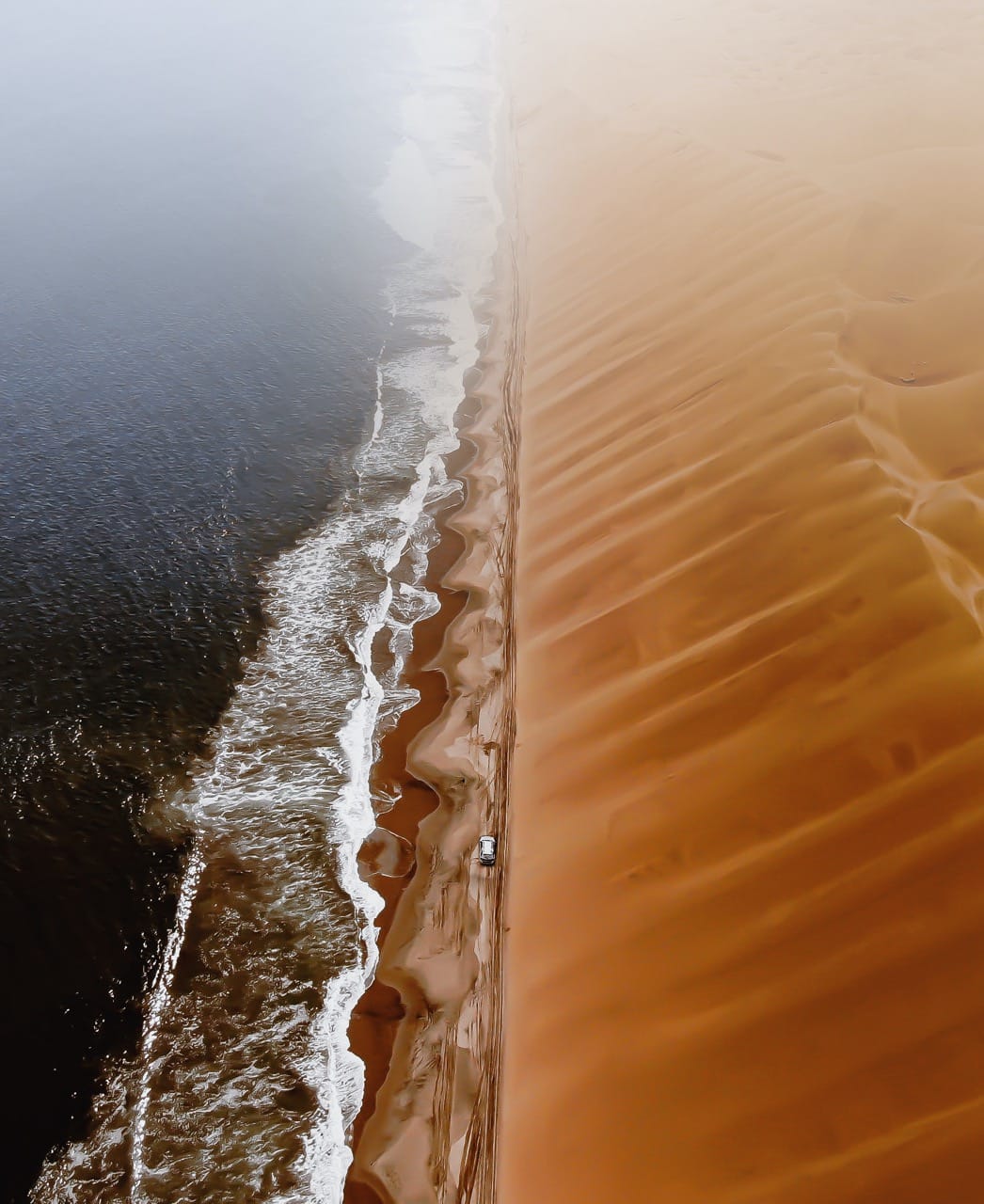
Why you dehydrate faster than you notice
Windhoek’s annual average humidity is about 32%. On the coast it runs 79 to 82%. That difference explains almost everything about how Namibia treats your body.
In dry air, sweat evaporates the instant it forms. You never feel wet, your shirt stays dry, and the usual signal that you are working hard in heat simply never arrives. Meanwhile you are losing fluid steadily, and at 1,700 metres you are also breathing harder than you would at sea level. People arrive at the lodge with a headache and blame the driving.
WHO guidance for hot conditions is a glass every hour whether or not you feel thirsty, and two to three litres across the day — and it warns that drinking large volumes of plain water while sweating heavily can itself upset your electrolyte balance, so a rehydration sachet is worth carrying. That advice is set out in the WHO’s guidance on staying hydrated in the heat.
Thirst is a lagging indicator anywhere. In 32% humidity it is close to useless.
Tap water is safe to drink in Windhoek, Swakopmund and most towns, and at the great majority of lodges — we cover where it is and is not in our guide to whether you can drink the tap water in Namibia. Carrying a refillable bottle is a cost and plastic decision, not a safety one.
Do you need malaria tablets for Namibia?
For the classic circuit, usually not. This is the single most useful thing on this page, because a great deal of general “African safari” advice assumes you do.
| Area | Risk | When |
|---|---|---|
| Windhoek | None | No transmission |
| Sossusvlei, Swakopmund, Damaraland, the south | Rare | Outside the risk regions |
| Ohangwena, Omaheke, Omusati, Oshana, Oshikoto, Otjozondjupa | Seasonal | November to June |
| Kunene, Okavango and Zambezi river areas | Year-round | All months |
Those regional boundaries come from the Shoreland Travax medical summary for Namibia, the clinical reference many travel doctors use. Northern Etosha, the Caprivi and any trip toward the Okavango move you into risk; a Sossusvlei-to-Swakopmund-to-Damaraland loop does not.
Prophylaxis is a medical decision that depends on your route, your dates and your own health, and the guidance above is geography rather than a prescription. Take your actual itinerary to a travel clinic and let them advise. What we can tell you is exactly which regions your route passes through and in which months — which is the information the clinic will ask for first.
The rest of the entry requirements, including what is and is not needed on arrival, is in our guide to vaccinations for Namibia.
The sun is stronger than the temperature suggests
Windhoek averages 9.9 hours of sunshine a day, about 3,600 hours a year. Add high altitude, thin dry air and pale sand and gravel throwing light back up at you, and you can burn badly on a 22°C winter afternoon that feels pleasant.
- Reapply, do not just apply. One application at breakfast is not cover for a full day outdoors.
- A wide brim beats a cap. Ears and the back of the neck are where visitors burn, especially in an open vehicle.
- Long sleeves are cooler than bare arms in dry heat, because they slow evaporation and keep the sun off.
- Lip balm with SPF. Cracked lips are the most common small misery of a Namibian trip.
- Sunglasses matter on the pans. Etosha’s white salt and the Deadvlei clay are genuinely dazzling.
On the clothing side of that, The Safari Store’s guide to keeping cool and protected from the sun on safari goes into fabric weight and UPF ratings in more detail than we need to here — the short version is that a UPF50+ long-sleeved shirt in a technical fabric will keep you cooler than a cotton T-shirt, which is the opposite of what most people assume.
Eating and energy on long driving days
Namibian driving days are long and the gaps between places to buy food are longer. A 340 km leg on gravel is five hours or more, and there may be nothing en route but a fuel station.
Breakfast does the heavy lifting: eggs, yoghurt, fruit and nuts hold considerably better than pastries and cereal against a five-hour drive. Then carry your own supply — nuts, dried fruit, biltong, wholegrain crackers, fresh fruit — because the alternative is arriving at a lodge at three in the afternoon having eaten nothing since seven.
Tiredness, dehydration and low blood sugar all degrade reaction time, and on loose gravel reaction time is the thing that matters. Stop every two hours, get out, walk for two minutes. It costs twenty minutes across a driving day and it is the cheapest safety measure available.
Sleep, and why the early starts are worth it
The best wildlife hour is the first one after sunrise, and the best light for photographs is the same. That means genuinely early mornings, which only work if the nights work.
Namibia helps here more than most destinations: lodges are remote, there is almost no light pollution and very little noise. Keep caffeine to the morning, keep the room cool, and put the phone away well before bed. On the classic circuit you will be going to bed earlier than you do at home without particularly trying.
Pacing the trip so you arrive home rested
The commonest mistake is not a health mistake at all — it is an itinerary mistake. Too many one-night stops, too many five-hour drives back to back, and the trip becomes a commute with wildlife attached.
Two nights wherever possible. A rest day somewhere in the middle. Driving days sized on the real surface rather than the map. Our 14-day Namibia self-drive is built that way deliberately, with the second nights placed where they earn their keep rather than spread evenly.
Frequently asked questions
Do you need malaria tablets for a Namibia safari?
Usually not for the classic circuit. Windhoek has no transmission and Sossusvlei, Swakopmund, Damaraland and the south are outside the risk regions. Risk is seasonal from November to June in six northern regions, and year-round along the Kunene, Okavango and Zambezi rivers. Take your exact route to a travel clinic.
How hot does Namibia get?
Summer highs reach 32 to 33°C in Windhoek and 36 to 37°C on the southern plateau. The coast at Swakopmund stays at 20 to 21°C. Winter days are 22 to 24°C inland but nights fall to 7 to 8°C, and near freezing in the desert.
How much water should you drink on a Namibia safari?
Two to three litres a day in hot conditions, taken as roughly a glass an hour rather than in large amounts occasionally. Humidity inland averages around 32%, so sweat evaporates instantly and thirst is an unreliable guide.
Can you drink the tap water in Namibia?
Yes in Windhoek, Swakopmund and most towns, and at the great majority of lodges. Carrying a refillable bottle is about cost and plastic rather than safety.
What should you pack for health on a Namibia safari?
High-SPF sunscreen, a wide-brimmed hat, sunglasses, SPF lip balm, moisturiser for the dry air, layers for cold mornings, rehydration sachets, personal medication and a basic first-aid kit.
Is Namibia a difficult destination for older travellers?
No, but the driving days are long and the temperature swing is wide. Fewer one-night stops, two nights in each region and a rest day in the middle make far more difference than anything medical.
Last verified August 2026. Malaria regions are from the Shoreland Travax medical summary and hydration guidance from the WHO; both are checked quarterly. Temperature figures are climate averages, not forecasts. Nothing here is medical advice — take your itinerary to a travel clinic.
Tell us your route and dates and we will tell you which regions you pass through and in which months, so your clinic appointment takes five minutes instead of twenty.