The most budget-friendly safari options in Namibia
The cheapest real safari in Namibia is self-drive and camping: roughly N$1,700 per person per day for two people sharing a vehicle, once park fees, a campsite, fuel and the car are all counted. Guided budget trips start higher.
Budget in Namibia does not mean cheap. It means driving yourself and sleeping in a tent, and it still costs more than most people expect, because the two unavoidable lines — the vehicle and the park fees — do not care how you sleep. Park fees rose 86 per cent in April 2026, which hit the budget end hardest. Here is what the cheap version actually costs at August 2026 prices.
What budget actually means here
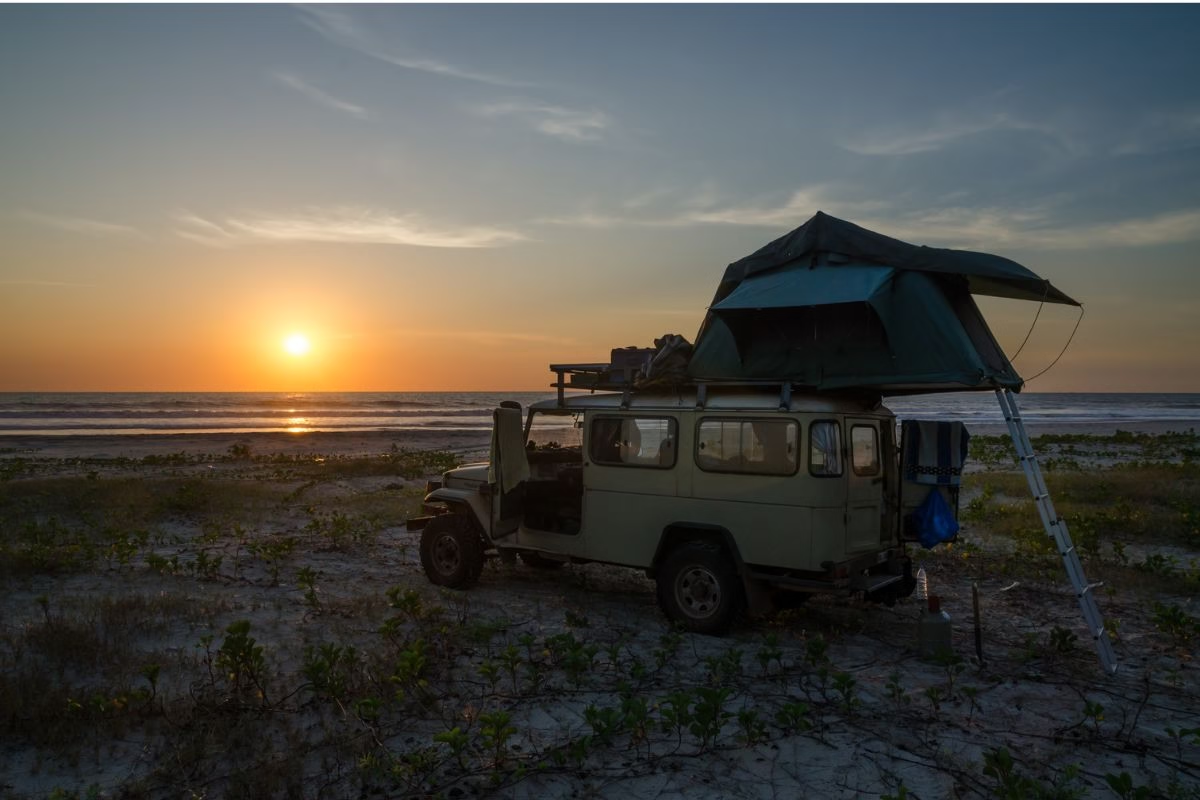
There is no hostel-and-minibus version of Namibia. The distances rule that out, and public transport does not reach the parks. Practically there are three tiers: self-drive camping, self-drive with budget lodges, and a small-group guided camping trip. The first is the cheapest by a clear margin, and the third removes the driving at a price.
The cheapest version, costed
Two adults sharing one vehicle in low season, camping inside the parks, driving about 200km a day. Every figure here is published rather than estimated.
Over a fortnight that is N$47,600 for two, or about N$23,800 each — roughly €1,270 a person before flights and food. Camping does not make Namibia a cheap holiday. It makes a two-week Namibian holiday possible on a budget that would buy four nights of lodges.
N$1,700 a person is about €90 a day before food. That is the floor, not a target, and it assumes low season and a small vehicle. In July to October the same trip runs roughly a third higher.
Where you sleep
Park campsites are run by Namibia Wildlife Resorts and priced per person, not per site, which surprises couples. Okaukuejo in Etosha is N$460 a person in low season and N$560 from July to October. Sesriem, the gate camp for Sossusvlei, is N$670 a person year-round and worth it for one reason: campers get through the inner gate before day visitors, which is the difference between seeing Deadvlei in first light and seeing it in a queue.
That last line is the whole argument. A chalet at the same camp costs roughly five times the campsite, for the same waterhole and the same sunrise.
The activities worth paying for
Most of Namibia is free once you are through the gate. The exceptions at Sesriem are modest and genuinely good: a sunset drive to Elim Dune at N$300 a person, the shuttle into Deadvlei at N$180, and a guided morning drive at N$600 to N$700. Skip the rest and put the money into an extra night somewhere.
Where people try to save and should not
- The insurance excess. A zero-excess waiver costs a few hundred a day and a single gravel rollover costs more than the trip.
- The spare tyre. Two spares is normal here for a reason. One puncture on the D707 with one spare left is a long afternoon.
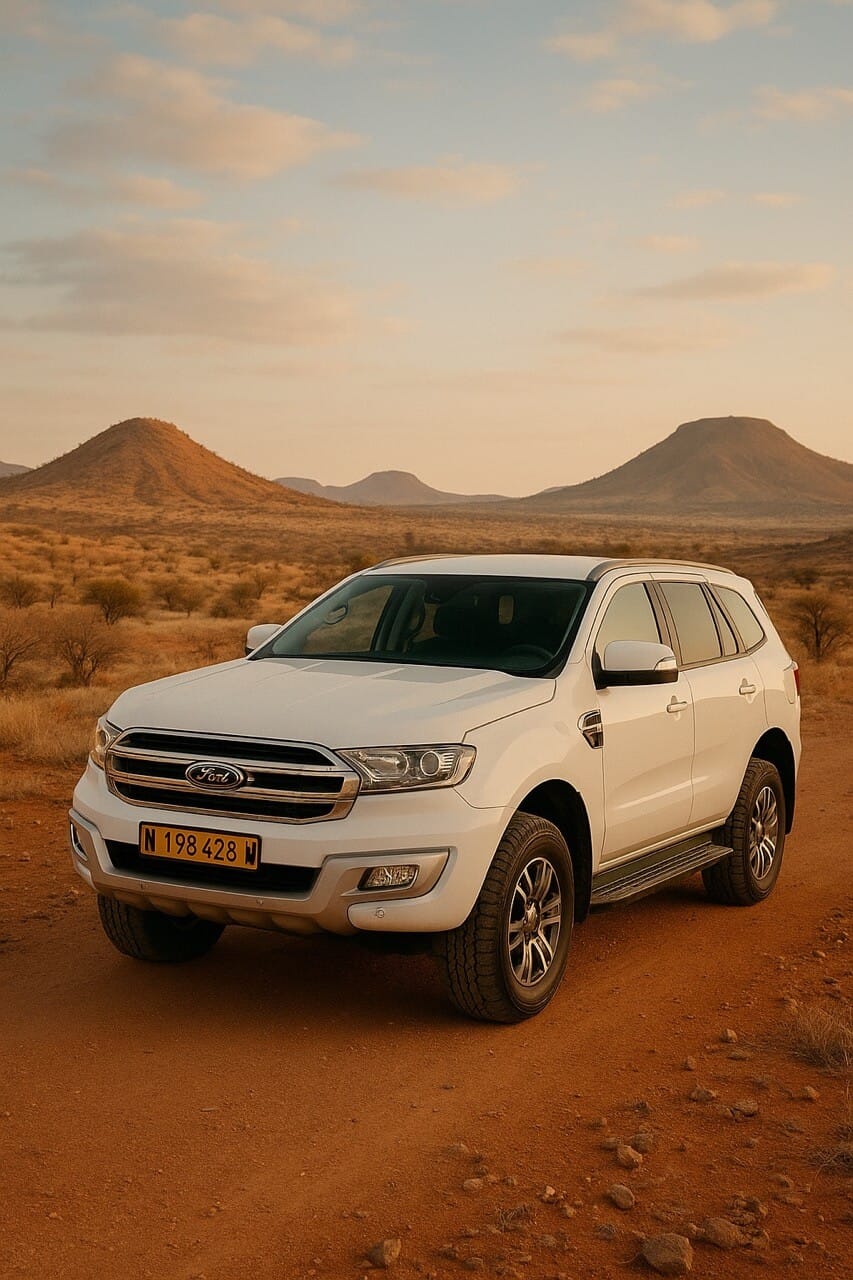
- Taking a sedan to save on the vehicle. It works on the tar and fails on the last twenty kilometres of most good places.
- Booking one night per stop. Park fees are charged per day, so short hops multiply the cost you were trying to avoid.
Where the savings actually are
- Travel November to June. Vehicles and camps both drop, and the green season is the better photograph anyway.
- Fill four seats. The vehicle is the same price for two people or four, so the per-person cost falls by nearly a third.
- Stay three nights, not one. Fewer park-entry days, better rates, and less fuel.
- Self-cater. Supermarkets in Windhoek, Swakopmund and Otjiwarongo are good and cheap; lodge restaurants are neither.
- Mix it. Camp four nights, take a lodge on the fifth. The trip stays affordable and stops feeling like an endurance test.
If you would rather not build it yourself, our 14-day camping Namibia safari is this trip with the campsites booked and the vehicle sorted. For the wider cost picture see whether Namibia is expensive to visit, and for the park itself, how self-driving Etosha works.
Park fees went from N$150 to N$280 per adult per day on 1 April 2026. On a fourteen-day camping trip with eight park days that is N$2,080 more than the same trip last year, and it lands hardest on the cheapest itineraries.
What the vehicle has to carry
- Two spare wheels, not one, and a working jack you have actually looked at.
- A dual-battery fridge. Ice does not survive a Namibian afternoon, and buying food daily costs more than the fridge.
- A compressor and a tyre plug kit. Deflating for sand and reinflating for tar is routine here.
- Twenty litres of drinking water and a full jerry can of fuel for the Kaokoveld or the D707.
- Offline maps. There is no signal for long stretches and the paper map in the glovebox is usually older than the roads.
Frequently asked questions
What is the cheapest way to safari in Namibia?
Self-drive camping. Two people sharing a 4×4 and camping inside the parks spend about N$1,700 each per day in low season, before food.
How much is camping in Etosha?
Okaukuejo charges N$460 per person per night in low season and N$560 from July to October. Camping is priced per person, not per site.
Is Sesriem worth the higher campsite fee?
Yes, if you want Sossusvlei at sunrise. Campers pass the inner gate before day visitors, which is the whole point of staying there.
Can you do Namibia without a 4×4?
On the main circuit a 2WD manages, but the cheapest itineraries reach places where clearance matters. The saving is smaller than the risk.
When is the cheapest time to visit Namibia?
November to June. Vehicle rates and camp rates both fall outside the July to October high season.
Is a guided budget safari cheaper than self-drive?
No, but it removes the driving and the planning. A small-group camping trip costs more per day and less in effort.
We run the camping trips as well as the lodge ones, and the campsite rates above are published by Namibia Wildlife Resorts, not by us.