What is the weather like during September in Namibia
September is Namibia’s best all-round month. Expect 19–35°C by day, 8–19°C at night and no rain. Game viewing is at its dry-season peak, the freezing dawns are over, and crowds thin through the month.
What is the weather like during September in Namibia
September is spring in Namibia: the cold has gone, the heat has not yet arrived, and the country is at the end of a six-month drought. Days run roughly 26°C to 31°C inland and nights sit at a comfortable 10°C to 15°C. There is no rain.
For most travellers it is the best compromise on the calendar. You keep almost all of the dry-season game viewing, you lose the freezing dawns of July, and by the second half of the month the peak-season crowds have thinned.
What is the weather like in Namibia in September?
Dry, clear and warming. September has effectively no rainfall anywhere in the country and very little cloud. What changes through the month is the temperature: the first week still feels like late August, and the last week is starting to feel like October.
Wind and dust remain a factor from August, easing as the month goes on. The air is hazier than it was in June, which softens the light — noticeable if you photograph, invisible if you do not.
Temperatures in Namibia in September
The daily swing narrows through September as nights warm faster than days. A dawn game drive still wants a fleece; by late September it no longer wants a jacket.
Northern Namibia and Etosha National Park
The hottest part of the country in September, reaching the mid-thirties by late month. The heat is what drives the game viewing: after six months without rain, every animal in Etosha depends on a permanent waterhole, and the hotter it gets the more often they come. September is arguably the single best month to sit at a waterhole in Namibia.
Central Namibia and Windhoek
Comfortable throughout. Windhoek’s 1,700-metre altitude keeps daytime temperatures around 30°C and nights in the low teens. Clear skies, warm afternoons, no rain — September is the easiest month to be in the highlands.
Southern Namibia and the Namib Desert
Warm days and cool mornings. Sossusvlei in September is comfortable at sunrise and hot by eleven, which is exactly the right shape for a dune climb. The Fish River Canyon hiking season runs to mid-September, so the first half of the month is the last of it.
Coastal Namibia – Swakopmund and Walvis Bay
Unchanged from August: fog most mornings, wind most afternoons, and the occasional east-wind day that pushes the temperature into the thirties for twenty-four hours. The coast is the cool escape from an increasingly hot interior, and the gap between Swakopmund and Sesriem on the same afternoon can be fifteen degrees.
Safari and Wildlife in Namibia in September
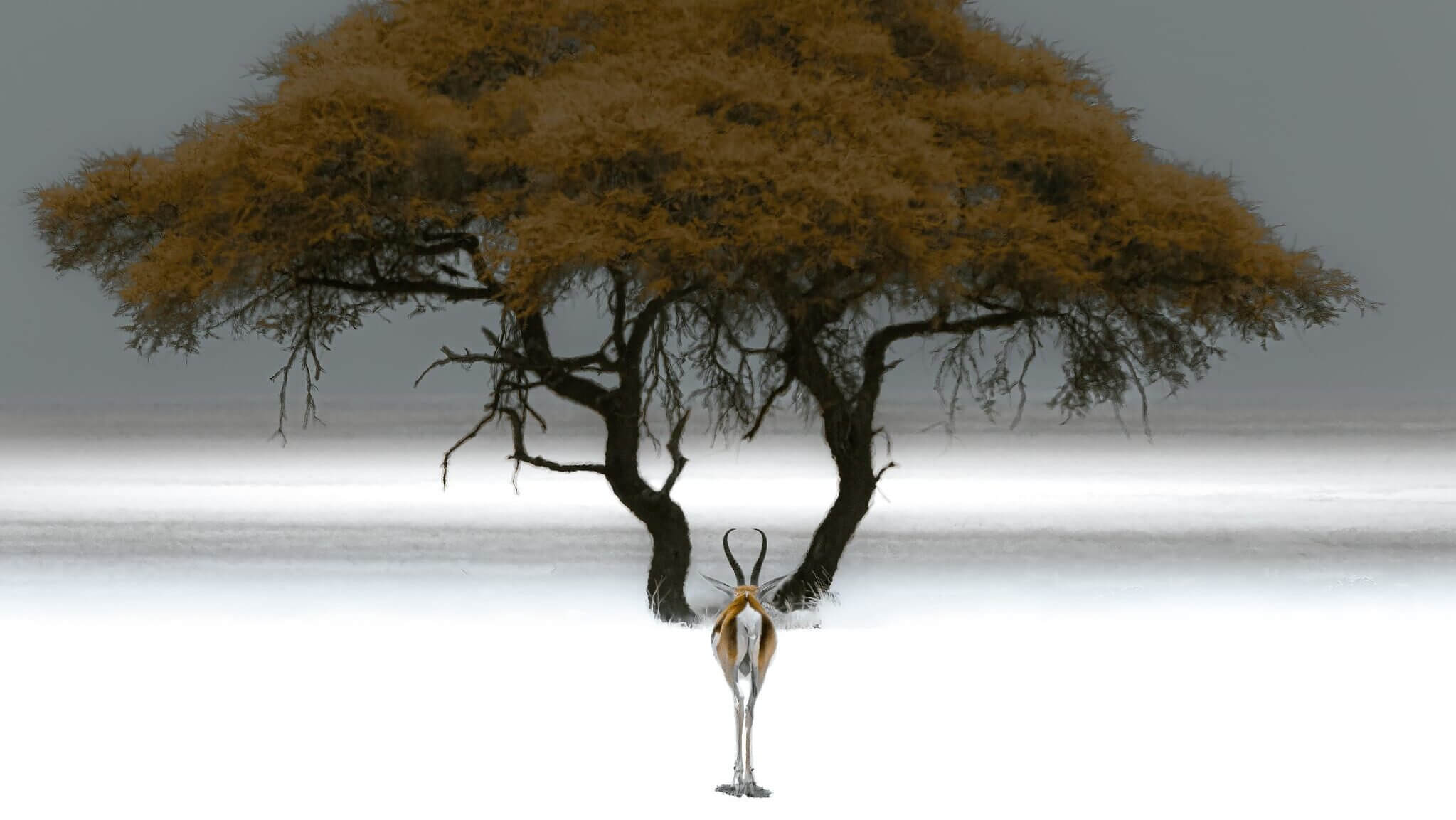
This is the top of the dry-season curve. The bush is bare, the grass is gone, the ephemeral pans have been dry since May, and the animals have no options left.
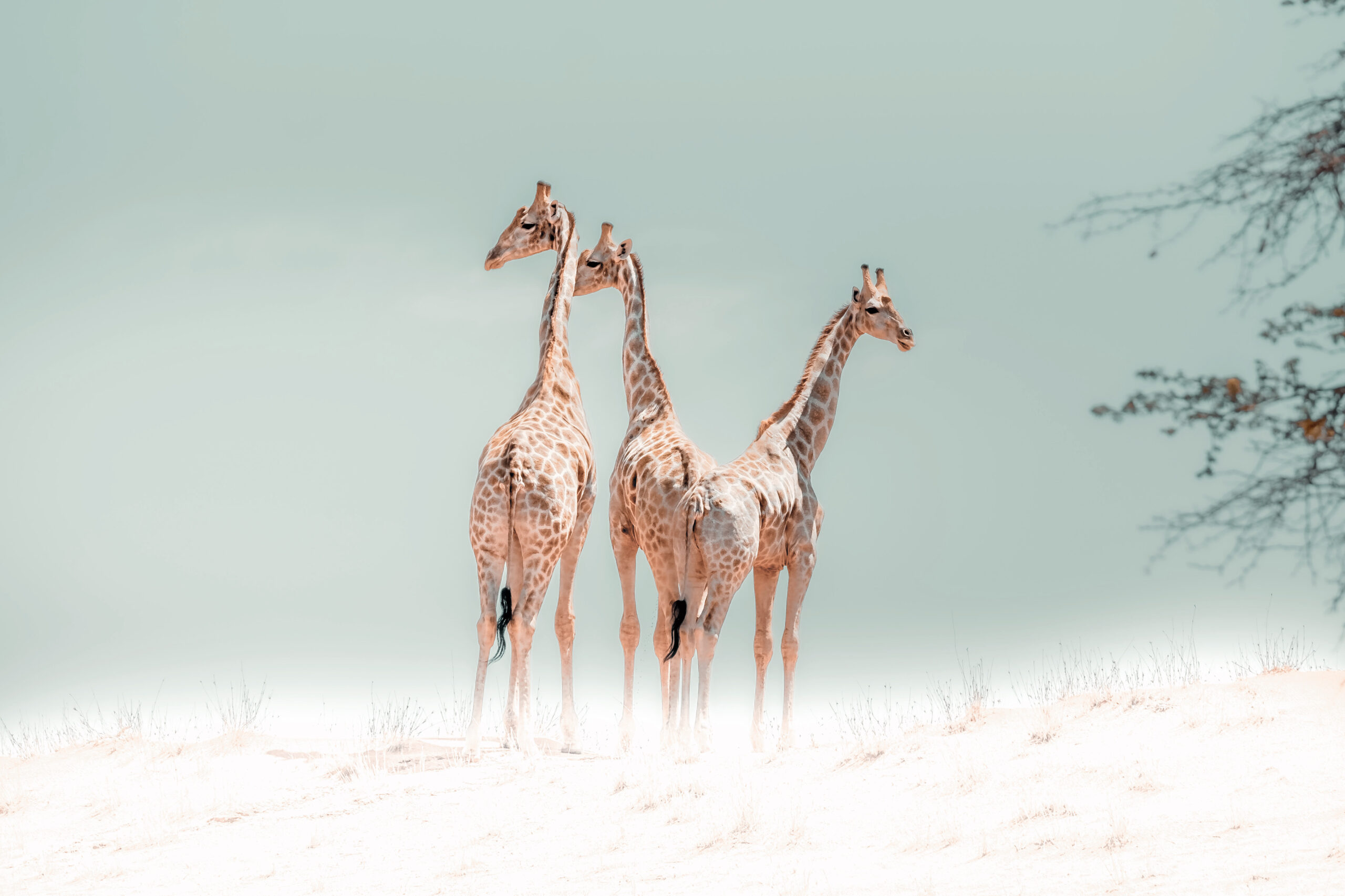
- Etosha is at its peak. Elephant herds, zebra and springbok in the hundreds, oryx, giraffe, kudu — all funnelled onto a handful of waterholes. Black rhino at the floodlit Okaukuejo hole after dark is close to routine.
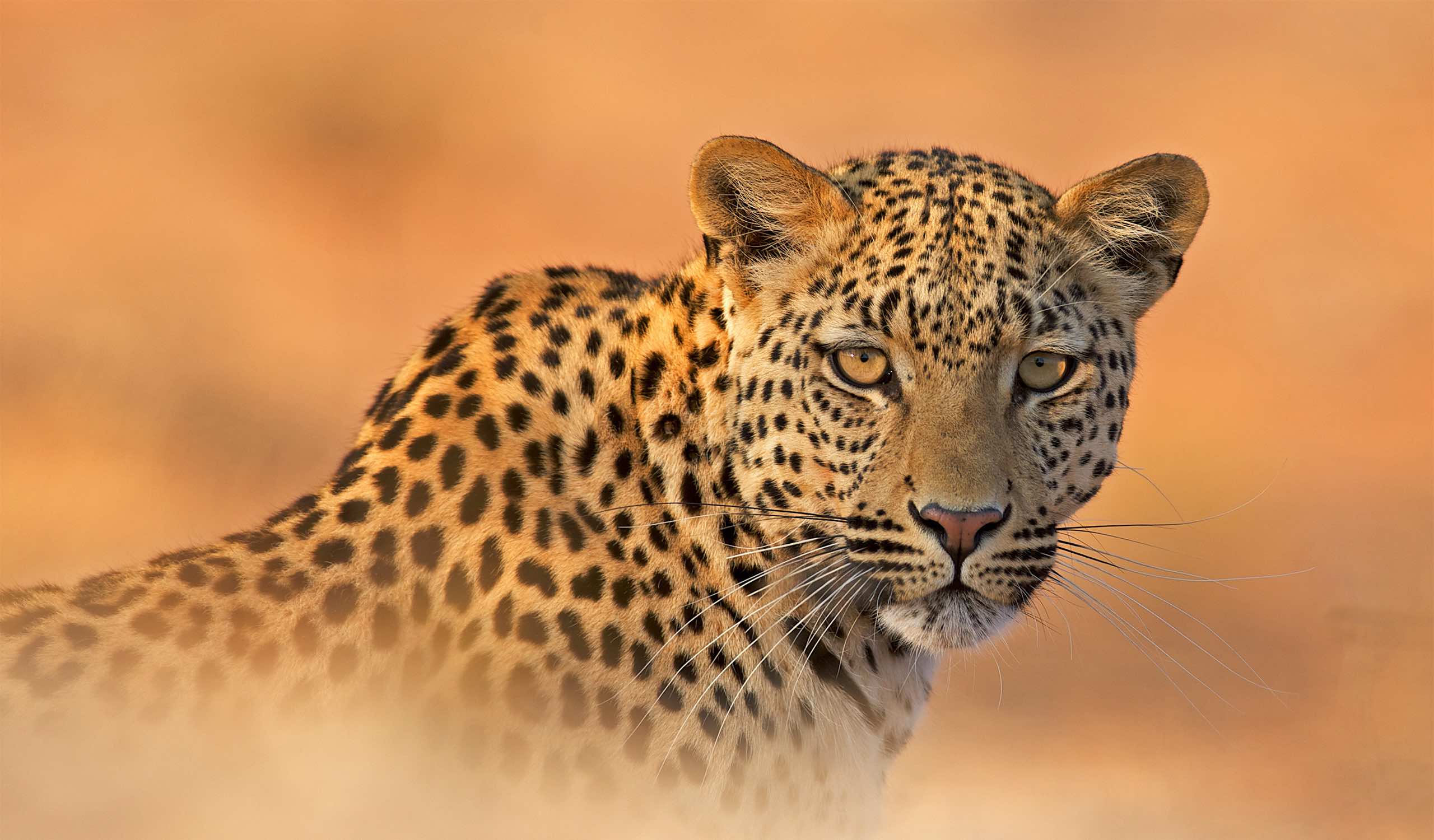
- Predators are easier. Lion work the waterholes; cheetah are visible across open ground; leopard sightings improve simply because there is nothing to hide behind.
- Desert-adapted game is settled. Damaraland’s elephant and black rhino are on predictable stretches of the ephemeral rivers.
- Birding is beginning to recover. The first summer migrants arrive from late September, so the last week is better than the first three.
- Animals are in poorer condition. The honest note: by September the grazers have been living off nothing for months, and it shows.
Park camps are run by Namibia Wildlife Resorts and remain heavily booked through September, though not quite at the pitch of July and August.
Desert and Coast Experiences in Namibia in September
September suits the parts of a Namibian itinerary that involve getting out of the vehicle. Dune climbs, canyon walks, rock-art sites and rhino tracking are all comfortable in the morning and unpleasant by mid-afternoon — so the day organises itself: activity early, rest at midday, activity again from four.
On the coast, Cape Cross holds its fur seal colony year-round and Walvis Bay lagoon has resident flamingo and pelican. September sits inside the whale season along this coast, which runs broadly June to November, though sightings are far less reliable off Namibia than off South Africa — treat one as a bonus.

Crowds and Costs in Namibia in September
September is where the peak starts to break. The first two weeks are still busy, particularly at Etosha and Sossusvlei, but European school holidays have ended and the pressure comes off through the month. Many lodges hold high-season rates to the end of September or into October, so the saving is in availability rather than price.
The practical upshot: late September is one of the two or three best trades in the Namibian calendar. Almost all of August’s wildlife, materially fewer vehicles, and a realistic chance of booking three months out rather than six.
August has cooler middays and slightly better light. September has hotter days, better waterhole activity and fewer people. If your priority is wildlife rather than photography, take September.
Festivals and Cultural Events in Namibia in September
There is no national public holiday in September, so domestic travel does not affect availability. The month belongs to the winter events season as it winds down — agricultural shows, town festivals and cultural events scheduled while the weather still allows them.
The date that matters practically is the middle of the month: the Fish River Canyon hiking trail closes around mid-September for the summer, and does not reopen until 1 May. If the canyon walk is on your list, September is your last chance for seven months.
Activities and Travel Tips for Namibia in September
- Sit at a waterhole through the hottest part of the day. Counter-intuitive and correct — the animals come when it is hot.
- Track rhino on foot in Damaraland. Still comfortable early; unpleasant by ten.
- Climb a dune at sunrise. Easier than July, hotter than July by nine.
- Walk the Fish River Canyon in the first half of the month. The season closes mid-September.
- Use the coast as a rest day. Fifteen degrees cooler than the interior on the same afternoon.
- Start early and stop at midday. Sizing driving days on gravel rather than the map matters more as the heat builds — see our guide to Namibian roads.
Packing Advice for Namibia in September
Lighter than July, but do not abandon the warm layer — dawn in the Kalahari is still in single figures in early September.
- A fleece and a windproof layer for early mornings; an insulated jacket only if you travel in the first week
- Lightweight long-sleeved clothing for the middle of the day — cooler than bare arms in dry heat
- Wraparound sunglasses and a buff; wind-blown dust carries over from August
- High-SPF sunscreen, wide-brimmed hat, SPF lip balm
- Heavy moisturiser; six months without rain leaves the air very dry
- Closed walking shoes
- Rehydration sachets and a refillable bottle — two to three litres a day inland
September sits outside the seasonal transmission window in the northern regions, which runs November to June. The Kunene, Okavango and Zambezi rivers remain year-round risk areas. Windhoek has no transmission and the classic circuit is outside the risk regions entirely. Take your route to a travel clinic rather than a rule of thumb.
Is Namibia in September a good time to visit?
Yes — and if you asked us to name the best single month for a first Namibian safari, September and late August would be the argument. Wildlife is at or near its peak, the weather is entirely predictable, the freezing dawns are behind you and the crowds are thinning.
The case against is narrow: it is hot in the north by late month, the landscape is completely bare, and animals are in visibly poor condition after six months without rain. None of that is a reason to choose another month unless green scenery is what you came for.
Our Namibia weather by month guide sets all twelve side by side. For a route that suits late dry-season conditions, the 14-day Namibia self-drive safari is where we would start.
September is one of twelve, and the differences between them are larger than most visitors expect. Every month is covered in the same detail in our Namibia weather by month.
Frequently asked questions
Is September a good time to visit Namibia?
Yes — it is arguably the best all-round month. Game viewing is at or near its peak, there is no rain, dawns are no longer freezing, and crowds thin through the month.
How hot is Namibia in September?
Interior days run 27–35°C, hottest around Etosha and coolest on the coast at 19–22°C. Nights are comfortable at 8–19°C depending on region.
Does it rain in Namibia in September?
Effectively never. September is one of the driest months of the year across the whole country.
Is Etosha good in September?
It is at its best. After six months without rain every animal depends on the permanent waterholes, and the hotter it gets the more often they come to drink.
Is September cheaper than August in Namibia?
Rates are often similar, since many lodges hold high season into September. What changes is availability and crowding — late September is materially quieter.
Can you hike the Fish River Canyon in September?
Only in the first half. The trail season runs 1 May to around mid-September and then closes until the following May.
Last verified August 2026. Temperature and rainfall figures are seasonal norms, not forecasts; any individual year will vary. Long-run climate data is published by the World Bank Climate Change Knowledge Portal.
Tell us your dates and we will tell you what the weather usually does on your route, and which lodges are worth booking early.