Amazing Facts About Namibia — and the Ones That Are Wrong
Namibia genuinely has the world’s largest cheetah population, the largest known intact meteorite, and the only substantial free-roaming black rhino population. It does not have the world’s highest dunes, the second largest canyon, or 2,000-year-old Welwitschia plants., the dry winter. Rainfall is near zero, wildlife concentrates at Etosha’s waterholes, and roads are at their best. July and August are the peak — and the coldest, near 6 °C at dawn.
Every country accumulates a set of amazing facts that get repeated until nobody checks them. Namibia has more than most, partly because it really is extraordinary and partly because superlatives travel well. We put the most-repeated ones through the sources. Six held up. Four did not, and one of the four was overturned by a paper published this year.
The ones that hold up
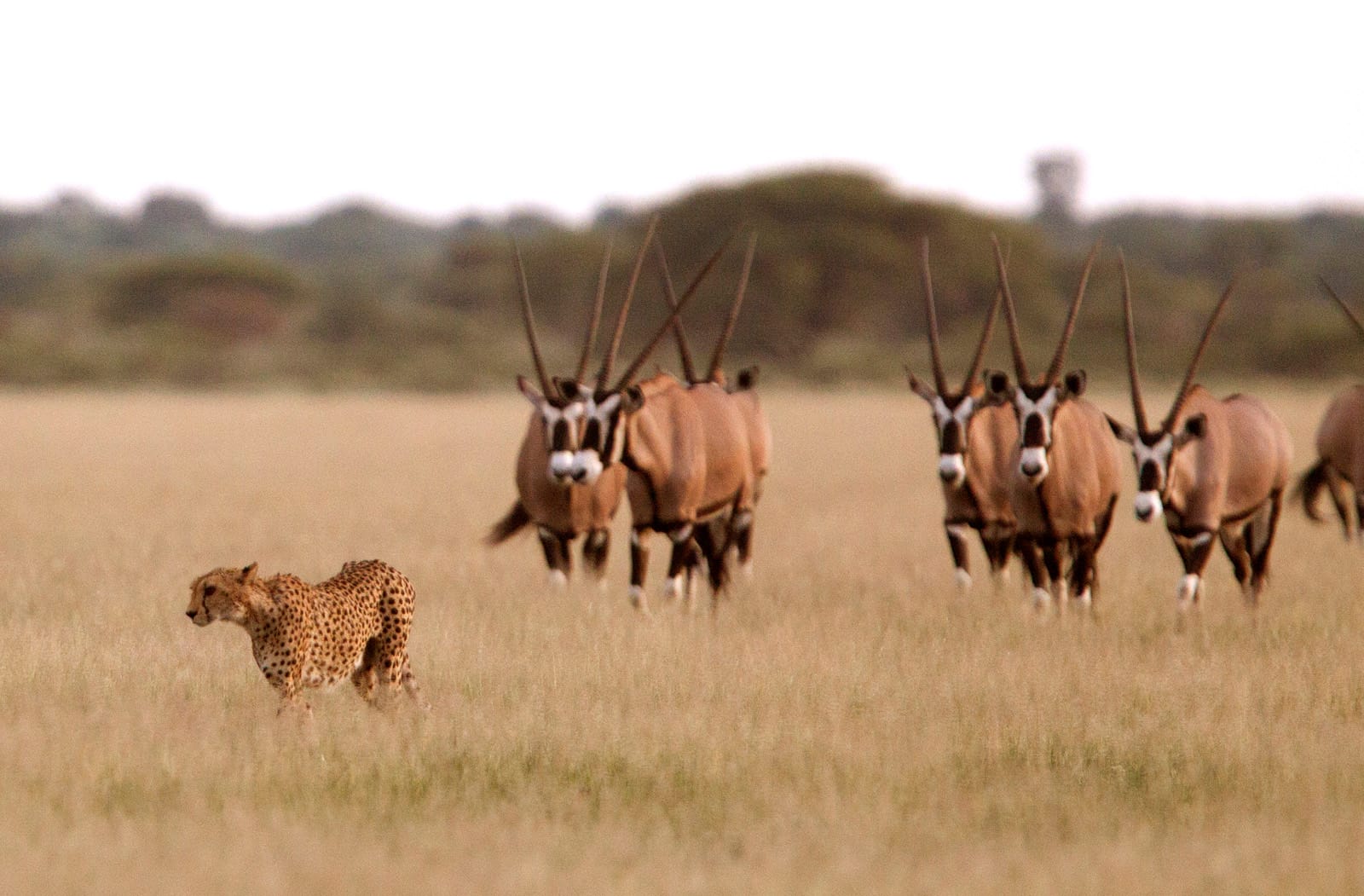
Namibia has the world’s largest cheetah population. The IUCN’s 2023 Red List assessment puts it at roughly 3,400 animals, ahead of Botswana at 1,700, Kenya at 1,500, Tanzania at 1,180 and South Africa at 1,100. Because nearly the entire wild cheetah population lives in Africa, with only a remnant in Iran, the national figure is also the global one.
The largest meteorite on earth sits on a farm near Grootfontein. The Hoba meteorite weighs around 60 tonnes today, down from an original mass of up to 66 before erosion and souvenir-chipping. It fell less than 80,000 years ago and was found in 1920 by a farmer named Jacobus Hermanus Brits while ploughing. It has never been moved, because nothing on site could move it.
Namibia holds the world’s only substantial free-roaming black rhino population — free-roaming meaning outside fences. Save the Rhino Trust describes the desert-adapted rhino of the north-west as the only such population on earth, which makes the superlative close to definitional rather than merely impressive. It is also a more precise claim than the vaguer “largest”, and more useful.
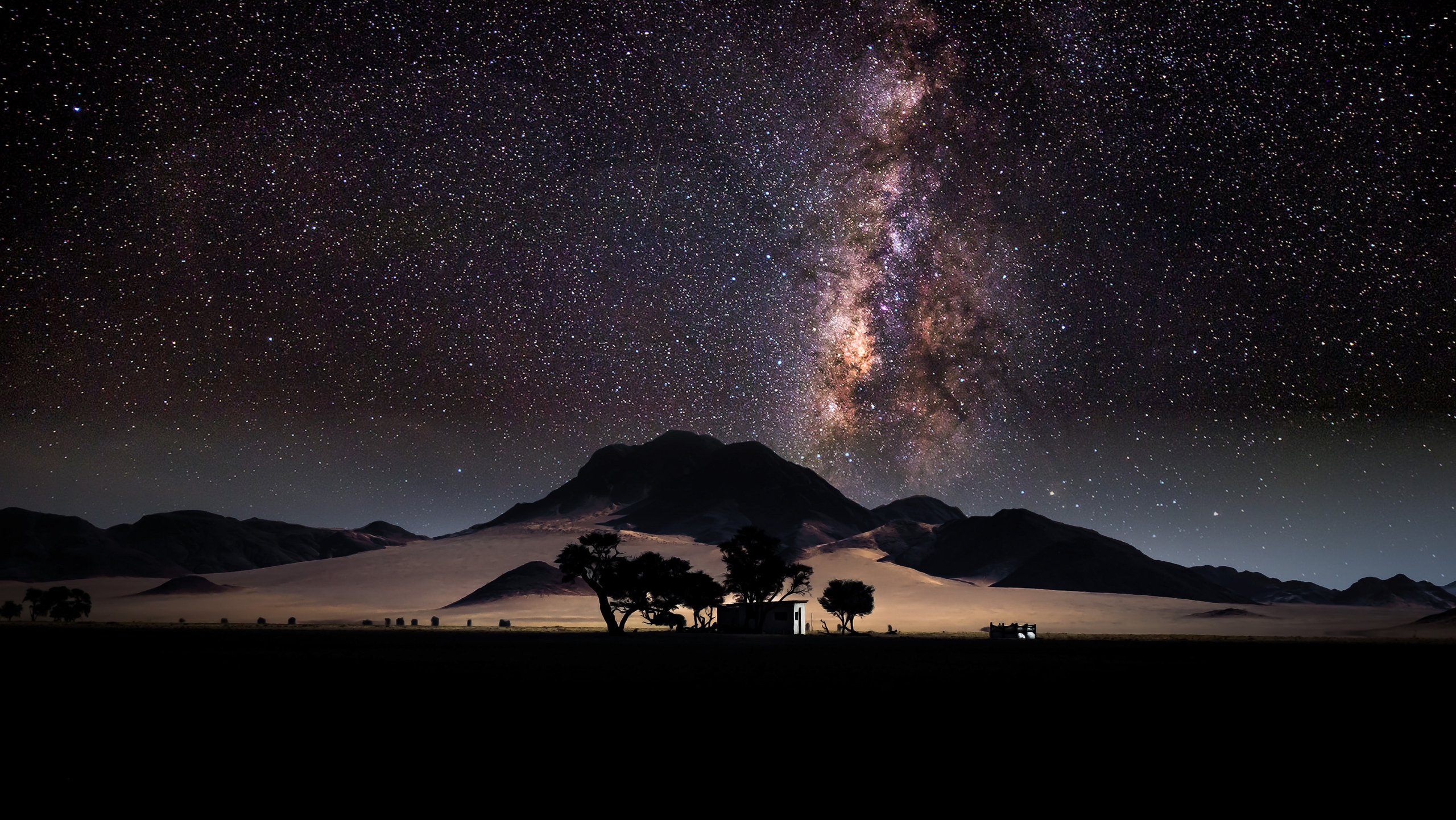
And one the listicles always miss. In 2012 the NamibRand Nature Reserve was designated an International Dark Sky Reserve — the first in Africa, and the first in any developing nation, at Gold Tier. It is a genuine world first, it is verifiable, and almost no amazing-facts article mentions it.
The ones that do not
The dunes are not the world’s highest. Big Daddy at Sossusvlei is 325 metres; Dune 7 near Walvis Bay is given as 383 metres by one source and 388 by another, and is the tallest in the Namib. The genuinely tallest dunes on earth — Duna Federico Kirbus in Argentina at 1,230 metres and Cerro Blanco in Peru at 1,176 — are roughly three times higher. Dune 7 ranks around eighth globally.
Fish River Canyon is not the second largest canyon in the world. It is about 160 kilometres long, up to 27 kilometres wide and around 549 metres deep. Describing it as the largest canyon in Africa is defensible. The world ranking is not: on depth it sits far behind Nepal’s Kali Gandaki Gorge, Tibet’s Yarlung Tsangpo and Peru’s Cotahuasi and Colca.
The Skeleton Coast is probably not the world’s largest ship graveyard. No documented total wreck count exists for the coast at all. One comparative industry ranking places it seventh, behind the Bay of Nouadhibou in Mauritania with more than 300 documented vessels — while acknowledging in the same breath that Skeleton Coast is “regarded by many” as the largest, which is a fair description of a reputation rather than a count.
The constitutional claim needs care too. Namibia’s 1990 Constitution does commit the state, under Article 95, to maintaining ecosystems and biological diversity — that part is real and unusual. But the frequently repeated line that Namibia was the first country in the WORLD to do so has no independent source. The furthest any independent outlet goes is “first in Africa”, and even that traces back to Namibian government material rather than a comparative survey of constitutions.
The one that changed this year
For decades every guide to the Welwitschia has said the same thing: these plants live 1,500 to 2,000 years, and the big ones in the Namib are older than the Norman Conquest. A radiocarbon study published in the journal Radiocarbon in 2026 tested that directly, and the oldest tissue it could verify — on a dead specimen — dated to about 531 radiocarbon years before present, placing it in the 1420s or 1430s.
More interesting is where the old number came from. The paper traces it to a 1960 estimate that extrapolated from a sample of roughly 500 to 600 years and was never independently checked, plus a 1970 study whose sampling method was never documented. Sixty-six years of confident repetition resting on one speculative guess. Our guide to the Welwitschia mirabilis covers what the plant actually does, which is remarkable enough without the inflated age.
A page that says “Namibia has the world’s highest dunes” competes with a thousand identical pages and gets cited by nothing. A page that says which superlatives survive checking, and shows the numbers, resolves an argument — and that is what search engines and AI assistants actually quote.
If you want the properly remarkable version of Namibia rather than the listicle one, the two UNESCO sites are the place to start — Twyfelfontein and the Namib Sand Sea, with a third nomination currently in Paris. A full-country route is the only way to take in the desert, the coast, the north-west and Etosha in one trip.
Frequently asked questions
Does Namibia have the world’s largest cheetah population?
Yes. The IUCN’s 2023 Red List assessment puts Namibia at around 3,400 cheetahs, ahead of Botswana at 1,700, Kenya at 1,500, Tanzania at 1,180 and South Africa at 1,100. Since nearly all wild cheetahs live in Africa, that makes it the largest national population in the world.
Is the Namib the oldest desert in the world?
No credible rival claim was found, so the superlative stands. The age varies by source — one reference gives 55 to 80 million years, tying its formation to the break-up of West Gondwana. There is no single agreed figure.
Does Sossusvlei have the world’s highest dunes?
No. Big Daddy is 325 metres and Dune 7 is given as either 383 or 388 metres depending on source. The tallest dunes on earth are in Argentina and Peru at roughly 1,230 and 1,176 metres — about three times higher.
Is Fish River Canyon the second largest canyon in the world?
No. It is around 549 metres deep, which places it well down any depth-based global ranking. It is reasonably described as the largest canyon in Africa; the world ranking is not supported.
How old is a Welwitschia plant?
Much younger than the guidebooks say. A 2026 radiocarbon study in the journal Radiocarbon found the oldest verified tissue dated to about 531 years. The familiar 2,000-year figure traces to a speculative 1960 extrapolation that was never verified.
Is Namibia the least densely populated country?
It depends what you count. Among sovereign UN member states it ranks second after Mongolia, at about 3.02 people per km². Counting non-sovereign territories, a UN-data table puts it fifth. Publish it with that caveat or not at all.
Desert Tracks plans Namibian journeys around what is actually there. Tell us what you want to see and we will tell you honestly what to expect. Tell us what you want out of the trip rather than when you can travel, and we will tell you honestly whether your dates fit — including when the answer is that they do not. Get in touch with Desert Tracks.