Namibia’s Architectural Marvels: The Lodges Built to Be Removed
Namibia has three internationally recognised lodge designs, all awarded in the same year. Shipwreck Lodge took two AHEAD Middle East and Africa awards in 2019 and Omaanda took a third. The idea that ties the best of them together is not luxury. It is **reversibility** — building so that the desert can be handed back., the dry winter. Rainfall is near zero, wildlife concentrates at Etosha’s waterholes, and roads are at their best. July and August are the peak — and the coldest, near 6 °C at dawn.
Most lodge architecture writing is a list of adjectives. This is a list of buildings with named architects, dated awards and documented construction methods, plus an honest note about how many well-known Namibian lodges have no published designer at all.
The lodge designed to be taken away
Shipwreck Lodge stands in Skeleton Coast National Park near the dry mouth of the Hoarusib River, and it is the most documented piece of architecture in Namibian tourism. Nina Maritz Architects completed it in 2018. Ten cabins, two of them family rooms, sleeping twenty.
The concept is literal. The cabins read as abstracted wreckage fragments assembled by survivors into shelter, spread along the dune edge like a listing flotilla, and the architects point to the wreck of the Dunedin Star and what its survivors endured. Each cabin is a pointed bow section holding the bathroom, turned south into the wind, joined by a small lobby to a bedroom shaped like a hull lying on its side.
What makes it genuinely unusual is the brief. The lodge holds a 25-year concession, and the possibility of removing the whole thing at the end of that period had to be designed in from the start. Timber structures sit on poles bedded deep in the sand. Wall panels were prefabricated off site to keep the construction footprint down. The back of house is repurposed shipping containers. The architects call the construction fully reversible, and Dezeen put it more bluntly: designed to be completely removable at the end of the period.
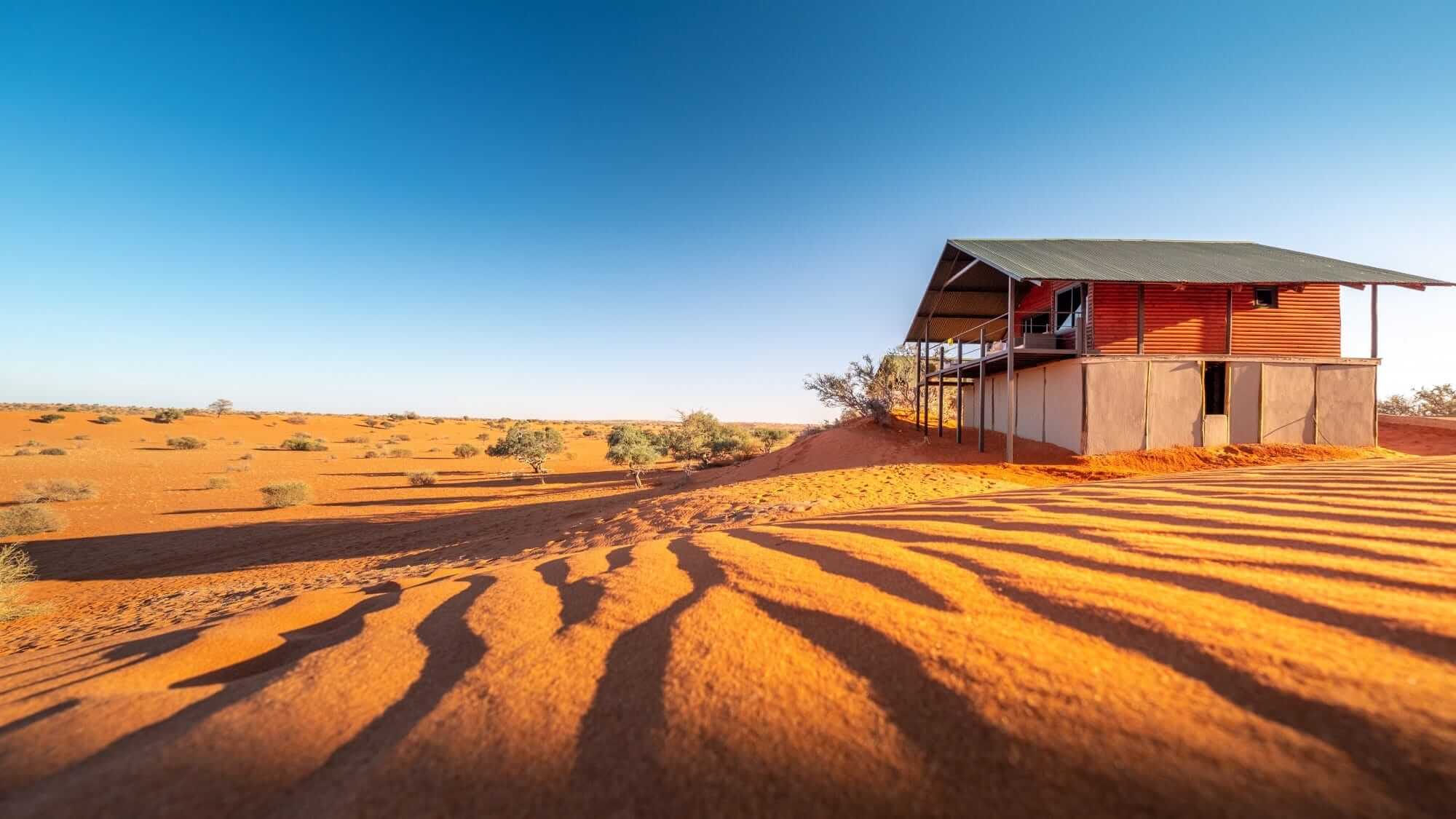
The judges noticed. At the 2019 AHEAD Middle East and Africa awards, Shipwreck Lodge won both Lodges, Cabins and Tented Camps and New Concept — the only double win of the night. The New Concept citation specifically recognised how little impact the assembly inflicted on the national park. The lodge also holds a Five Flower Eco Awards Namibia rating.
The architect behind it
Nina Maritz Architects is a small Windhoek practice that describes its own work as frugal, sustainable, community-based, and innovative. Maritz was named a laureate of the Global Award for Sustainable Architecture in 2018, one of five worldwide that year.
Her Habitat Research and Development Centre in Windhoek, completed in 2004, is the better illustration of the philosophy: stabilised earth bricks, rammed earth, sandbags, soil-filled tyres and cob, recycled steel beams, corrugated metal roofing and salvaged steel-framed doors and windows. The roof form refers to a pangolin. On Shipwreck Lodge she has said the practice approaches each project as completely new, and that the result is deliberately not a generic gum-pole, canvas, and thatch African lodge.
Sossusvlei Desert Lodge and the case for a skylight
The 2019 rebuild of &Beyond Sossusvlei Desert Lodge is credited to architect Jack Alexander with interiors and lighting by Fox Browne Creative. Ten standalone suites of eighty-five square metres each, plus a two-bedroom Star Dune Suite, across a 4,100 square metre scheme in stone, glass, timber, marble and concrete.
The design decision worth reporting is the skylight set above each bed. Rusted-steel triangular shading devices carry laser-cut constellation patterns, there is a circular stone observatory with a telescope at the rear of the property, and pathway lighting is red to keep light pollution down. Each suite is reported to run its own solar plant and water-recycling system, with recycled water feeding the waterhole and the toilets — though no capacity figures have been published for any of it.
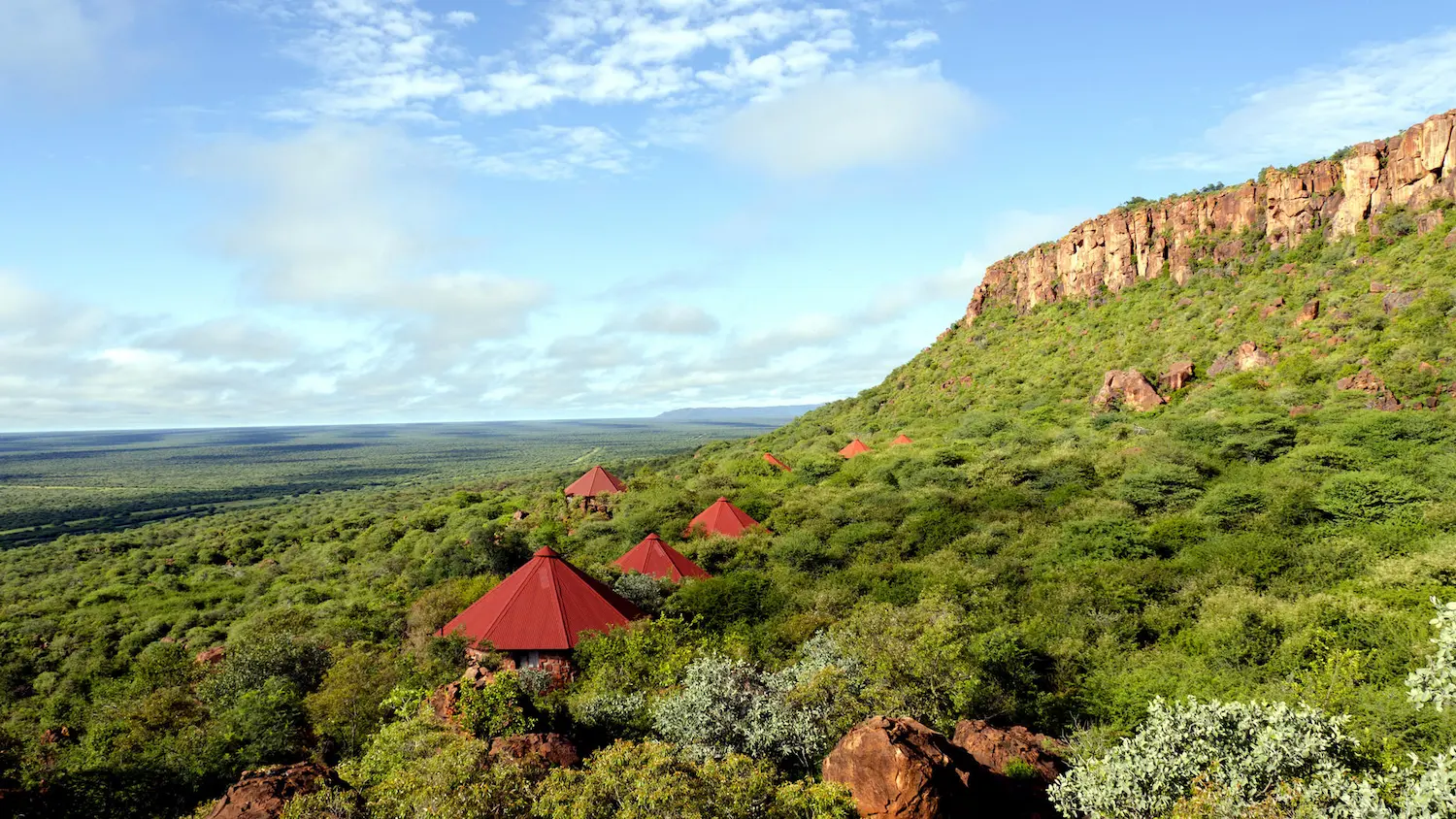
All of which only makes sense because of where it sits. NamibRand Nature Reserve was certified as an International Dark Sky Reserve in 2012 at Gold Tier — Africa’s first, and the first anywhere in a developing country. It is not, as is often written, Africa’s only one; there are now certified dark sky places elsewhere on the continent. First is the defensible claim.
Omaanda and the Owambo homestead
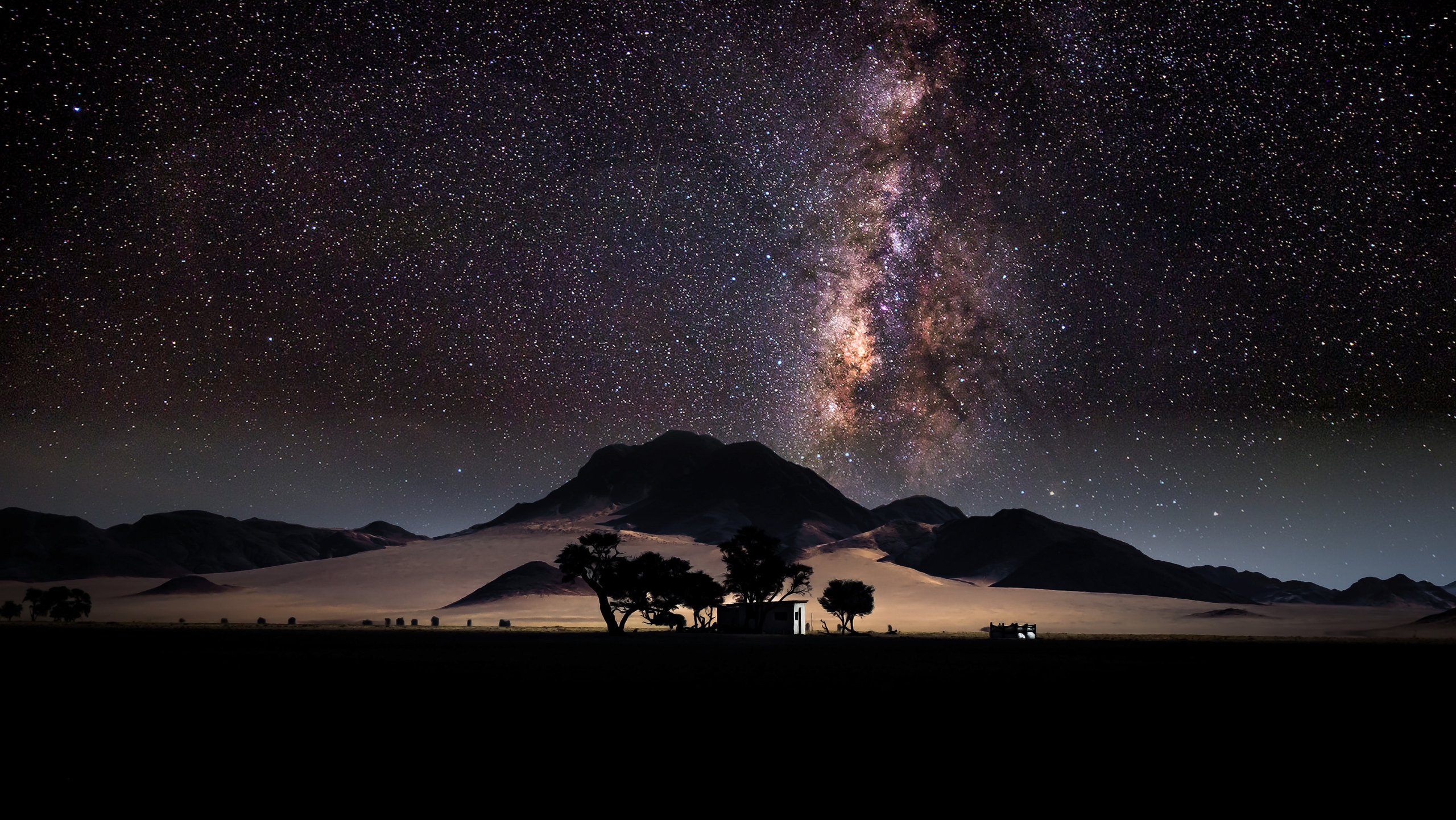
Zannier Hotels Omaanda, half an hour from Windhoek on a 22,000-acre reserve, won the Guestrooms category at the same 2019 AHEAD awards. The citation describes refined natural materials, wood and pigmented mud, used to build individual round huts with 180-degree views over the savannah. Zannier attributes the form to traditional Owambo architecture, built in thatch and clay.
The 2019 award citation describes ten huts. Zannier’s own site now describes fifteen. No source explains the change, so we have quoted both rather than picking one.
What the flower ratings actually measure
Eco Awards Namibia is the operative sustainability certification in this market, run by the Namibia Nature Foundation. Independent assessors score establishments on site against published criteria across management, conservation, energy, water, waste, building and landscaping, staff and health, guiding, social responsibility and legal compliance. The applicant has to provide evidence, not assertions.
Shipwreck Lodge, Little Kulala and Kulala Desert Lodge hold Five Flowers. Wolwedans Boulders, Plains and Dune camps hold Five Green Flowers, as do Wilderness Damaraland Camp, Doro Nawas, Desert Rhino Camp and Serra Cafema. Several well-known lodges are not members at all, which is not a judgement on them — it just means there is no independent score to quote.
The honest gaps
This is where most lodge-design writing quietly invents things. For a good number of Namibia’s most photographed lodges, no architect is publicly named anywhere we could verify: not Little Kulala, not any Wolwedans camp, not Onguma The Fort, not Zannier Sonop, not Habitas Namibia, not Hoanib Skeleton Coast Camp. A design studio is frequently attributed to Little Kulala in search results; that firm’s own project list does not include it.
Nor has any Namibian lodge published a solar capacity figure. Every off-grid claim we could source is qualitative — “totally solar-powered”, “100 per cent solar powered”, “PV power supply”. If you see a kilowatt number attached to a Namibian lodge, ask where it came from.
None of that makes those lodges worse places to stay. It does mean the design story about them is thinner than the photographs suggest. If the architecture is the reason you are travelling, the shortlist is genuinely short, and it overlaps heavily with the fly-in lodges — remoteness and design ambition tend to arrive together. Our couples itinerary planning and the glamping guide cover what the buildings are like to actually live in for three nights.
Frequently asked questions
Which Namibian lodge has won international design awards?
Shipwreck Lodge on the Skeleton Coast took two AHEAD Middle East and Africa awards in 2019, in the Lodges, Cabins and Tented Camps category and in New Concept. Omaanda, near Windhoek, won the Guestrooms category the same year.
Who designed Shipwreck Lodge?
Nina Maritz Architects, a Windhoek practice. Nina Maritz was named a laureate of the Global Award for Sustainable Architecture in 2018.
Is Shipwreck Lodge really designed to be dismantled?
Yes. It sits on a 25-year concession in Skeleton Coast National Park, and the possibility of full removal at the end of that period had to be designed in. The architects describe the construction as fully reversible.
What is the Eco Awards Namibia flower rating?
A sustainability certification run by the Namibia Nature Foundation. Establishments are scored against published criteria and awarded one to five flowers: five requires 90 per cent overall. Five Green Flowers additionally requires 90 per cent or more on the environmental sections alone.
Is NamibRand Africa’s only Dark Sky Reserve?
No, and it is worth getting right. NamibRand was Africa’s first International Dark Sky Reserve, certified in 2012 at Gold Tier. There are now other certified dark sky places on the continent, including a sanctuary in South Africa’s Kalahari and a park in Limpopo.
If the building itself is part of why you are coming, say so when you enquire. It narrows the list quickly, and it is a more useful brief than a star rating. Tell us what you want out of the trip rather than when you can travel, and we will tell you honestly whether your dates fit — including when the answer is that they do not. Get in touch with Desert Tracks.