Namibia’s Wildlife Conservation: What the Model Delivers
Namibia has 86 registered communal conservancies covering 166,179 km², or 20.2% of the country, with about 244,587 residents. The model began with the 1996 Nature Conservation Amendment Act, which gave communal-land residents rights over wildlife., the dry winter. Rainfall is near zero, wildlife concentrates at Etosha’s waterholes, and roads are at their best. July and August are the peak — and the coldest, near 6 °C at dawn.
Namibia is held up internationally as the country that got community conservation right. Most of that reputation is deserved and the numbers behind it are real. What gets left out is that the picture is uneven — some populations are recovering, others are falling, and in 2024 the state culled 723 animals for meat. A conservation story worth telling has to hold all of that at once.
What the law actually changed
Namibia’s constitution commits the state, under Article 95, to maintaining ecosystems, essential ecological processes and biological diversity, and to using living natural resources sustainably for the benefit of present and future Namibians. You will often read that this made Namibia the first African country to write environmental protection into its constitution — that claim traces to Namibia’s own government material, and no independent comparative survey confirming it could be found. It is Namibia’s description of itself, which is not the same as a verified ranking.
The change that actually mattered came later. The Nature Conservation Amendment Act of 1996 introduced Section 24A, allowing residents of communal land to register their area as a conservancy and, once registered, to hold rights over the consumptive and non-consumptive use of game so that the community could derive benefit from it. Before that, only freehold landowners held anything like those rights. The first conservancies were registered in 1998.
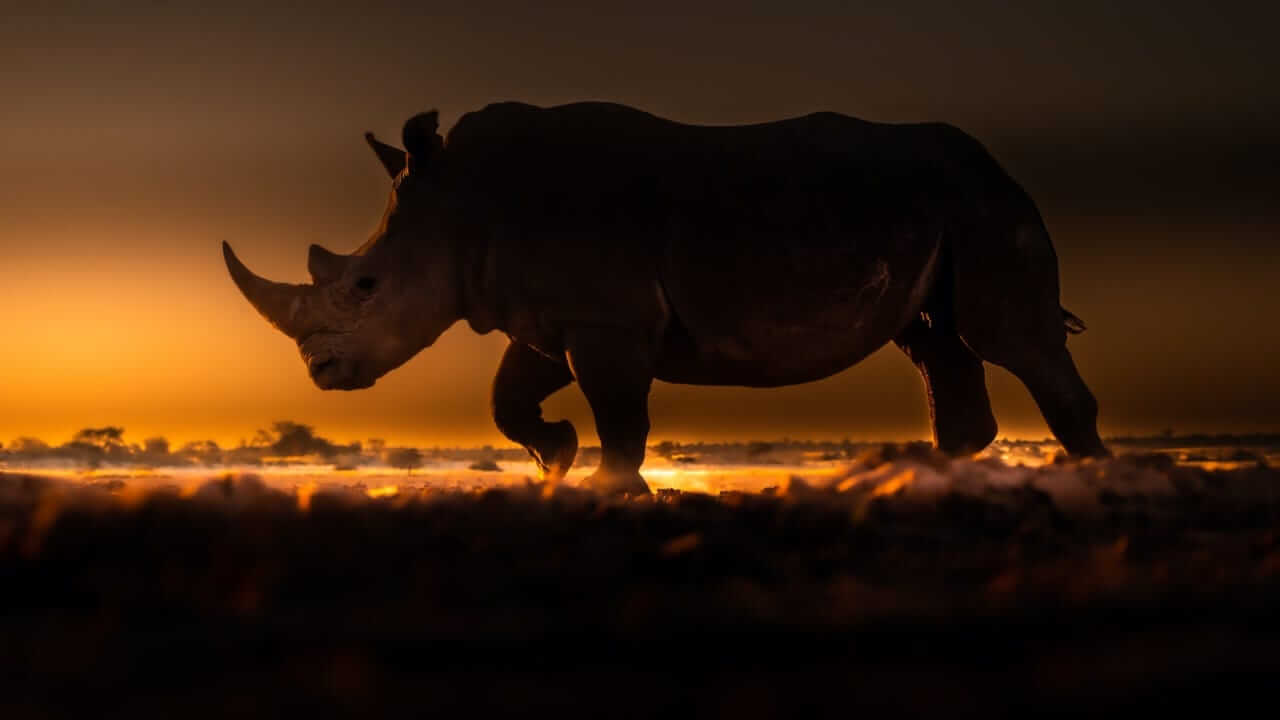
The rhino, which is the strongest claim
NACSO’s 2023 report describes Namibia’s black rhino population as the largest free-roaming one globally. Getting a current number is harder than it should be: the IUCN assessment put the south-western subspecies at 1,920 animals in 2010, and more recent material refers to just over 2,000, roughly a third of them held under custodianship rather than in state protected areas. Neither figure can be tied to a confirmed recent survey year, so treat both as indicative.
The structure behind it is the Black Rhino Custodianship Programme, established in 1993 and extended to communal conservancies in 2005, under which private and communal custodians hold state-owned rhino on the country’s behalf. Save the Rhino Trust monitors free-roaming animals in Kunene and Erongo using local community trackers. In 2026 the Black Rhino Association of Namibia launched to coordinate custodians, the ministry, WWF and Save the Rhino Trust around shared data and training.
Where the numbers are going the wrong way
The national elephant picture is broadly positive — an estimated 22,754 in 2016 rising to around 24,091 in 2019, drawing on regional surveys at Khaudum, Zambezi, Etosha and the north-west. The desert-adapted population is a different story. Elephant numbers in the Huab and Ugab river systems fell by a third from 2016, with 62 individuals recorded as of August 2024, and nine of fourteen newborn calves failed to survive between 2014 and 2018.
Kunene’s desert lions were counted systematically for the first time between November 2022 and January 2023, across a 41,000 km² core range covering eleven conservancies, three tourism concessions and Skeleton Coast National Park. The result was 57 to 60 adults plus fourteen cubs under a year — a density of 0.11 lions per 100 km², described as the lowest recorded for a stable free-ranging African lion population. That is 45 to 60% below earlier estimates, though those earlier figures were expert opinion rather than systematic counts, so some of the drop reflects better counting rather than fewer lions.

In August 2024 the environment ministry announced a plan to cull 723 wild animals across five national parks and communal areas as drought relief and conflict mitigation — 300 zebra, 100 blue wildebeest, 100 eland, 83 elephants, 60 buffalo, 50 impala and 30 hippo. By the announcement date 262 had been culled, producing about 56,875 kg of meat distributed through Meatco and the Office of the Prime Minister. Conservationists objected publicly, on grounds ranging from the ecological logic to the timing shortly before a general election. It is part of the record and belongs in any honest account of how Namibia manages recovered wildlife under drought.
Does conservation pay for itself?
Partly, and the detail matters. Conservancies generated N$166,855,933 in returns and benefits in 2023 — roughly two thirds from tourism and most of the rest from conservation hunting — and the programme has contributed N$15.268 billion to national income between 1990 and 2023. Employment runs to 1,057 conservancy staff and 767 community game guards.
But the headline figure is not what lands in people’s hands. Cash actually distributed to residents in 2023 came to N$28,026,553 — most of the rest goes on running costs, wages and reinvestment. Whether that is a fair split, and who benefits from hunting revenue in particular, is genuinely contested; we set that argument out properly in our guide to sustainability and responsible tourism in Namibia rather than glossing it here.
The people living with this wildlife are the ones carrying its costs, which is worth understanding before you travel — the peoples of Namibia covers who lives where. A nineteen-day route through the deserts and the north-east runs through conservancy country for much of its length, which is the only way to see the model rather than read about it.

Frequently asked questions
How much of Namibia is under communal conservancies?
As of 2023 there were 86 registered communal conservancies plus three community conservation associations, directly managing 166,179 km² — 20.2% of Namibia’s land area. Around 244,587 people live in community conservation areas.
When did community conservation start in Namibia?
The Nature Conservation Amendment Act of 1996 introduced Section 24A, letting communal-land residents register a conservancy and gain rights over the use and management of game. The first conservancies were registered in 1998.
Is Namibia’s constitution really the first in Africa to protect the environment?
Namibia’s constitution does commit the state to maintaining ecosystems and biological diversity under Article 95. The “first in Africa” line traces to Namibia’s own government material and no independent comparative survey confirming it could be found — so it is best stated as Namibia’s own description of itself.
How many black rhino does Namibia have?
NACSO describes Namibia’s as the largest free-roaming black rhino population in the world but gives no head-count. The IUCN assessment put the south-western subspecies at 1,920 in 2010; more recent material refers to just over 2,000. There is no single current, sourced figure.
Are all the wildlife numbers going up?
No. Namibia’s national elephant estimate rose between 2016 and 2019, but desert-adapted elephants in the Huab and Ugab river systems fell by a third from 2016, with 62 individuals recorded by August 2024. The first systematic Kunene lion survey found 57 to 60 adults.
Did Namibia cull wildlife in 2024?
Yes. In August 2024 the environment ministry announced a plan to cull 723 animals across five national parks and communal areas as drought relief, including 83 elephants, with meat distributed through Meatco and the Office of the Prime Minister. Conservationists criticised it publicly.
Desert Tracks builds Namibian routes through conservancy country because that is where the model is visible. Tell us what you want to understand and we will plan around it. Tell us what you want out of the trip rather than when you can travel, and we will tell you honestly whether your dates fit — including when the answer is that they do not. Get in touch with Desert Tracks.