Okavango Delta Lodge Prices: What You Should Know
Okavango Delta lodges cost USD 595 to USD 3,895 per person per night in 2026, fully inclusive of meals, drinks, activities, guiding, airstrip transfers and park fees, plus a USD 60 conservation levy. Green season runs at roughly half of peak., the dry winter. Rainfall is near zero, wildlife concentrates at Etosha’s waterholes, and roads are at their best. July and August are the peak — and the coldest, near 6 °C at dawn.
Okavango prices confuse people because almost nobody is comparing like with like. A quoted rate in the delta usually includes your food, your drinks, your guide, your two activities a day, the flight in from the airstrip and your park fees. A quoted rate almost anywhere else in southern Africa includes a bed and breakfast. Put the two side by side without adjusting and the delta looks four times worse than it is — though it is still, genuinely, expensive.
What Okavango Delta camps cost in 2026
These are published 2026 rack rates from Natural Selection’s Botswana rate card, in US dollars, per person per night sharing. They are a fair sample of the market across all three tiers.
Those rates cover accommodation, all meals and drinks, wifi, laundry, daily activities, guiding, airstrip transfers, park entry fees and VAT. On top you pay a Community, Conservation and Reserve levy of USD 60 per person per night, every season. A private vehicle, if you want one, is USD 725 to 935 a day.
Why one camp costs six times another in the same delta
Three things move the number, and only one of them is luxury. Season is the largest: the same bed at Sable Alley is $995 in green season and $1,995 in July. Water is the second — camps sitting on permanent channels can offer mokoro and boating year-round, while camps on seasonal floodplain cannot, and the permanent-water sites are finite. Bed count is the third: an eight-bed camp divides the cost of a chef, three guides and a supply aircraft eight ways. That is most of the gap between the Explorer tier and the Premier tier, and it has very little to do with the linen.
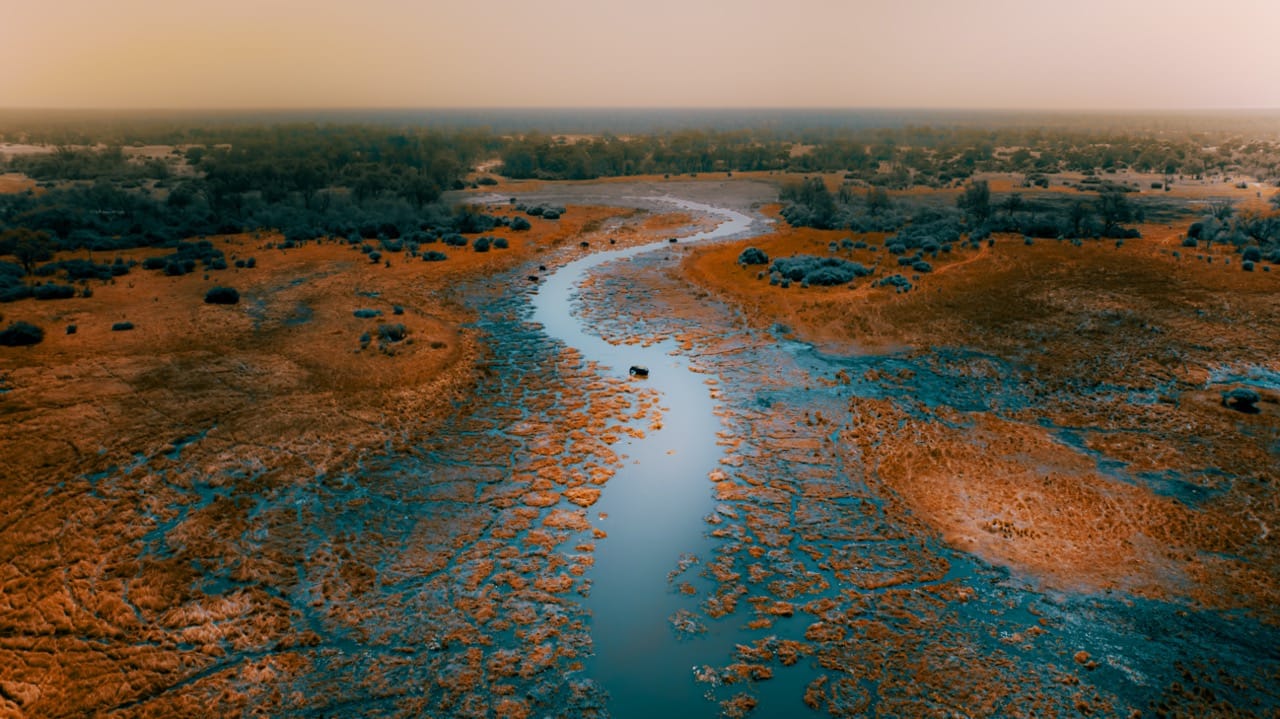
The season bands, and what the water is doing
The delta’s flood has almost nothing to do with Botswana’s rain. The water falls on the Angolan highlands and takes months to arrive: according to Expert Africa’s flood records, the peak at Mohembo where the river enters Botswana is usually between mid-March and mid-May, and most of the delta sees its highest water later still, roughly May to August. That is why the dearest months are dry, hot and the best time to be on the water.
- Green, 10 January – 31 March. Cheapest by a wide margin, often half of peak. Rain, newborn antelope, superb birding, dramatic skies.
- Shoulder, April and 1 November – 19 December. Rates step up; the flood is arriving in the north.
- Shoulder high, May and October. May is the sweet spot for value against water; October is very hot.
- High, June, September and 20 December – 9 January.
- Peak, 1 July – 31 August. High water across most of the delta, best mokoro conditions, thinnest bush, dearest beds.
Botswana park fees, if you drive yourself
Fly-in camps bundle park fees into the rate. Self-drivers pay them at the gate. Botswana’s Department of Wildlife and National Parks currently charges P270 per international visitor per day, dropping to P190 when the booking comes through a licensed tour operator, plus P75 a day for a foreign-registered vehicle under 3,500 kg. DWNP camping is P60 per person per night for non-residents, though the concession-run sites charge their own rates on top — Third Bridge is P561.
A fee increase to P500 per person, and P640 for operator bookings, was scheduled for 1 April 2026 and postponed on 31 March 2026. Botswana has been explicit that it is delayed rather than cancelled, and as of July 2026 no new date has been announced. Budget for it if you are booking a self-drive trip far ahead.
The full current schedule is published on the Moremi Game Reserve fees page.
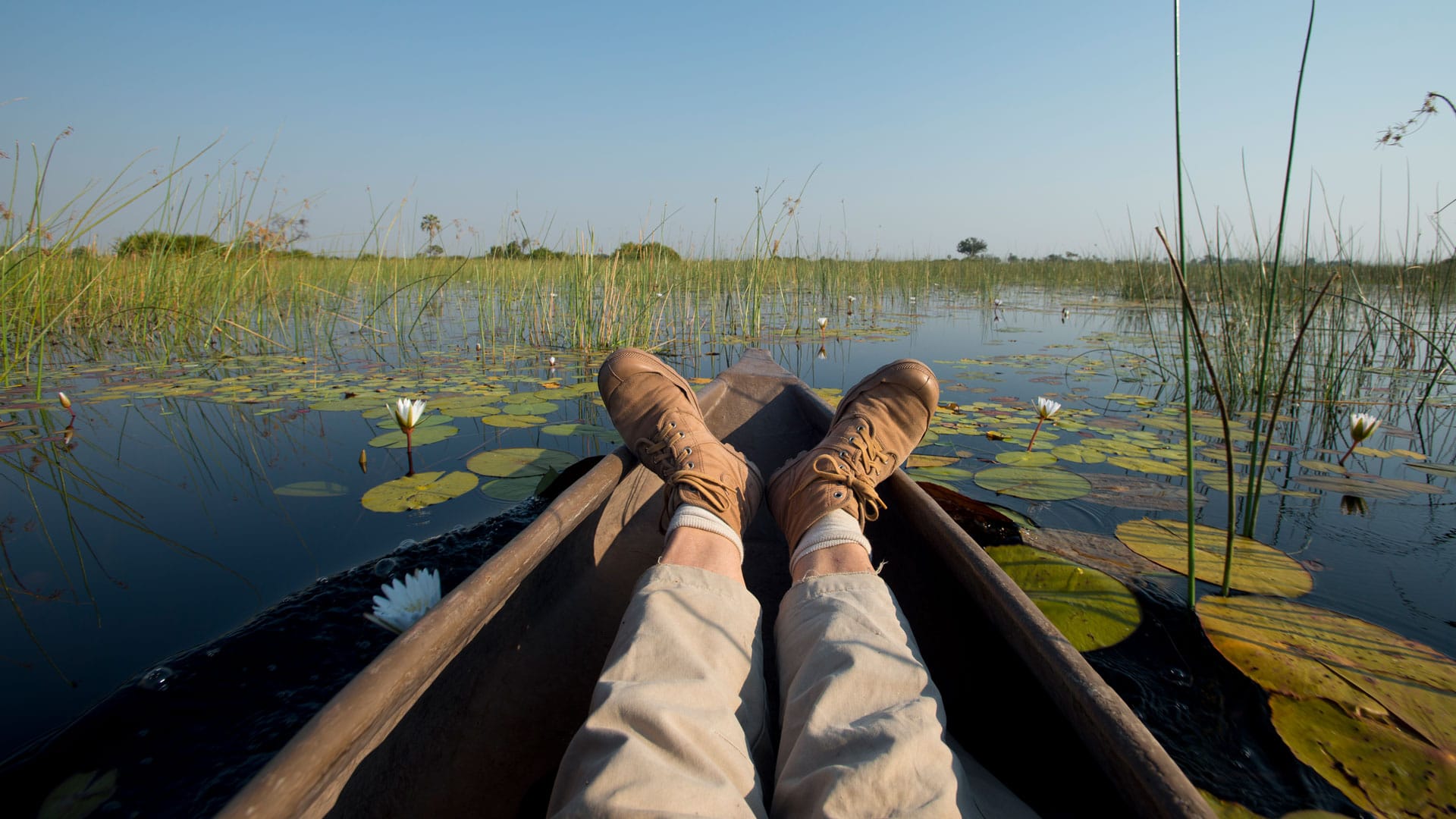
The honest comparison
Botswana chose low-volume, high-value tourism deliberately, and the pricing is the policy working as intended. There is no cheap way into the permanent delta — no budget tier, no self-drive route to the good water, no way around the aircraft. If your budget will not carry $1,000 a night, the delta is not going to bend to meet you, and we would rather say that than sell you a compromise you will resent. If it does carry it, the shape that rewards the money is a fly-in circuit of concessions rather than a single camp: our 10-day Botswana Delta Explorer Deluxe works the Linyanti concession and the Khwai community area alongside the Okavango itself.
What does exist is a genuinely different trip: self-driving and camping in Moremi, at DWNP fees rather than camp rates. It is drier, it is harder work, you sleep in your own tent and you will not see the channels the brochures show. It is also one of the great self-drive experiences in Africa. Our guide to affordable Okavango Delta accommodation covers that end, and what there is to do in Botswana covers what fills the days once you are there.
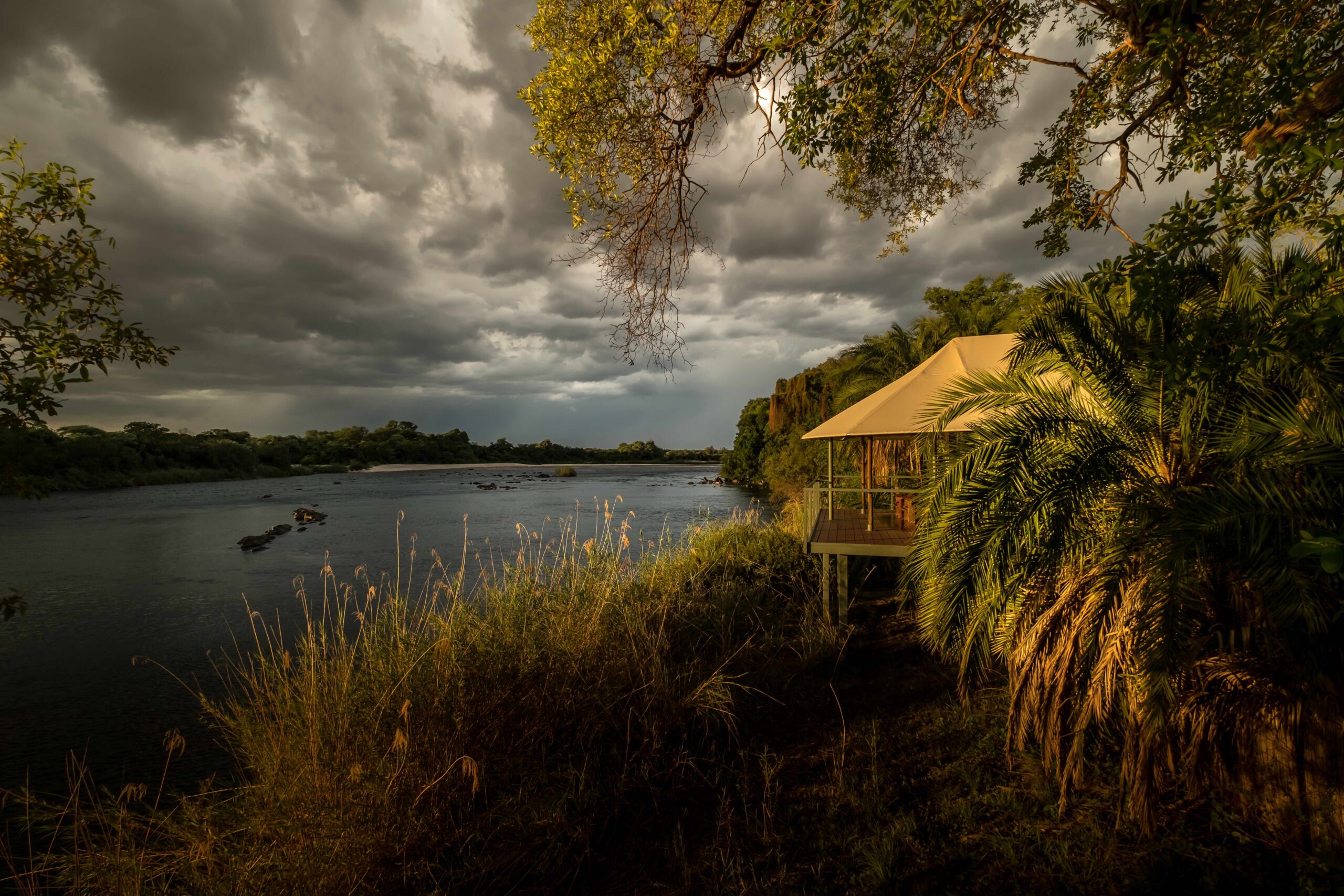
If you want the delta priced properly against your dates rather than against a rack card, we can put a Botswana itinerary together and show you what each night actually buys.
Frequently asked questions
How much does a week in the Okavango Delta cost per person?
At 2026 rack rates, seven nights runs from about USD 4,165 at an Explorer camp in green season to about USD 27,265 at a Premier camp in peak season, before the USD 60 nightly conservation levy — another USD 420 for the week — and before international flights and the charter into camp.
Is the Okavango Delta cheaper if you drive yourself?
Substantially, but it is a different trip. Self-driving Moremi costs P270 per person per day plus P75 for the vehicle and from P60 a night for a DWNP campsite, so two people can spend a night in the reserve for a fraction of one hour at a fly-in camp. You will not reach the permanent water channels, and the good campsites go early.
When is the Okavango Delta cheapest?
Green season, 10 January to 31 March. Rates run at roughly half of peak — Sable Alley at $995 against $1,995, Jack’s Camp at $2,095 against $3,895. You trade the high water and the easy game viewing for rain, green bush and much better skies.
Desert Tracks arranges self-drive and fly-in itineraries across Namibia, Botswana and East Africa. Send us your dates and we will price the delta honestly, including the seasons we think you should avoid. Tell us what you want out of the trip rather than when you can travel, and we will tell you honestly whether your dates fit — including when the answer is that they do not. Get in touch with Desert Tracks.