10 Activities to Do When Visiting Botswana
Botswana runs a deliberately high-value, low-volume tourism model, and that shows up in what things cost and how tightly they are guided. **Non-resident park entry was P380 as of February 2026**, with a rise to P500 announced and then reported postponed. Tsodilo Hills cannot be visited unguided. Khama Rhino Sanctuary publishes its rates openly. Most of the delta cannot be reached by road at all., the dry winter. Rainfall is near zero, wildlife concentrates at Etosha’s waterholes, and roads are at their best. July and August are the peak — and the coldest, near 6 °C at dawn.
Ten things worth doing, each with the fee, the rule or the season that actually governs it — and a clear note where we could not confirm something rather than a confident guess.
1. A mokoro trip in the Okavango Delta
The mokoro is the delta’s own vessel: a dugout, traditionally hollowed from ebony or sausage tree, poled standing from the stern. Most are now fibreglass, which spares the big trees. The delta was inscribed on the World Heritage List in 2014 under all three of criteria seven, nine and ten, covering 2,023,590 hectares, and UNESCO’s reason is the flood arriving in the dry season rather than with the rain.
The community structure behind delta tourism is real and named: the Okavango Community Trust, Itekeng Community Trust, Okavango Panhandle Community Trust and Mababe Zokotshama Community Trust all operate under Botswana’s community-based natural resource management programme, and DWNP issues them annual quotas. Botswana’s own management plan is candid that citizens and local communities have raised concerns about their limited participation in the industry.
How mokoro polers are recruited, licensed or paid. The trusts are documented; the poler-level income mechanism is not published anywhere we could reach, so we are not going to describe one.
2. Game drives in Chobe National Park
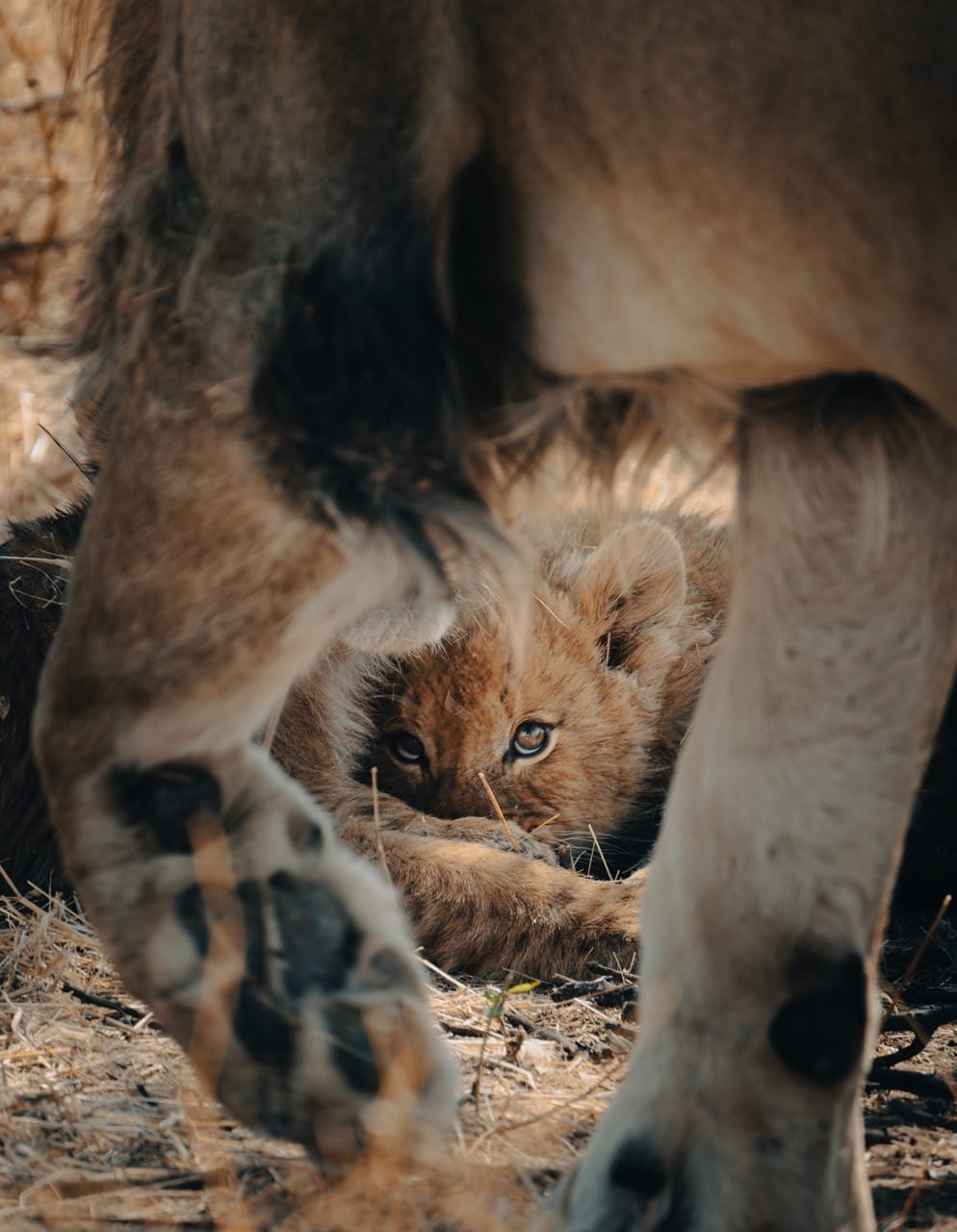
Chobe covers roughly 11,700 square kilometres and became a national park in 1968. It has four distinct characters: the Chobe riverfront at Serondela, with floodplains and dense woodland; the Savuti marsh, the relic of a large inland lake; the Linyanti marsh; and the dry grass woodland at Nogatsaa. A 4×4 is needed to travel in the park. Elephants move a seasonal route of around 200 kilometres between the Chobe and Linyanti rivers.
You will read constantly that Chobe holds the highest concentration of elephants in Africa. That phrase comes from text Botswana submitted to UNESCO for a tentative-list entry in 2010 — a State Party claim, sixteen years old, not a survey result. No aerial survey we could reach supports a density ranking, so we do not repeat it.
3. A boat cruise on the Chobe River
Kasane sits on the south bank at the north-eastern boundary of the park, near the Four Corners where Botswana, Namibia, Zambia and Zimbabwe borders almost meet. Cruising the Chobe puts you level with drinking elephant rather than above them, which is a different photograph entirely. We looked for a published cap on boat numbers on the river and could not find one; what does exist is an IUCN note that regulation and mitigation of tourism impacts, including noise and bank erosion, needs strengthening.
4. The Makgadikgadi pans
The salt pans cover about 16,000 square kilometres in the Kalahari basin, with the largest single pan at roughly 4,900 square kilometres. Sua, Ntwetwe and Nxai are the three biggest, and Sua Pan at 890 metres is Botswana’s lowest point. Zebra and wildebeest move from the Boteti River across to Ntwetwe Pan. The region holds one of only two breeding populations of greater flamingo in southern Africa.
The “longest terrestrial mammal migration in Africa” line attached to Botswana’s zebra is one we could not verify. The underlying paper was not accessible to us, and there are two distinct Botswana zebra migrations that travel writing regularly conflates. We will not print a distance or a superlative we have not read.
Kubu Island, a dry granite island in the pan, is a national monument and sacred to local people. It carries a dry stone wall up to 1.25 metres high and 344 circular stone cairns. A 4×4 is required, and the basic camping there is run for the benefit of the local population.
5. Tsodilo Hills, the Louvre of the Desert
The best-documented cultural site in the country and, for our money, the most underrated thing in Botswana. Inscribed by UNESCO in 2001 under criteria one, three and six, with over 4,500 paintings preserved across more than 400 sites in an area of only ten square kilometres. UNESCO calls it the Louvre of the Desert. The property covers 4,800 hectares with a 70,400-hectare buffer, and there is evidence of human activity spanning at least 100,000 years.
The rule that governs a visit is unambiguous: self-guiding is not allowed. Every visitor registers at the Site Museum Office and is introduced to the site and its regulations first. The Botswana National Museum manages it, and a liaison committee of tribal and Museum representatives coordinates with the roughly two hundred local residents. Local guides keep their guiding fees, and tourism income has funded water infrastructure and funeral assistance. Access is about forty kilometres from Shakawe on graded dirt. No entry fee is published anywhere we could find.
Visitor numbers grew from seven or eight thousand a year to around eighteen thousand, and the State Party recorded that fees are collected but make no contribution to the management of the World Heritage property. That is not a reason to stay away. It is a reason to buy something at the craft shop.
6. The Central Kalahari Game Reserve
At 52,800 square kilometres, established in 1961, the CKGR is one of the largest protected areas in the world and has been on Botswana’s UNESCO tentative list since 2010. Deception Valley is one of four fossilised river valleys in the reserve, which began forming around sixteen thousand years ago. It is also the least casual destination on this list: we could not source current access requirements, permit procedures or the months when game concentrates in Deception Valley, so treat it as a place to go with an operator rather than a map.
7. Khama Rhino Sanctuary
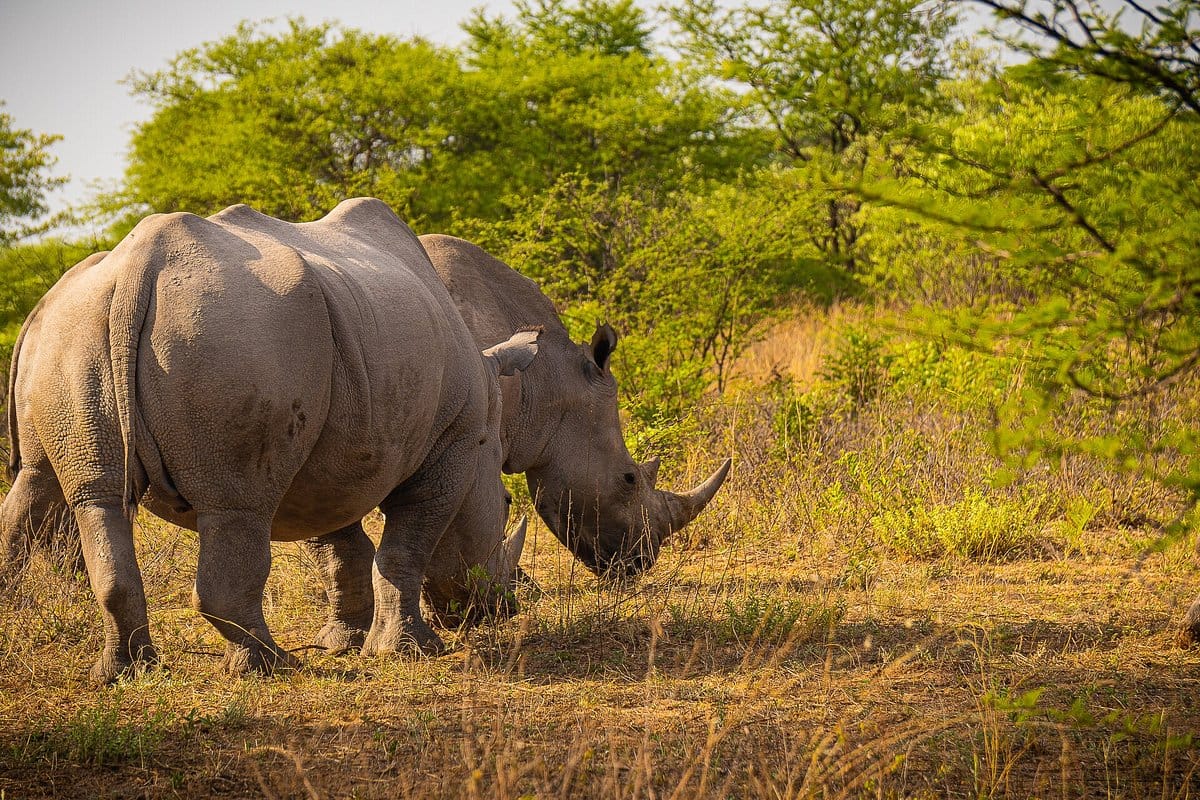
A community-based project established in 1992, covering around 8,585 hectares of Kalahari sandveld about twenty-five kilometres from Serowe. White rhino were introduced in 1992 and black rhino reintroduced in 2002. It is open daily from 07:00 to 19:00, with out-of-hours access by prior arrangement, and rhino tracking runs in the mornings only.
The sanctuary publishes these rates without a validity window. We checked them on 1 September 2026. Verify before you travel.
8. A walking safari
This is where Botswana’s regulation is genuinely reassuring. Every professional guide must hold a licence issued by the Department of Wildlife and National Parks under the Wildlife Conservation and National Parks Act of 1992, valid for one year and renewed annually. Applicants sit both theory and practical examinations, and processing takes 48 working days. Non-citizen applicants must be twenty-one or over and already hold a professional guide licence elsewhere.
So when you walk in Botswana, the person in front of you has been examined and licensed by the state, not just employed by a lodge. Which concessions permit walking and horseback safaris, and which operators hold them, is not published centrally — that part you ask an operator. Private reserves are where the question usually lands: our 10-day Vic Falls, Caprivi and Delta safari runs Victoria Falls into the Selinda Reserve and Duba Plains, both private concessions rather than national park.
9. A scenic flight over the delta
Not an indulgence so much as the only way to comprehend the shape of the place. UNESCO and IUCN both record that there are no permanent roads into the inner delta and that everything has to be flown in to small temporary tented camps — at nomination in 2014 the whole inscribed property held just 2,129 beds across 16,500 square kilometres. Maun International is described by Botswana as the busiest port in the country, which tells you how much of the delta arrives by air. We could find no published minimum-altitude rule for flights over the delta and will not invent one.
10. Cultural visits, done carefully
Basarwa is the official collective term used in Botswana; San entered wider use through anthropology in the 1970s. In 2003 representatives stated a preference for their individual nation names — ǃKung, Khwe, Haiǁom — rather than any collective label, which is worth knowing before you book anything marketed generically.
The model we would point to is Tsodilo, because it is documented rather than asserted: the hills are sacred to both ǃKung and Hambukushu communities who maintain traditional practices there, guides are drawn from those communities and keep their fees, and a liaison committee sits between the residents and the National Museum. We looked for a national accreditation framework specific to cultural tourism and found none — the Botswana Tourism Organisation grades tourist facilities generally, but nothing we could reach covers cultural experiences specifically. Ask who owns the operation and where the money goes.
Before you go: the practicalities
Botswana operates a tourism visa and a visitor’s visa, applied for online at the government e-visa portal or in person, with processing quoted at seven to fourteen days and a requirement of at least six months of passport validity. Many nationalities, including British, are admitted visa-free. Neither government visa page publishes a fee, so do not budget from a third-party figure.
The USD 30 Tourism Development Levy is genuinely unclear. The original notice, effective 1 June 2017, applied it to all visitors except residents and SADC nationals, payable at every port of entry and valid thirty days for multiple entries. One dated 2026 source states it was cancelled eight months after introduction. We could not reach the tourism authority to settle it. Carry the thirty dollars and hope not to need them.
On health, NaTHNaC records high malaria risk from October to May across the northern half of Botswana including the Okavango Delta, low risk in the remaining months, and very low risk year-round in the south, on a risk map dated June 2026. Take medical advice on prophylaxis rather than ours.
If you are combining Botswana with Namibia, the practical route and its border requirements are covered in our guide to pairing the Namib desert with the delta, and the Namibian half of that journey in off the beaten track in Namibia. If Botswana is the whole trip, the 11-day Botswana safari experience covers most of this list at a sensible pace.
Frequently asked questions
Do I need a guide at Tsodilo Hills?
Yes. Botswana’s own reporting to UNESCO states that visitors are not allowed to self-guide: all visitors register at the Site Museum Office and are introduced to the site and its regulations first. The local guides keep their guiding fees.
What does Khama Rhino Sanctuary cost?
As published on the sanctuary’s own website, a non-resident adult pays P117.20 to enter, a child aged six to twelve P58.60, and a vehicle under five tonnes P144.20. Game activities carry a separate minimum fee of P1,017.10 for non-residents. The sanctuary opens daily from 07:00 to 19:00.
What are Botswana’s national park entry fees?
The government stated in February 2026 that non-resident park entry was P380 and proposed raising it to P500 from 1 April 2026. Trade press reported the increase postponed on 31 March 2026, but we found no ministry statement confirming that. Confirm before you budget.
Is northern Botswana a malaria area?
Yes. The UK health authority NaTHNaC records high malaria risk from October to May in the northern half of Botswana including the Okavango Delta, dropping to low risk in the other months, with the southern half very low risk year-round. Get medical advice before travelling.
Is the Botswana zebra migration the longest in Africa?
We could not verify that claim, so we do not make it. The underlying study was not accessible to us, and there are two different Botswana zebra migrations that travel writing routinely confuses. What is sourced is a zebra and wildebeest movement between the Boteti River and Ntwetwe Pan.
We run Botswana as well as Namibia, so ask us which of these ten actually fit your dates. Several of them are seasonal and two of them are a long way from everything else. Tell us what you want out of the trip rather than when you can travel, and we will tell you honestly whether your dates fit — including when the answer is that they do not. Get in touch with Desert Tracks.