Whale Watching in Namibia: What You Will Actually See
Whale watching in Namibia mostly means dolphins and seals. Humpbacks pass seasonally with a July peak, but southern right whales have not returned to Walvis Bay. The resident Heaviside’s and bottlenose dolphins are the reliable sighting., the dry winter. Rainfall is near zero, wildlife concentrates at Etosha’s waterholes, and roads are at their best. July and August are the peak — and the coldest, near 6 °C at dawn.
Namibia sells a lot of boat trips out of Walvis Bay, and they are genuinely worth doing. But the word “whale” does a lot of work in the marketing, and it is worth knowing before you book what the ocean here actually holds and what it does not.
What a Walvis Bay boat trip really shows you
Two species are resident and near-certain. Heaviside’s dolphin, a small blunt-nosed dolphin endemic to the Benguela ecosystem, ranges from Cape Point in South Africa north to about 16°30′S in Angola — so it is a Benguela endemic rather than a Namibian one, though this is one of the best places on earth to see it. Alongside it is a very small resident population of common bottlenose dolphins, fewer than 100 animals, which use the shallow lagoon to forage.
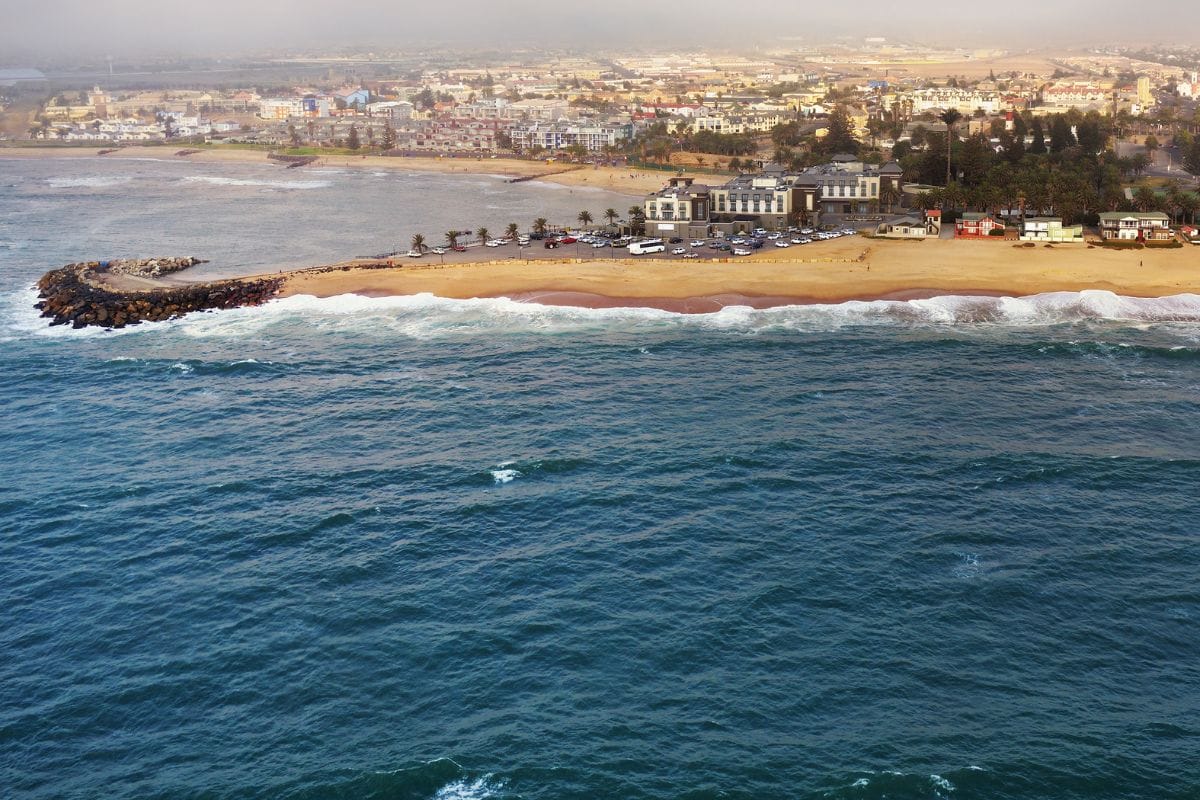
Add Cape fur seals and pelicans, both abundant at Pelican Point, and that is the reliable core of the trip. It is a good three hours on the water. It is not a whale-watching trip in the sense that phrase usually implies.
The whales that pass, and the one that is missing
Humpback whales do come by. A study covering 2005 to 2012 at the Walvis Bay latitude found a bimodal pattern, with a primary peak in July and a secondary peak in September — animals intercepting the coast on migration rather than breeding or feeding here. Recent counts bear that out: 526 sightings between August and November 2024, and 466 over the same window in 2025.
Southern right whales are the absence. These are the animals that make Hermanus famous, and across southern Africa the species has been recovering for decades. But the most recent Namibia-specific reporting states plainly that they have not yet returned to Walvis Bay. Any page promising you southern rights off Namibia is selling something that is not currently there.
Why the honest version is the useful one
Hermanus rests on a coastal breeding population monitored since 1969, with a 46-year dataset and annual cow-calf counts in the hundreds. Namibia has no comparable dataset and no comparable breeding presence. Setting the two side by side is not flattering, but it is the comparison a traveller is actually trying to make, and pretending otherwise just produces a disappointed guest on a cold boat.
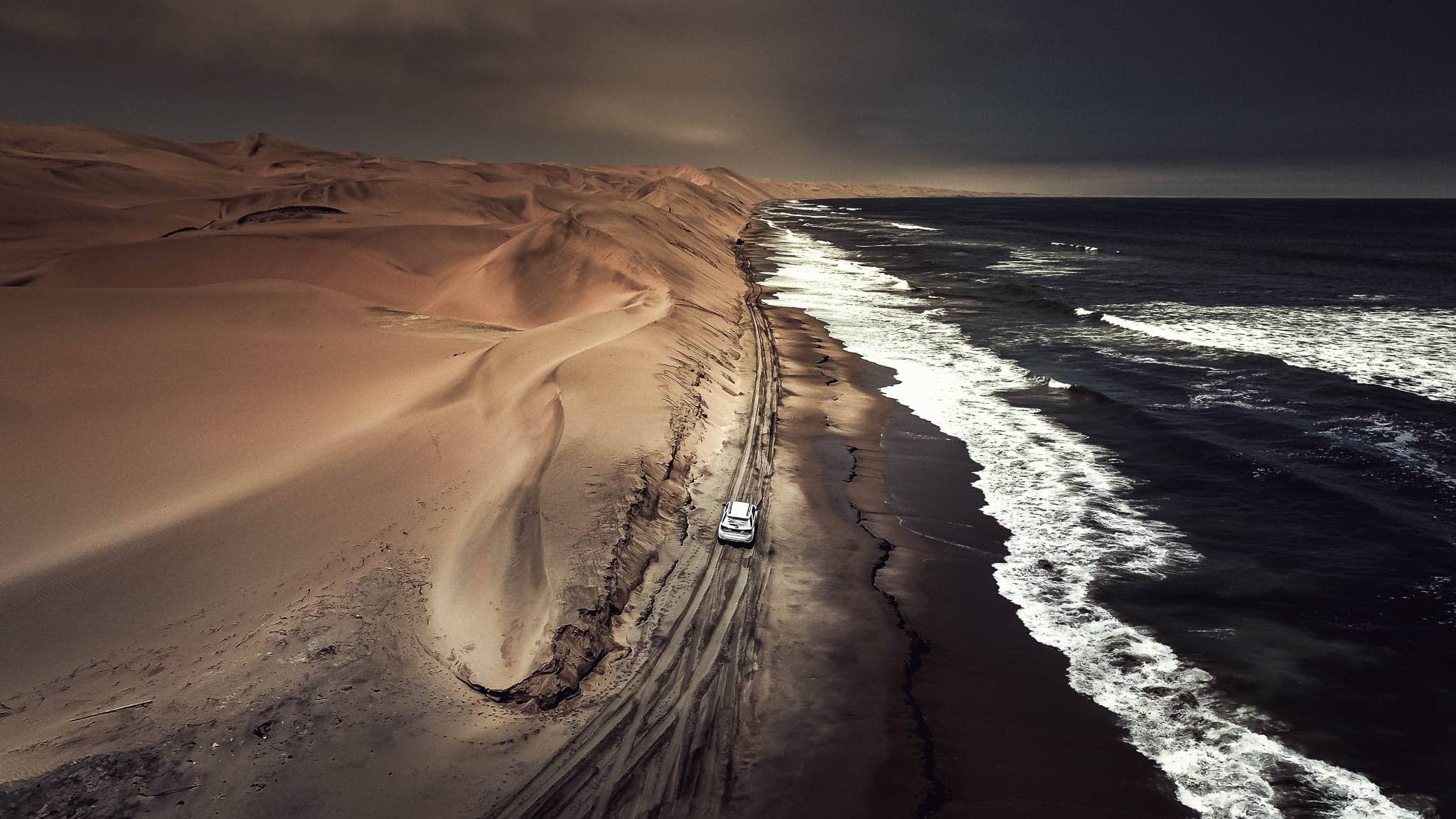
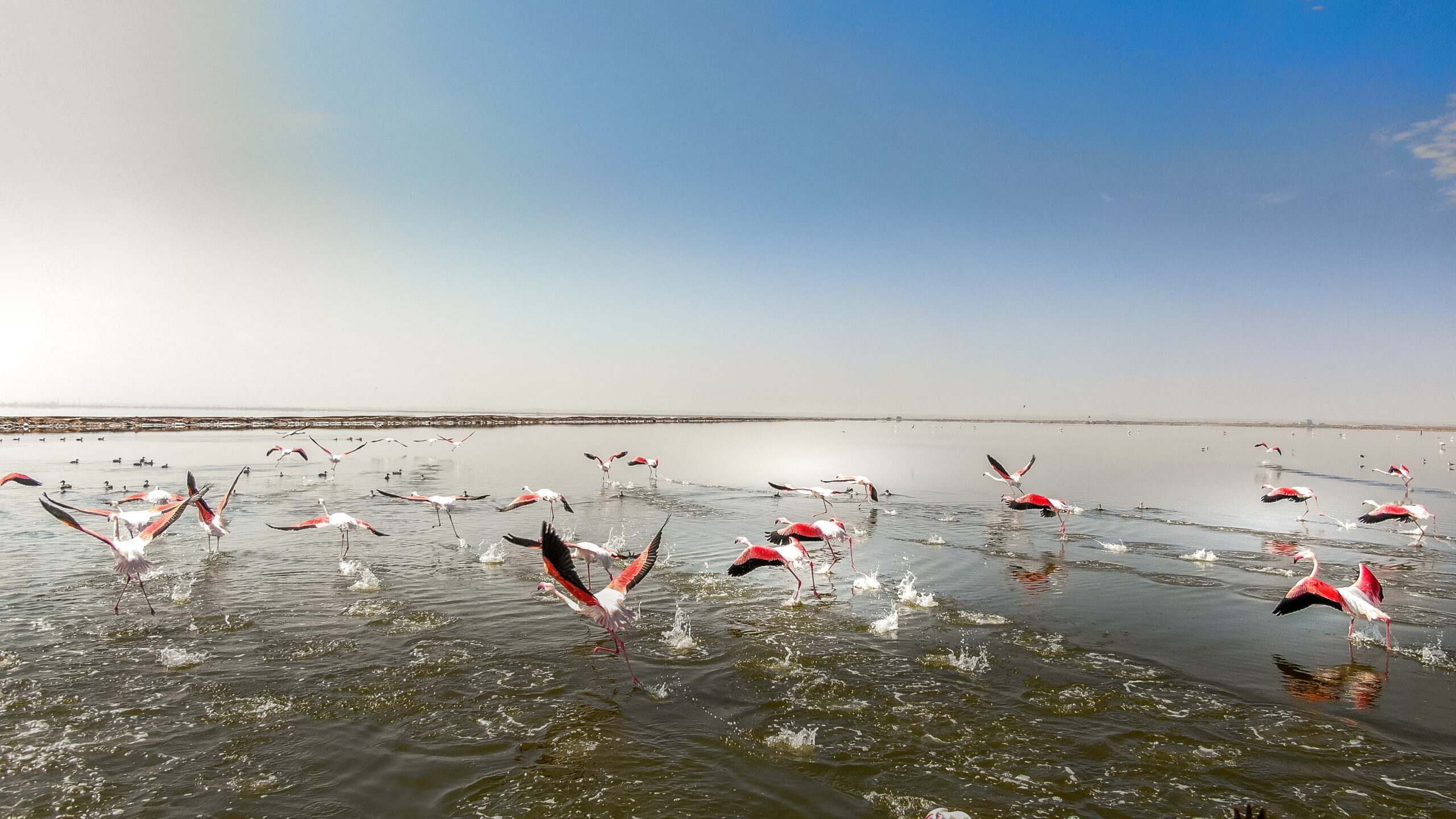
The flip side is that Namibia gives you something Hermanus cannot: a Benguela-endemic dolphin, a seal colony on a desert spit, a Ramsar lagoon full of flamingos, and dunes behind all of it. Booked as that, the trip is excellent. Booked as a whale safari, it is not.
Practicalities and one gap worth knowing
The Benguela Current keeps the water cold and the coast foggy; mornings are often grey and clear later. Wind picks up through the year with July typically the windiest month. Trips run about three to three and a half hours from the Walvis Bay waterfront.
No Namibia-specific minimum approach distance or whale-watching permit regime could be found in Namibian law — unlike South Africa, which regulates this explicitly. The general prohibition on disturbing wildlife in Dorob National Park applies, but responsible boat behaviour here is industry convention rather than statute. Worth asking your operator what their own policy is.
Most people fit the coast into a wider loop. A seventeen-day classic route gives Walvis Bay a day alongside Sossusvlei, Damaraland and Etosha, which is about right. It pairs naturally with what else the coast offers — see what the Namibian coast is really like before you decide how many nights to give it. German-speaking readers will find the same ground covered in unserem deutschsprachigen Beitrag zur Walbeobachtung.
Take the boat trip anyway, but book it for the dolphins, the seals and the lagoon. Treat a humpback in July as the bonus it is.
Frequently asked questions
Can you see whales in Namibia?
Humpback whales pass the Namibian coast seasonally and are sighted from boats, with a primary peak in July and a secondary peak in September. They are not guaranteed. The species Namibia does reliably deliver are dolphins and Cape fur seals, which are resident year-round.
Are there southern right whales in Walvis Bay?
Not currently. As of the most recent Namibia-specific reporting, southern right whales have not returned to Walvis Bay despite the species recovering elsewhere in southern Africa.
What dolphins live in Namibia?
Heaviside’s dolphin, endemic to the Benguela ecosystem from the Cape north into southern Angola, and a small resident population of common bottlenose dolphins numbering fewer than 100 individuals that forage in the Walvis Bay lagoon.
When is the best time for whale watching in Namibia?
July for the main humpback peak and September for the secondary one. Recorded humpback sightings ran to 526 between August and November 2024 and 466 over the same months in 2025.
Is Namibia as good as Hermanus for whale watching?
No, and it is worth being clear about that. Hermanus is built on a coastal breeding population of southern right whales monitored continuously for decades. Namibia offers boat-based, seasonal, non-guaranteed humpback sightings and excellent resident dolphins.
Are there rules on how close boats can approach?
No Namibia-specific approach distance or whale-watching permit regime could be found in Namibian law. The general park rule against disturbing wildlife applies. Any responsible-distance practice is industry convention rather than regulation.
Desert Tracks plans Namibian journeys that include the coast without overselling it. Tell us what you most want to see and we will say honestly what the odds are. Tell us what you want out of the trip rather than when you can travel, and we will tell you honestly whether your dates fit — including when the answer is that they do not. Get in touch with Desert Tracks.