January is Namibia's hottest and wettest month. Expect 30–38°C inland, 20–25°C on the coast, and 40–50 mm of rain falling as short afternoon thunderstorms. Landscapes turn green, animals calve, and visitor numbers are at their lowest.
January in Namibia is midsummer and falls in the rainy season, bringing warm temperatures, dramatic skies and occasional afternoon thunderstorms. While Namibia is famous for its dry desert landscapes, January reveals a very different side of the country: greener vegetation, active wildlife and powerful summer storms.
It is also the month most misunderstood by first-time visitors. The heat is real, and so is the rain — but neither behaves the way people expect, and the trade-offs are more favourable than the averages suggest. Below is what actually happens on the ground, region by region.
Temperature in January
January is typically one of the hottest months of the year in Namibia. Daytime temperatures often range between 30°C and 38°C, especially inland and in the desert. During heatwaves the Namib and Kalahari can exceed 40°C. At night the air cools to roughly 14°C to 21°C, which makes evenings comfortable in a way that midday is not.
Because Namibia has such varied landscapes and altitude differences, temperatures feel cooler in places like Windhoek, which sits about 1,700 metres above sea level. The same January afternoon can be 38°C at Sossusvlei and 21°C in Swakopmund, three hours apart. Pack for both.

Rainfall and Thunderstorms
January sits in the middle of Namibia's proper summer rainfall season, which generally runs from November to April. Rain falls in short but intense afternoon thunderstorms rather than all-day drizzle. Mornings are usually sunny and clear; cloud builds through the afternoon; the storm arrives, and an hour later it is over. Average rainfall is roughly 40–50 mm in central Namibia during January.
Those rains bring a transformation that is hard to overstate. Dry savanna turns green in a fortnight, waterholes refill, migratory birds arrive, and the desert takes on colour it does not have for the other eight months of the year. Long-run rainfall and temperature series for Namibia are published on the World Bank Climate Change Knowledge Portal.
The rain matters more for the roads than for your comfort. Gravel D-roads soften, river crossings fill, and some Etosha loops close outright after heavy falls. It is the one month where the vehicle question genuinely changes — we cover it in detail in our guides to what Namibian roads are actually like and whether you need a 4x4.
Regional Weather Differences
Namibia is larger than France and Germany combined, and in January the difference between its corners is the whole story.
Coastal Areas (Swakopmund, Walvis Bay)
The Atlantic and the cold Benguela Current keep the coast far cooler than inland areas — usually 20–25°C, often with morning fog rolling in off the ocean and burning back by late morning. Humidity on the coast runs around 80%, against roughly 32% inland, which is why the same temperature feels completely different in the two places. Swakopmund in January is the country's escape valve, and Namibians treat it as such: it is the one month the town is genuinely busy.
Inland Highlands (Windhoek region)
Central Namibia has warm days and cooler nights thanks to altitude. Afternoon thunderstorms are most common here in summer, and they arrive with real theatre — anvil clouds from mid-afternoon, an hour of hard rain, then a clear, washed evening. Windhoek averages around 9.9 hours of sunshine a day across the year; even in January the mornings are reliably bright.
Northern Namibia and Etosha
The north receives the most rainfall and becomes lush and green through January. Wildlife disperses across the landscape as water becomes widely available, which is the single biggest difference between green-season and dry-season game viewing. The park camps are run by Namibia Wildlife Resorts and are noticeably easier to book at this time of year than in July.
Desert Regions (Namib and Kalahari)
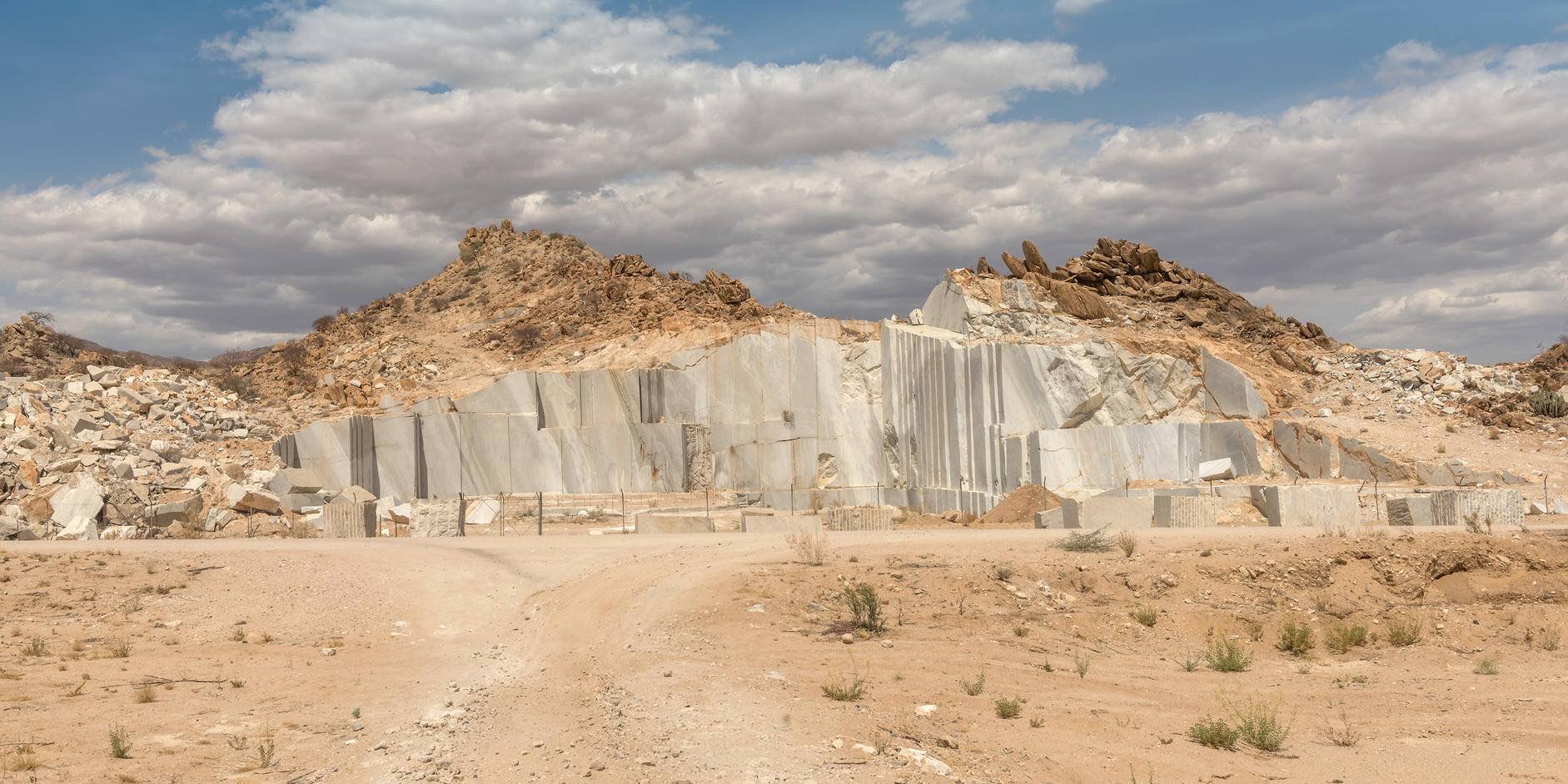
Desert areas stay hot and mostly dry, though occasional summer storms do reach them, and when they do the effect is extraordinary — grass across the Kalahari within days. Daytime temperatures can exceed 38–40°C. Sossusvlei in January is a dawn activity and nothing else: be at the gate at sunrise, be back at the lodge by eleven.
Wildlife and Safari Conditions
January is the green season for safaris. Wildlife viewing around waterholes is genuinely harder, because water is everywhere and animals no longer have to come to you. What you gain instead is a landscape that photographs beautifully and a park that is close to empty.
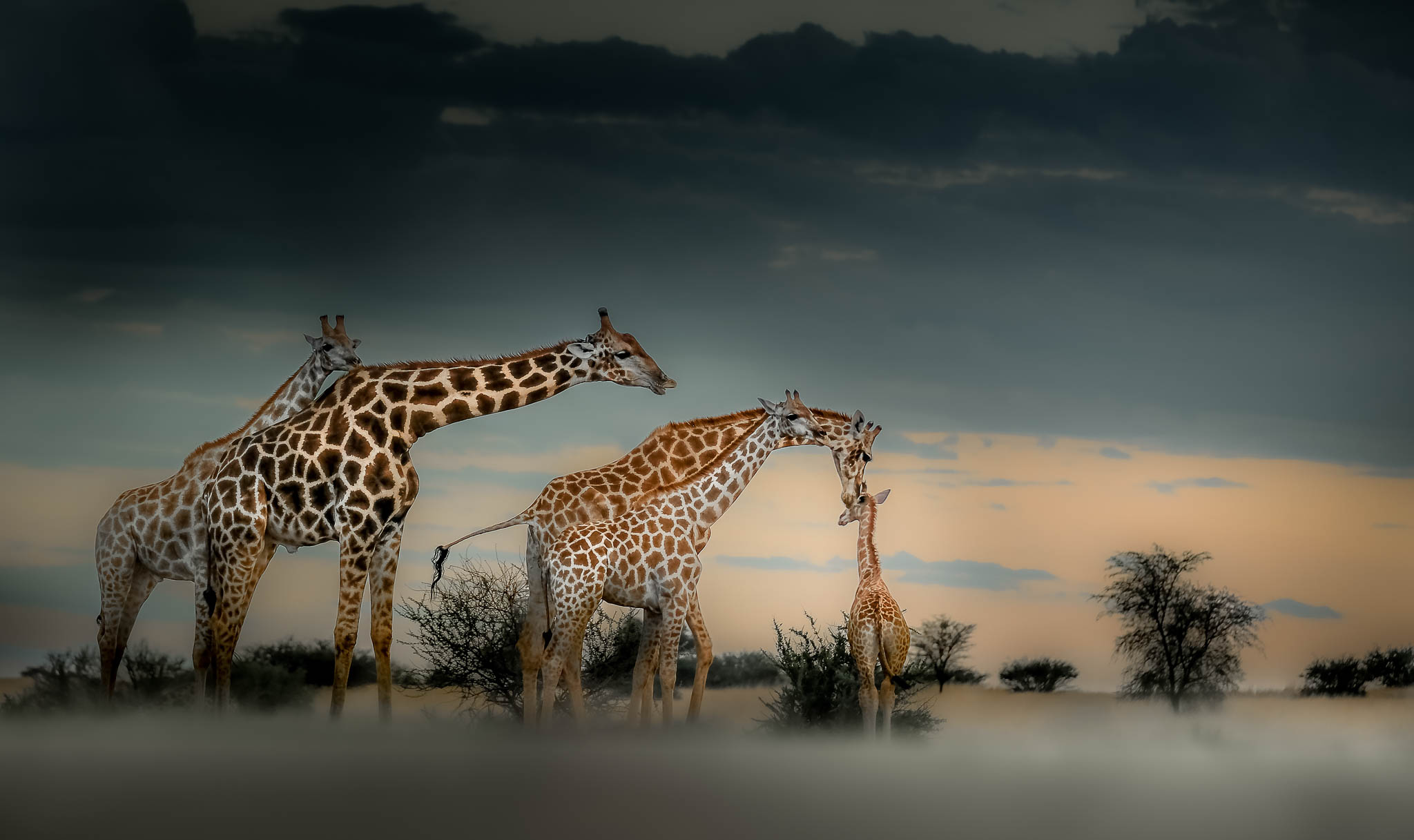
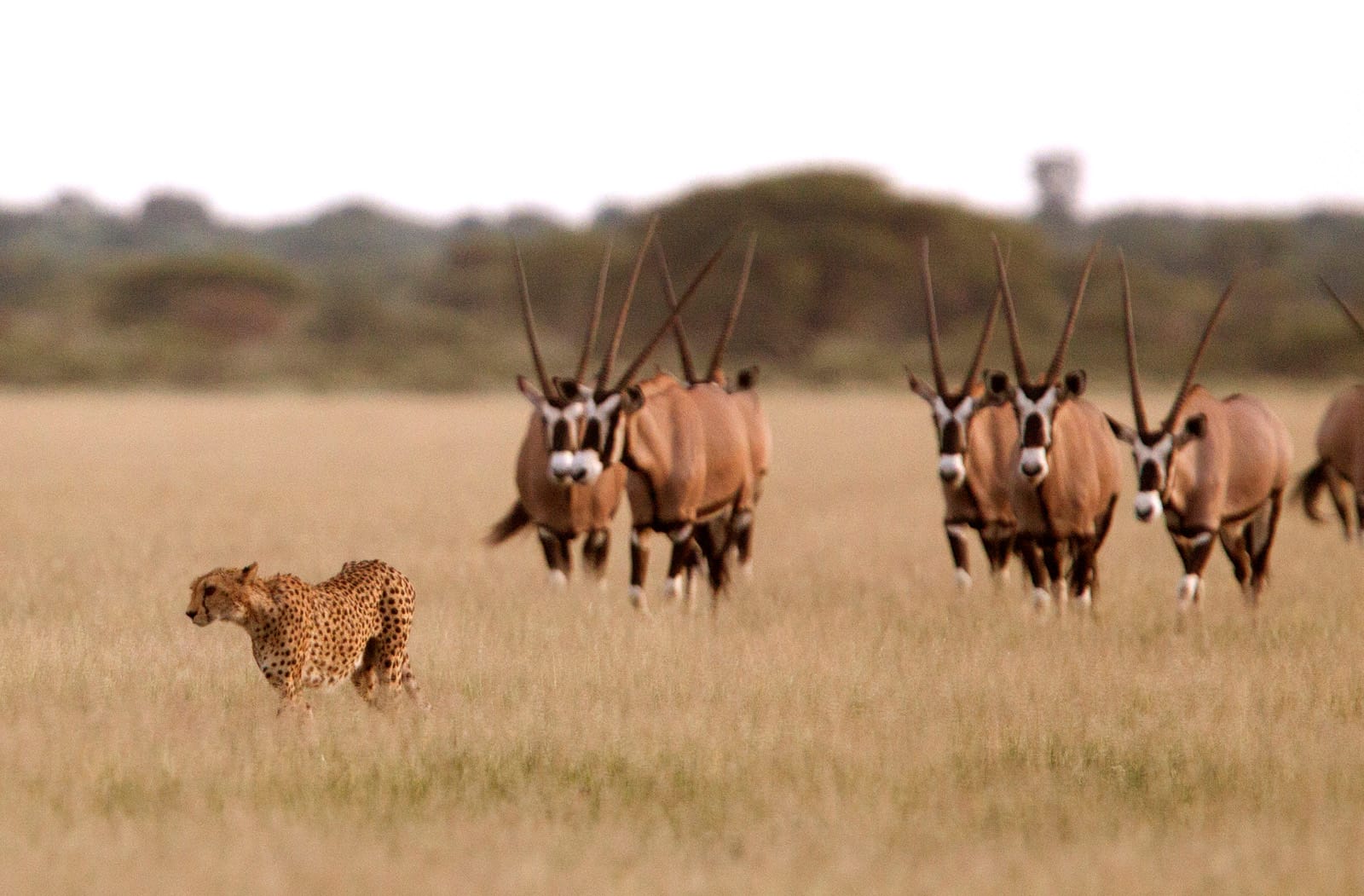
- Newborn animals. Springbok, wildebeest and zebra calve with the rains, so January and February are the months to see very young animals — and the predators that follow them.
- Migratory birds. Over a hundred migrant species arrive for the summer. Etosha's pans can hold flamingo in numbers after good rain.
- Dramatic light. Storm cloud behind red dune is the shot people come to Namibia for, and it only exists in these months.
- Dispersed game. The honest trade-off: expect to work harder for big cats, and expect fewer animals per waterhole.
Advantages of Visiting Namibia in January
Despite the heat, January offers several things no other month does.
- Green landscapes. The country is unrecognisable from its dry-season photographs.
- Fewer tourists. This is the emptiest part of the year on the classic circuit.
- Lower rates. Many lodges price January as low season, and availability at short notice is realistic.
- Dramatic skies. Sunsets and storm light through the whole month.
- Excellent birdwatching. The best of the year, by a distance.
Things to Pack
Pack for heat and rain in the same bag, and for a cool coast in the middle of both.
- Lightweight, breathable, long-sleeved clothing — cooler than bare arms in dry heat
- Sun protection: wide-brimmed hat, high-SPF sunscreen, sunglasses, SPF lip balm
- A light rain jacket, not a heavy one
- A fleece or jumper for Swakopmund, which will be twenty degrees cooler than where you came from
- Good walking shoes, and something that copes with mud
- Rehydration sachets and a refillable bottle — two to three litres a day in this heat
In summary
January in Namibia is hot, vibrant and full of life. Temperatures are high and thunderstorms are frequent, but the country transforms into a greener, more dramatic version of its desert self, the crowds are gone and the prices are lower. For travellers who want striking landscapes, spectacular skies and space to themselves — and who are willing to start early and rest at midday — it is a surprisingly rewarding time to visit.
If you are weighing January against another month, our Namibia weather by month guide sets every month side by side, and our 14-day Namibia self-drive safari is the itinerary that handles green-season conditions best.
January is one of twelve. Every other month is covered in the same detail in our Namibia weather by month — temperatures, rainfall, what the wildlife is doing and what it costs.
Frequently asked questions
Is January a good time to visit Namibia?
Yes, with trade-offs. You get green landscapes, newborn animals, excellent birding, far fewer tourists and lower rates. You accept 30–38°C inland, afternoon thunderstorms and harder waterhole game viewing.
How hot does Namibia get in January?
Inland and desert areas typically reach 30–38°C and can exceed 40°C in a heatwave. Nights fall to 14–21°C. The coast at Swakopmund stays at 20–25°C.
How much does it rain in Namibia in January?
Roughly 40–50 mm in central Namibia, 70–100 mm around Etosha and 100–150 mm in the Zambezi. Almost none on the coast. It falls as short afternoon storms, not all-day rain.
Can you still go on safari in Namibia in January?
Yes. Parks stay open and roads on the classic circuit remain passable. Animals disperse because water is widely available, so plan for more driving between sightings and more time at the few permanent waterholes.
Is Etosha worth visiting in January?
Yes, if you want green scenery, calving herds and birds. No, if your priority is dense waterhole game viewing — that is a June-to-October experience.
Last verified August 2026. Temperature and rainfall figures are seasonal norms rather than forecasts; conditions in any given January vary. Long-run climate data is published by the World Bank Climate Change Knowledge Portal.
Tell us your dates and we will tell you what the weather usually does on your route, and which lodges are worth booking early.