Best Time to Visit Chobe National Park
Chobe’s dry season runs April to October and is the best game viewing, as animals concentrate on the river. The green season, November to March, suits birders. Savuti is rated good year-round, unlike the riverfront., the dry winter. Rainfall is near zero, wildlife concentrates at Etosha’s waterholes, and roads are at their best. July and August are the peak — and the coldest, near 6 °C at dawn.
Chobe is the easiest big-game park in southern Africa to reach and one of the harder ones to time well, because it is really four parks with different seasons. It also carries one of the most repeated claims in African tourism, and that claim does not survive contact with the survey data.
Four regions, not one park
Chobe Game Reserve was created in 1960 and declared a national park in 1968. It covers roughly 11,700 square kilometres and splits into four distinct areas: the Serondela or Chobe riverfront in the north-east, the Savuti Marsh in the west, the Linyanti Marsh in the north-west, and the Nogatsaa or Ngwezumba grassland in between. They behave differently enough that “when to visit Chobe” has more than one answer.
The riverfront is the seasonal one — it peaks hard in the dry months when water elsewhere disappears. Savuti is rated excellent all year. That single distinction is worth more to trip planning than any month-by-month table.
The elephant claim, and the actual numbers
You will read everywhere that Chobe holds the highest concentration of elephants in Africa. No survey, study or organisation could be found actually making or supporting that claim — it is unattributed tourism copy that acquired weight through repetition.
The survey data tells a different story. Elephants Without Borders’ aerial survey programme records Chobe National Park at 26,609 elephants in 2010, 17,634 in 2014 and 15,404 in 2018, describing the long-term trend within the park as downward. Across northern Botswana as a whole the picture is flatter — 128,340 in 2010, 129,939 in 2014, 126,114 in 2018, statistically unchanged since 2014 — so elephants appear to have redistributed rather than simply vanished. Botswana nationally counted somewhere between 130,000 and 132,000 in the 2022 KAZA survey, with different outlets reporting the same underlying data slightly differently.
One number to be careful with: a Botswana government magazine article refers to Chobe’s elephant population as approximately 120,000. That figure almost certainly describes the wider northern-Botswana range rather than the park, where the most recent aerial count is 15,404 from 2018. The two get conflated constantly. If a source gives you a six-figure elephant number for Chobe National Park itself, it is describing something else.

The channel that comes and goes
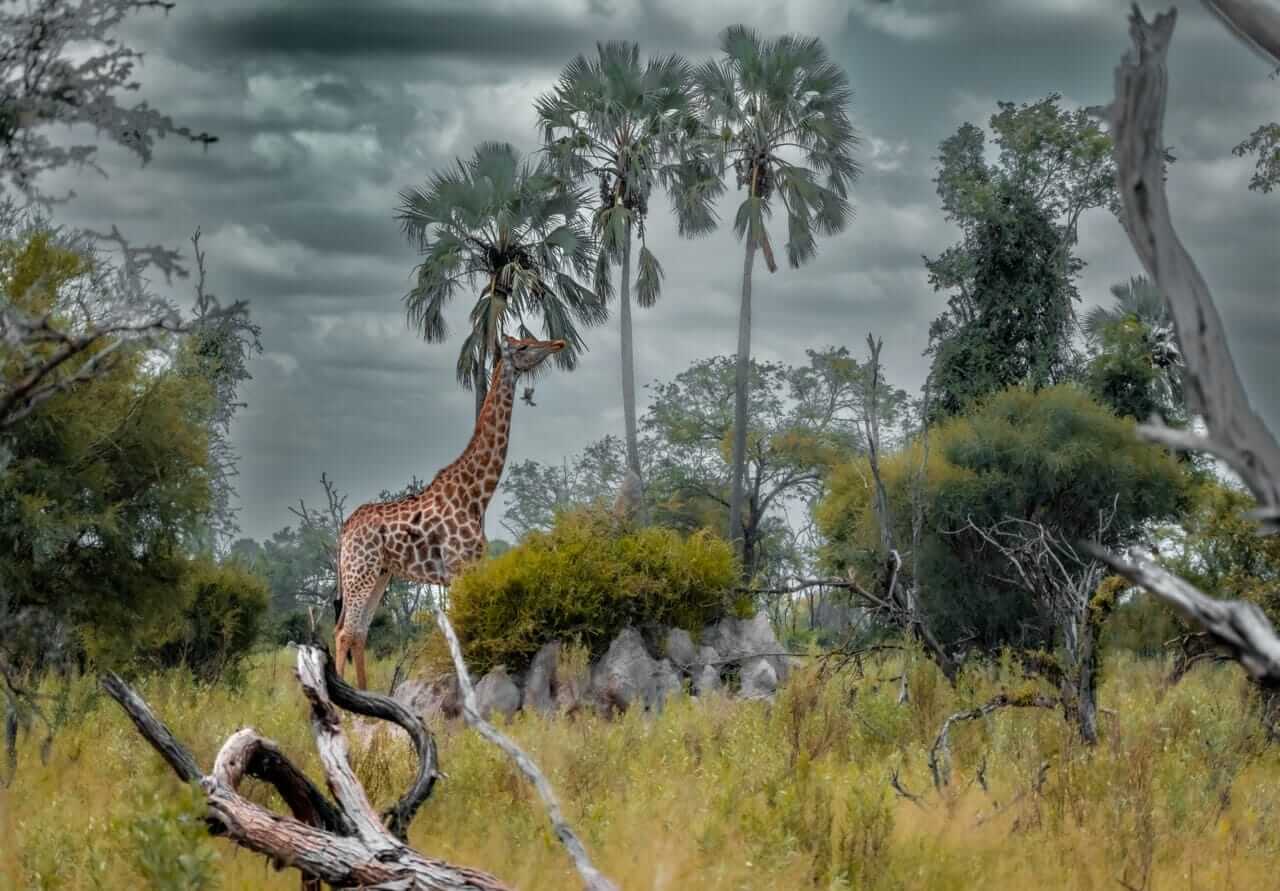
Savuti is fed by a channel that has switched on and off for more than 150 years, and nobody controls it. It was dry in the late 1880s, flowing by 1957, dry again from the early 1980s for roughly thirty years, flowing from 2008, strong between 2013 and 2015, then drying from 2016 with only minimal flow by 2023. Water was reported returning in June 2026. The explanation offered is tectonic — the channel drops only 18 metres over 100 kilometres, so small shifts linked to the East African Rift can reverse it.
For a visitor the practical point is that Savuti in a flowing year and Savuti in a dry year are different destinations, and you should check the current state rather than trust a guidebook photograph.
Crowding, fees and getting there
Chobe’s riverfront congestion is real and officially acknowledged. Botswana’s own government magazine describes the problem across the 17-kilometre stretch from Sedudu Gate to the Serondela picnic site, and the Department of Wildlife and National Parks response: three colour-coded one-way routes, each capped at 25 vehicles — 75 in total per session — with each tour company limited to two vehicles per route, plus a code of conduct. An earlier version of the system, introduced in 2012, was flouted by operators who kept concentrating on the riverfront anyway.
Do not budget from a number you read in early 2026. Botswana proposed raising non-resident park entry from P380 to P500 with effect from 1 April 2026, then postponed the increase on 31 March, citing inadequate consultation and opening a wider review. The older fees stand for now and no new date has been announced — confirm at the time of booking.
Access is straightforward, which is much of Chobe’s appeal. Kasane International Airport is the gateway, Sedudu Gate sits six kilometres west of Kasane, and Victoria Falls is around 80 kilometres away — close enough for a day trip. Coming from Namibia, the Ngoma Bridge border post is 56 kilometres from Kasane and open 07:00 to 18:00 daily, which makes Chobe a natural extension of a Zambezi region trip. Malaria risk is high from October to May and low from June to September.
If you are combining countries, our guide to what to do in Botswana covers the wider circuit, and Okavango Delta lodge prices gives a sense of what the Delta leg adds. An eleven-day Botswana route has the length to take in Chobe, Savuti and the Delta rather than treating Chobe as a stopover between Namibia and the Falls. At the other end of the scale, our 5-day Victoria Falls and Chobe getaway does only those two, which is the honest answer when the dates will not stretch further.
Frequently asked questions
When is the best time to visit Chobe?
The dry season, April to October, when water is scarce inland and game concentrates on the Chobe River. Viewing improves as the season progresses, though September and October are extremely hot and busy. The green season, November to March, is better for birding and newborn animals.
Does Chobe really have the highest concentration of elephants in Africa?
That line appears across tourism material but no survey or organisation could be found actually making or supporting it. Aerial survey data shows Chobe National Park’s own elephant numbers falling — 26,609 in 2010, 17,634 in 2014 and 15,404 in 2018.
What are Chobe’s park fees in 2026?
Unresolved. Botswana proposed raising non-resident entry from P380 to P500 from 1 April 2026, then postponed it on 31 March citing inadequate consultation. The old fees remain in force pending a review with no announced new date.
When does the Savuti channel have water?
Unpredictably. The channel has run through boom-and-bust cycles for over 150 years — dry in the late 1880s, flowing in 1957, dry from the early 1980s for about thirty years, flowing again in 2008, strong from 2013 to 2015, drying from 2016. Water was reported returning in June 2026.
Is Chobe a malaria area?
Yes. Northern Botswana, including Chobe, is classed as high malaria risk from October to May, with prophylaxis recommended. Risk drops to low from June to September, when bite avoidance is considered sufficient.
How crowded does Chobe get?
Crowded enough that the government acted. The 17km riverfront strip from Sedudu Gate to Serondela is managed with three colour-coded one-way routes, each capped at 25 vehicles, and a limit of two vehicles per tour company per route.
Desert Tracks builds routes that cross from the Zambezi into Chobe without wasting a day at the border. Tell us your dates and we will work out the season. Tell us what you want out of the trip rather than when you can travel, and we will tell you honestly whether your dates fit — including when the answer is that they do not. Get in touch with Desert Tracks.