Baby Elephant Facts – And What Makes Namibia’s Desert Calves Different
An African elephant calf weighs 90 to 120 kg at birth, stands 80 to 90 cm tall, and is on its feet within about 15 minutes. Gestation is roughly 22 months. Namibia’s desert-adapted calves differ sharply: some still suckle at six years old., the dry winter. Rainfall is near zero, wildlife concentrates at Etosha’s waterholes, and roads are at their best. July and August are the peak — and the coldest, near 6 °C at dawn.
The standard elephant facts are worth knowing, but they describe a savanna animal with reliable water and grass. Namibia’s elephants live somewhere else entirely — the ephemeral riverbeds of the Kunene, where a calf may walk further in its first week than a Kruger calf walks in a month. The interesting part of this subject is not the biology. It is what happens to that biology when you move it into a desert.
The numbers everybody wants
These figures come from the San Diego Zoo Wildlife Alliance’s African elephant fact sheet, which compiles the peer-reviewed literature and cites its sources line by line — a rarer thing than it should be on this subject.
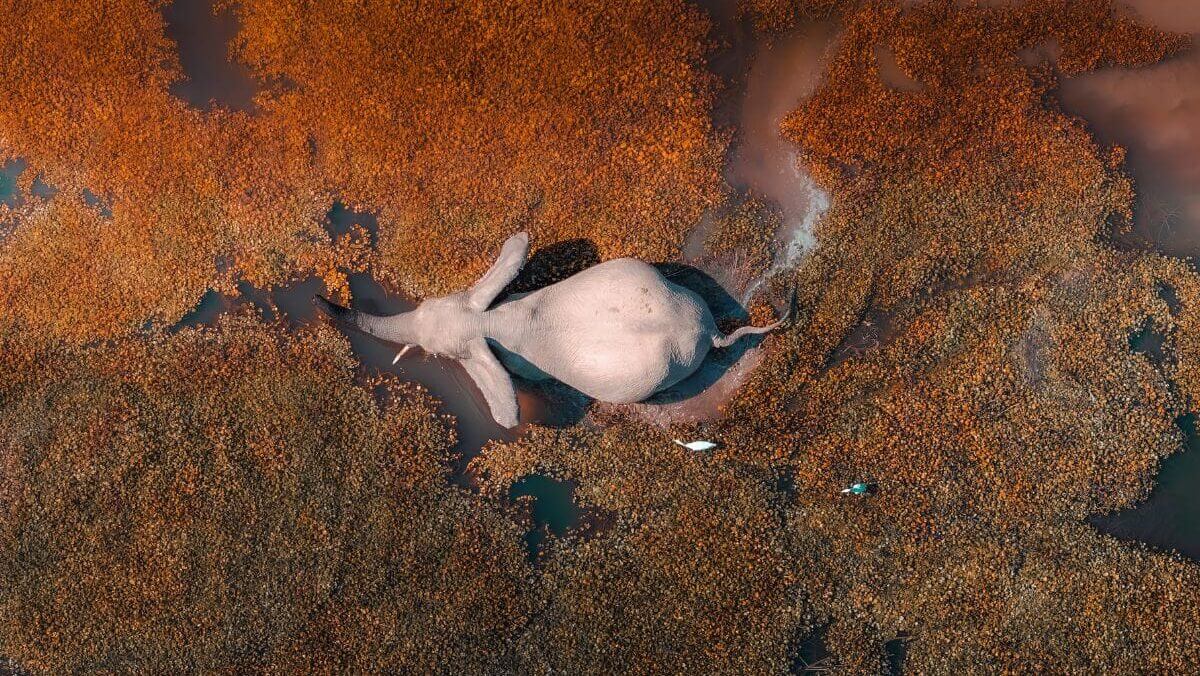
A calf is raised by the whole herd
Elephant families are matriarchal groups of roughly 10 to 25 animals, often three generations deep, and calves are looked after by their mothers and by the other adult and subadult females around them. This is not sentiment — the presence of these allomothers measurably increases a calf’s chance of survival, and when a first-time mother gives birth the experienced females come to her aid. First-born calves have higher mortality than calves born to experienced mothers, which is the same finding from the other direction.
Males leave on their own schedule. The average age of dispersal from the natal family is 13 to 14, but the recorded range runs from 7 to 19, and it happens gradually rather than as a single departure.
What drought does to calves
The Amboseli research project in Kenya has followed 2,652 elephants across four decades, which makes it the best dataset anyone has. Its finding on drought is stark: for calves under two years old, mortality runs at 29% in drought years against 16% in normal ones. Nearly double. That single number explains most of what follows about Namibia.
Be careful with elephant mortality statistics you read elsewhere. The often-quoted “25% of calves die in the first year” is, in the original Amboseli paper, a figure for firstborn male calves specifically — 25% of firstborn males against 17% of firstborn females. It is not a general first-year death rate, and it gets misquoted constantly.
Namibia’s desert calves are a different animal
The elephants of the Kunene and Damaraland are not a separate species or subspecies — they are savanna elephants that have learned to live in a desert, and the way they raise young reflects it. Researchers working on the northern drainages report calves still nursing at six years old, against a savanna norm of four and a half, and an interval between calves of about nine years rather than three to five. A cow here may raise three or four calves in a lifetime where a Kruger cow raises eight.
The distances are the reason. Elephants in the north-west range across country measured in tens of thousands of square kilometres, and have been recorded changing direction in response to rainfall falling more than 100 km away, in some cases up to 300 km. One calf born in the Kunene in 2012 walked 24 km in her first 48 hours of life.

The part that is not charming
This population is in trouble, and the calves are where it shows first. Elephant-Human Relations Aid, which monitors the southern ephemeral rivers, records that nine of fourteen calves born in the Huab and Ugab rivers between 2014 and 2018 died. The Ugab subpopulation has fallen by 32% since 2016, and by 73% since 1975. EHRA counts 62 resident desert-adapted elephants in the southern Kunene and northern Erongo.
Population estimates for these elephants vary widely — 62, or about 80, or around 150 — because different studies cover different river systems in different years. Anyone quoting one confident number for “the desert elephants” is quoting a fragment. Namibia’s national elephant population, by contrast, has been growing at about 5.4% a year since 1995 and stood at roughly 22,700 in 2016. The country’s elephants are doing well. This particular group is not.
Where to see calves
Etosha, in the dry season, at a waterhole, in the afternoon. A camera-trap study at Mushara waterhole recorded 77% of family-group visits during the dry season, with about 60% of sightings in the afternoon and a peak in October. Our guide to Namibia in October covers what that month is like to travel in.
The desert elephants are harder. They live in concessions you cannot self-drive into, which means a fly-in leg if you want to see them properly. If desert-adapted wildlife is the reason you are coming, how Namibia’s animals survive the desert covers the wider picture.
Frequently asked questions
How long is an elephant pregnant for?
About 22 months on average, with a recorded range of 17 to 25 months. It is the longest gestation of any land mammal, and it is why a cow produces a calf only every three to five years.
How much does a baby elephant weigh at birth?
Between 90 and 120 kg for a savanna elephant, standing 80 to 90 cm at the shoulder. Calves are on their feet within about 15 minutes of being born, which matters because the herd has to keep moving.
How long do elephant calves drink milk?
Savanna calves depend on milk for about two years and are fully weaned at around four and a half. Namibia’s desert-adapted calves nurse far longer — researchers in the Kunene have recorded calves still suckling at six years old.
Desert Tracks arranges self-drive and fly-in itineraries across Namibia, Botswana and East Africa. The desert elephants of the Kunene need a fly-in leg — tell us and we will price it. Tell us what you want out of the trip rather than when you can travel, and we will tell you honestly whether your dates fit — including when the answer is that they do not. Get in touch with Desert Tracks.