Namibia’s Black Rhino: The Subspecies That Came Back
Almost every article about Namibian rhino opens by calling them critically endangered. For Namibia’s own subspecies that stopped being true in 2020, and the reason it stopped is the most interesting conservation story in the country.
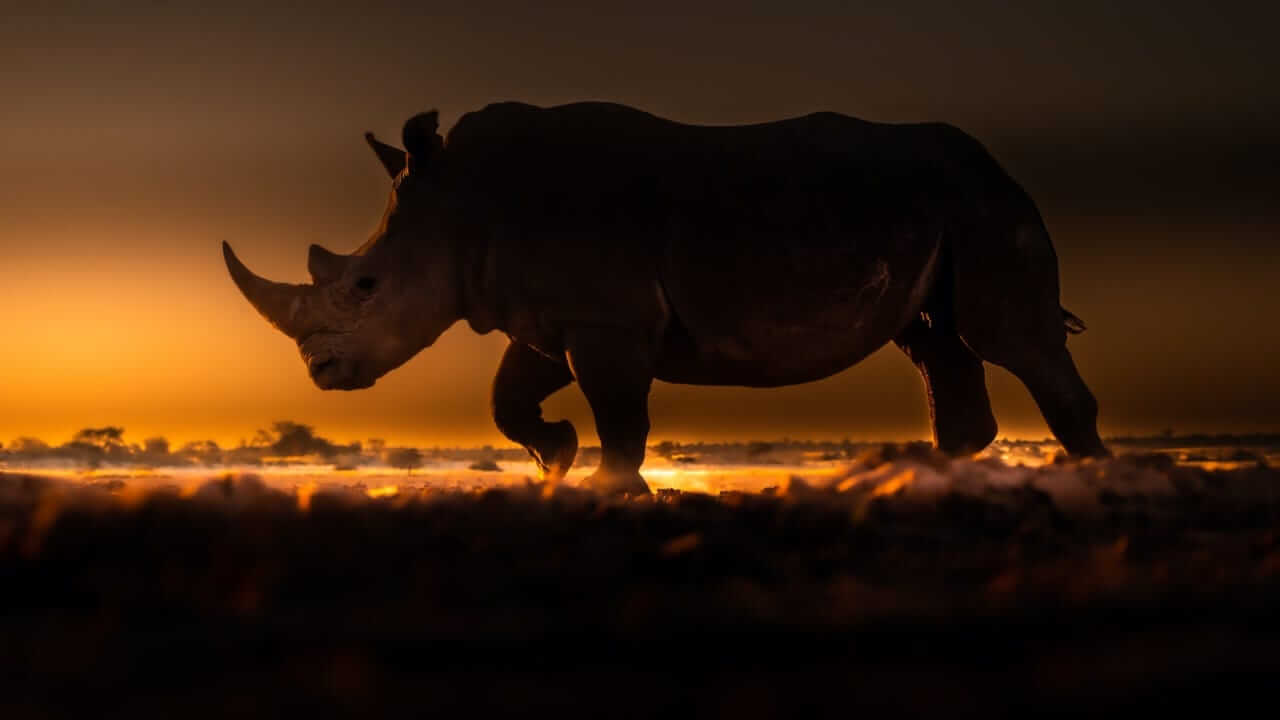
Namibia’s black rhino is Diceros bicornis bicornis, the south-western subspecies, which the IUCN uplisted from Critically Endangered to Near Threatened in 2020 after sustained recovery. Namibia holds about 35 per cent of the world’s black rhino and 84 per cent of this subspecies., the dry winter. Rainfall is near zero, wildlife concentrates at Etosha’s waterholes, and roads are at their best. July and August are the peak — and the coldest, near 6 °C at dawn.
The uplisting nobody mentions
In March 2020 the IUCN moved the south-western black rhino to Near Threatened, citing sufficient population recovery. The eastern and south-central subspecies stayed Critically Endangered. The species as a whole is still listed as Critically Endangered, which is how the old line survives in travel writing: it is true of the species and wrong about the animal you would actually see here.
The scale of the recovery is easier to grasp from the continental figures. Africa’s black rhino stood at about 6,788 at the end of 2024, up 5.2 per cent in a year, against a mid-1990s low point in the low thousands after a century that began with something near a hundred thousand animals.
The poaching numbers, and one caveat that matters
Namibia publishes its own figures, and they moved a long way in both directions.
The caveat: none of the published sources state whether these national totals count black rhino only or black and white together, and Namibia manages both. So this is a national rhino trend, not a clean black-rhino trend, and anybody presenting it as the latter is adding precision that the source does not have. The 2019 to 2023 figures come from the environment ministry’s own World Rhino Day address; the 2025 low is reported by WWF in July 2026.
Dehorning, and what the evidence actually covers
Namibia has dehorned at scale: around 2,500 animals over seven years at a programme cost of N$50 million, working out at N$18,000 to N$20,000 per rhino, with 147 immobilised and dehorned in 2025 alone. The figures come from the ministry itself.
Whether it works is a separate question with a good answer and a geographic asterisk. A 2025 study in Science found a 78 per cent drop in poaching across eight dehorned reserves against three non-dehorned controls, at 1.2 per cent of the antipoaching budget — a striking result, and one measured in the Greater Kruger ecosystem across South Africa and Mozambique, not in Namibia. No Namibia-specific study of dehorning effectiveness could be found. The same work flagged that some dehorned animals are still killed for the stump, and that poaching may shift rather than stop.
Custodianship: the part that is genuinely Namibian
On 14 April 1993 the first six black rhino were moved onto private land under an agreement with the state, and the Black Rhino Custodianship Programme began. The state keeps ownership; a landholder takes on the animals. By 2020 there were 35 land units in the programme — 25 commercial farms and game ranches and 10 communal conservancies, the communal side having opened up in 2005.
What a custodian signs up for is concrete: at least 10,000 hectares, fenced for black rhino, monitoring the population and reporting every birth, death, injury and missing animal, with veterinary support from the ministry and security assistance from the police. In May 2026 the custodians formed the Black Rhino Association of Namibia and held their first annual meeting, alongside the Namibia Nature Foundation, WWF, Save the Rhino Trust and the ministry. Our note on how conservation is actually structured in Namibia sets out the conservancy model this sits inside.
Tracking on foot, and what we do not do
Rhino tracking on foot has become a real tourism product in the northwest, and the numbers behind it are good: roughly 16,635 people took part between 2012 and 2018, growing nearly fourfold over that period, and conservancies collectively earned more than a million US dollars from rhino tourism between 2011 and 2018, a rise of 235 per cent.
One thing about it is widely misunderstood. Published research on the model states that it is not legally possible in Namibia to require that specific trained individuals accompany tourists tracking rhino on foot. Operators include trained conservancy rangers because it produces better sightings and because visitors will pay more for it — not because the law obliges them. That is a weaker safeguard than most brochures imply, and it is worth asking any operator who their tracker is.

We do not offer rhino tracking. Where our guests track rhino, it is through the properties that do it properly — Wilderness Desert Rhino Camp in the northwest, and Waterberg Plateau. That is a deliberate choice. Rhino work belongs to the people doing it every day, not to a booking agent adding an activity line to an itinerary.
What is missing from this page on purpose: any regional or reserve-level rhino count, any named place where rhino are reliably seen, and anything about how or where patrols work. Every one of those is useful to precisely one group of people besides tourists. If you read a travel article that hands them over, that article is doing harm.
Frequently asked questions
Are Namibia’s black rhinos critically endangered?
The species is. Namibia’s subspecies is not. Diceros bicornis bicornis, the south-western black rhino, was uplisted to Near Threatened by the IUCN in 2020 after sufficient population recovery. The other two black rhino subspecies remain Critically Endangered.
How many black rhino does Namibia have?
Namibia holds roughly 35 per cent of the world’s remaining black rhino and 84 per cent of its own subspecies. Africa’s black rhino total stood at 6,788 at the end of 2024. We do not publish national or regional head counts beyond that, and neither should anyone else.
Is poaching getting worse?
It got much worse and then much better. Namibia lost 92 rhino in 2022 and 41 in 2025 — the lowest in more than a decade — with 8 in the first four months of 2026. Note that the published national figures do not separate black from white rhino.
Does dehorning work?
The strongest evidence is a 2025 study in Science finding a 78 per cent drop in poaching across dehorned reserves — but that work was done in the Greater Kruger ecosystem, not Namibia. Namibia has dehorned around 2,500 rhino at a cost of N$50 million over seven years.
Can you track rhino on foot?
Yes, through properties and conservancies that offer it. There is no Namibian law requiring that a trained ranger accompany tourists on foot — operators include one because it works, not because they must. Desert Tracks does not run rhino tracking itself.
Desert Tracks books Wilderness Desert Rhino Camp and Waterberg Plateau, where rhino work is done by the people who do it every day. Tell us what you want out of the trip rather than when you can travel, and we will tell you honestly whether your dates fit — including when the answer is that they do not. Get in touch with Desert Tracks.