What Namibian Car-Hire Insurance Does Not Cover
Namibian car-hire insurance leaves more uncovered than most visitors expect. Even with an excess waiver, rental terms commonly exclude tyres, rims, windscreen and glass, sandblast and underbody damage, and water damage, and the single-vehicle rollover, the most likely accident on gravel, is excluded by all but the most expensive waiver. Read the specific rental company’s conditions before you rely on the words full cover., the dry winter. Rainfall is near zero, wildlife concentrates at Etosha’s waterholes, and roads are at their best. July and August are the peak — and the coldest, near 6 °C at dawn.
Namibia is hard on vehicles, and the insurance most visitors think they have bought is narrower than they realise. The gap is not hidden, but it sits in the rental terms and conditions almost nobody opens. Here is what three Namibian rental companies actually exclude, and the one crash you are most likely to have and least likely to be covered for.
What the standard rate never covers
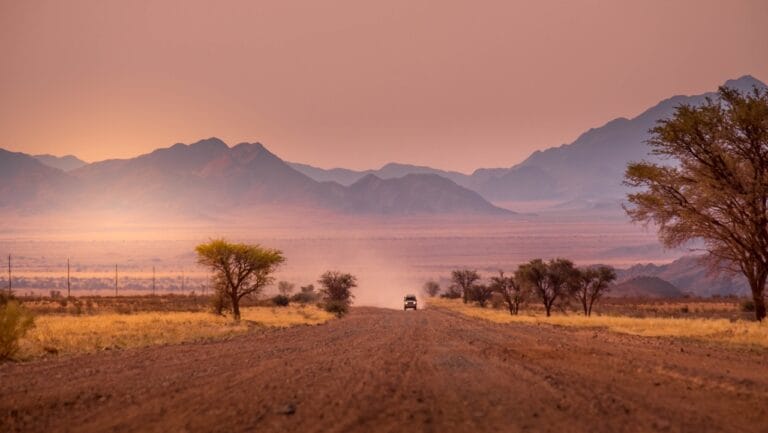
Reading African Tracks’ rental conditions is a useful shock. The standard rate excludes fuel, windscreen damage, sandblast damage, underbody damage, damage to lights and windows, tyres, damage to the rims, the insurance excess itself, and personal insurance. The rims are singled out: they are not covered by any excess, and the full replacement value is charged. On corrugated gravel, tyres and rims are exactly what you damage, so these are not edge cases.
The excess, and what the waivers cost
The excess is the amount you are liable for before any cover applies, and you reduce it by buying a waiver at a daily rate. Asco Car Hire’s insurance page lays this out clearly enough to use as a worked example. Note that the cheapest waiver still leaves a substantial excess, and the zero-excess tier is only offered on longer rentals.
The rollover: the crash you are most likely to have
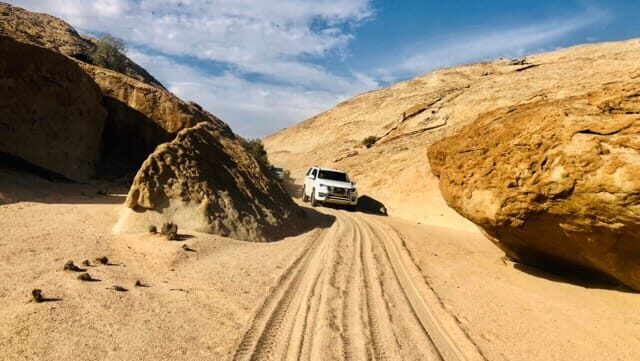
The most common serious accident in Namibia is a single-vehicle one: a wheel drops onto a soft verge or hits a corrugation at speed on gravel, and the vehicle rolls. This is precisely what the waivers carve out. Savanna Car Hire’s reduced-excess terms exclude damage from single-vehicle accidents at Reduced Excess levels 1 to 3; only the top tier adds rollover cover, and even then negligence is excluded. African Tracks, separately, holds the renter liable for up to N$100,000 on a single-vehicle accident regardless of speed or road conditions. In other words, the crash you are statistically most likely to have is the one the cheaper waivers do not cover.
The clauses that quietly void your cover
Two conditions can undo cover you thought you had. African Tracks’ terms tell you to drive only from sunrise to sunset on B and C roads, and that driving outside those hours is at your own risk; that is African Tracks’ wording, not an industry-wide rule, so check whether your own company carries it. Savanna sets speed limits that void cover if exceeded: 60 km/h in towns and national parks, 80 km/h on gravel, and 120 km/h on highways. Both tie back to the vehicle you hired and how you drive it, which is worth reading alongside whether you actually need a 4×4 and what Namibian roads are really like.
None of this is a reason not to come; it is a reason to read the contract and buy the right waiver for the roads you plan to drive. And keep it separate in your mind from your own travel insurance for Namibia, which covers you, not the car.
Frequently asked questions
Does Namibian car-hire insurance cover tyres and windscreen?
Often not. African Tracks’ rental conditions exclude tyres, rims, windscreen, sandblast, underbody and damage to lights and windows from the standard rate, so read the specific company’s conditions rather than assuming a waiver covers everything.
What is the excess on a Namibian rental?
It varies by company and waiver. Asco, for example, runs a standard excess of N$40,000, reduced to N$20,000, N$5,000 or zero for a daily fee of about EUR 8, EUR 15 or EUR 25 respectively, with the zero-excess tier only on rentals over ten days.
Is a rollover covered?
Usually only under the most expensive waiver. Savanna’s Reduced Excess levels 1 to 3 exclude damage from single-vehicle accidents; only the top tier adds rollover cover, and negligence is still excluded. A rollover on gravel is the most likely Namibian claim, so this matters.
Can driving at night void my cover?
With some companies, yes. African Tracks states you should drive only from sunrise to sunset on B and C roads, and that driving outside those hours is at your own risk. This is that company’s wording, not a blanket national rule, so check your own contract.
Is this the same as travel insurance?
No. Your personal travel insurance is a separate matter from the hire-car excess. You can carry good travel insurance and still be fully exposed on the vehicle, which is why the two need arranging separately.
Desert Tracks plans self-drive and guided Namibia safaris from our base in Swakopmund. Get in touch and we will help you build the route.