Tyre Pressure on Namibia’s Gravel, and the Second-Spare Question
Run about 1.8 bar (cold) on gravel, or 10–20% below your tar pressure, and reflate before you rejoin tar. A second spare earns its place on remote routes.
Gravel is where Namibian self-drives go wrong, and usually in the same way: one vehicle, too fast, on a loose surface. Tyre pressure and speed are the two things you control. Here is what the specialists recommend.
What pressure to run
For gravel, Bushlore recommends a cold pressure of 1.8 bar; Expert Africa gives the rule of thumb of dropping around 10–20% below your tar-road pressure. A softer tyre grips better, rides more smoothly over corrugations and is harder to puncture, because it bulges around a sharp stone instead of being pierced by it.
The one rule you cannot skip: reflate to normal pressure when you return to tar. Driving on tar on low-pressure tyres builds heat in the tyre and risks a blowout.
Speed, and why single-vehicle accidents happen
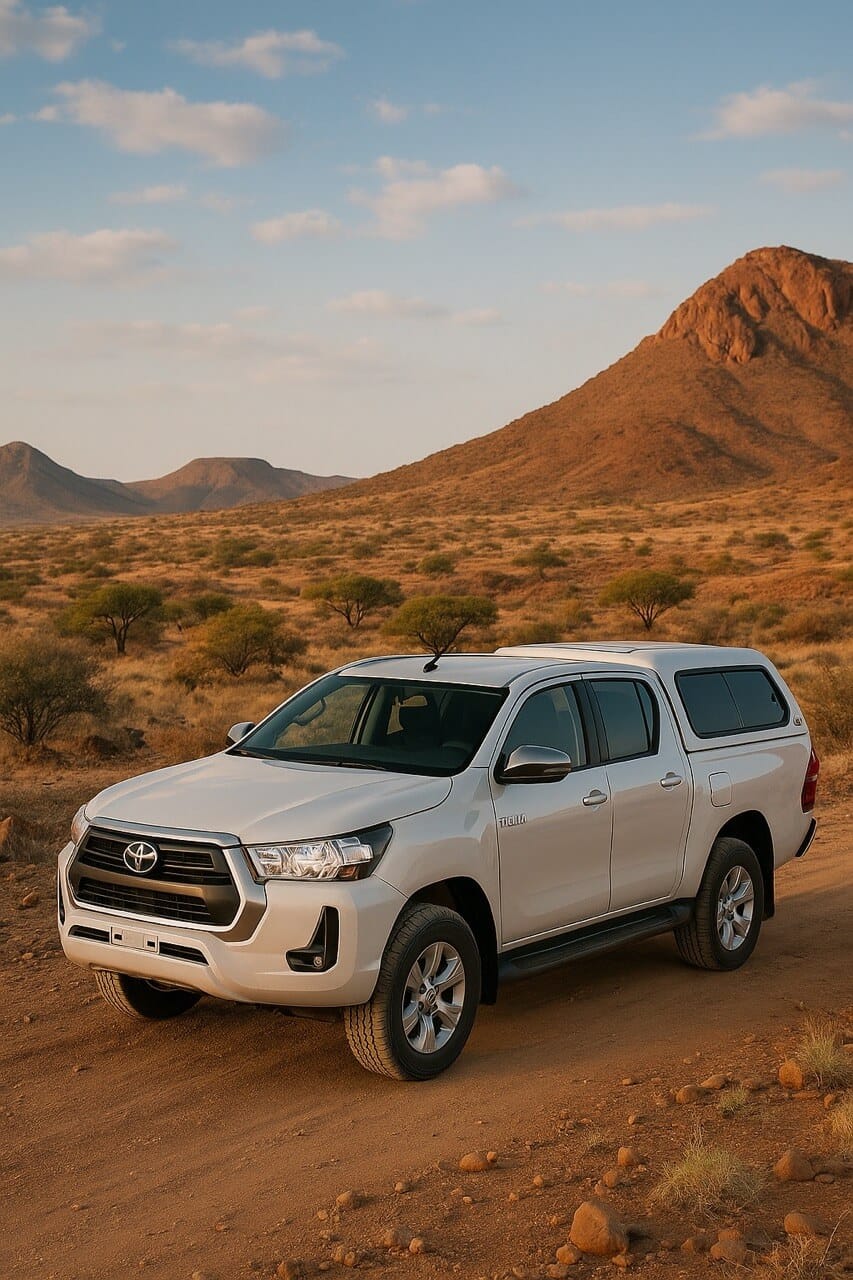
Most vehicle accidents involving visitors in Namibia don’t involve another car at all: a vehicle travelling too fast on gravel, and a driver who loses control. Expert Africa recommends an absolute maximum of 80 km/h on any gravel road, lower where the surface is less than excellent, and advises against trying to keep pace with local drivers. For how rental insurance treats a single-vehicle accident, see our guide to what Namibian car-hire insurance leaves out.
One spare or two?
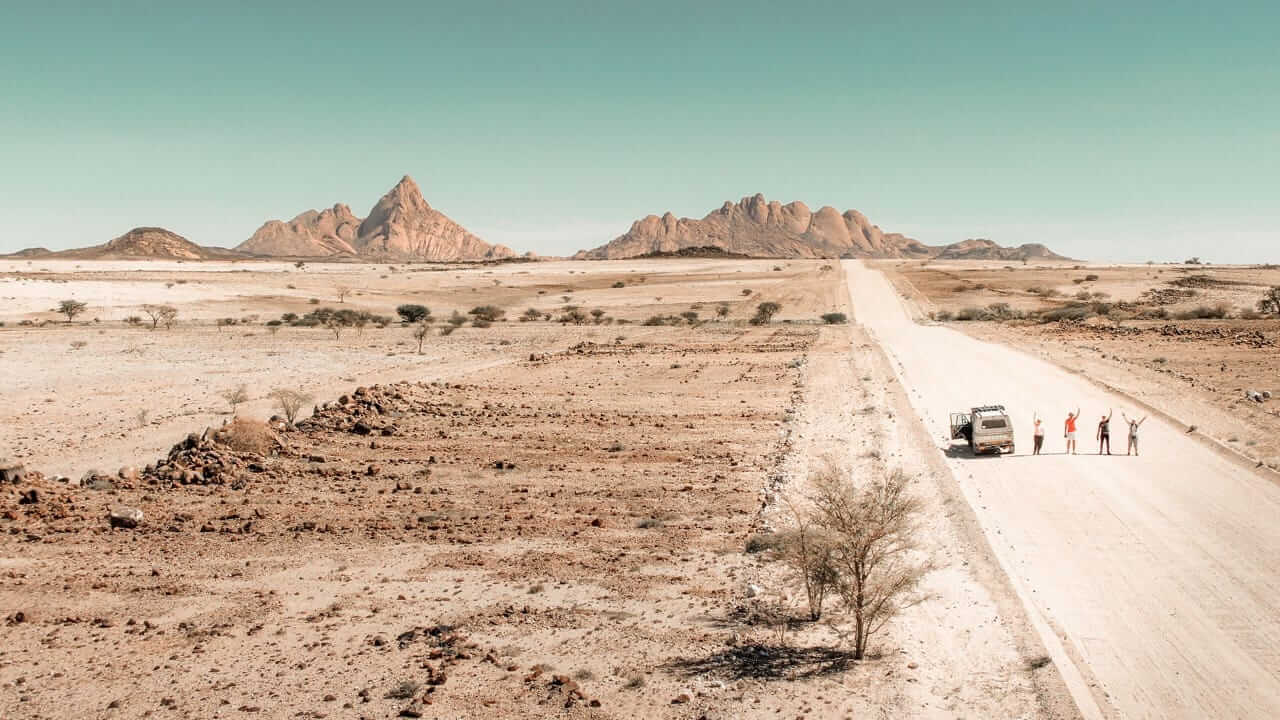
There is no single answer; it depends on your route. On the main circuits, where towns have tyre-repair shops, one spare is usually enough. On remote stretches far from a workshop, a second spare buys back a day you might otherwise lose. Either way, check your pressures at every fuel stop. If you are still deciding on the vehicle itself, see whether you need a 4×4 in Namibia, and browse our self-drive routes for how the gravel days string together.
Frequently asked questions
What tyre pressure should I run on Namibian gravel?
Bushlore recommends about 1.8 bar on a cold tyre; Expert Africa suggests dropping around 10–20% off your tar-road pressure. Re-inflate to the normal pressure before you get back on tar.
Should I deflate my tyres for gravel?
It isn’t essential, but a modest drop helps traction, comfort and puncture resistance, because a softer tyre bulges around sharp stones rather than being pierced. If you do deflate, reflating on tar is essential: low pressure on tar builds heat in the tyre.
Do I need a second spare tyre?
It depends on your route. Where towns and tyre-repair shops are within reach, one spare is usually enough; on remote stretches far from a workshop, a second spare can save you a lost day.
How fast can I drive on gravel in Namibia?
Expert Africa recommends 80 km/h as an absolute maximum on any gravel road, and slower where the surface is poor. Most accidents involving visitors involve a single vehicle travelling too fast on gravel.
Desert Tracks plans self-drive Namibia safaris from our base in Swakopmund. Get in touch and we will help you build the route.