Namibia in January – Hot Days, Green Landscapes and Fewer Crowds
January in Namibia is hot, green and quiet. Windhoek averages 32°C by day and 17°C at night with about 80mm of rain; the north gets 120mm and the coast stays dry near 20°C. Once the festive week clears it is the cheapest month of the year., the dry winter. Rainfall is near zero, wildlife concentrates at Etosha’s waterholes, and roads are at their best. July and August are the peak — and the coldest, near 6 °C at dawn.
January is the month that rewards people who can travel outside the school holidays. The first week is still festive-season busy and priced to match. After that the country empties out, the camps drop into their lowest band, and you get the Namib and the Kalahari greener than most visitors ever see them, largely to yourself. The catch is heat and the fact that the animals no longer need you or your waterhole.
Namibia in January: the numbers
Long-term monthly averages from Climates to Travel, cross-checked against the Windhoek normals on Weather Atlas. The three rows describe three genuinely different places.
On the same January afternoon it is 32°C in Windhoek and 20°C in Swakopmund. That gap is the single most useful fact for planning a summer trip: the coast is always the escape, and it never needs a rain plan.
The two Januaries
Rate cards generally hold the festive high-season band until around 9 or 10 January, then drop into green season. That break is worth real money. Kwessi Dunes is N$18,445 per person per night in the high band and N$10,845 in green season; Hoanib Valley Camp is N$22,545 against N$15,995. Shifting a trip by a week can be the difference between two camps and three.
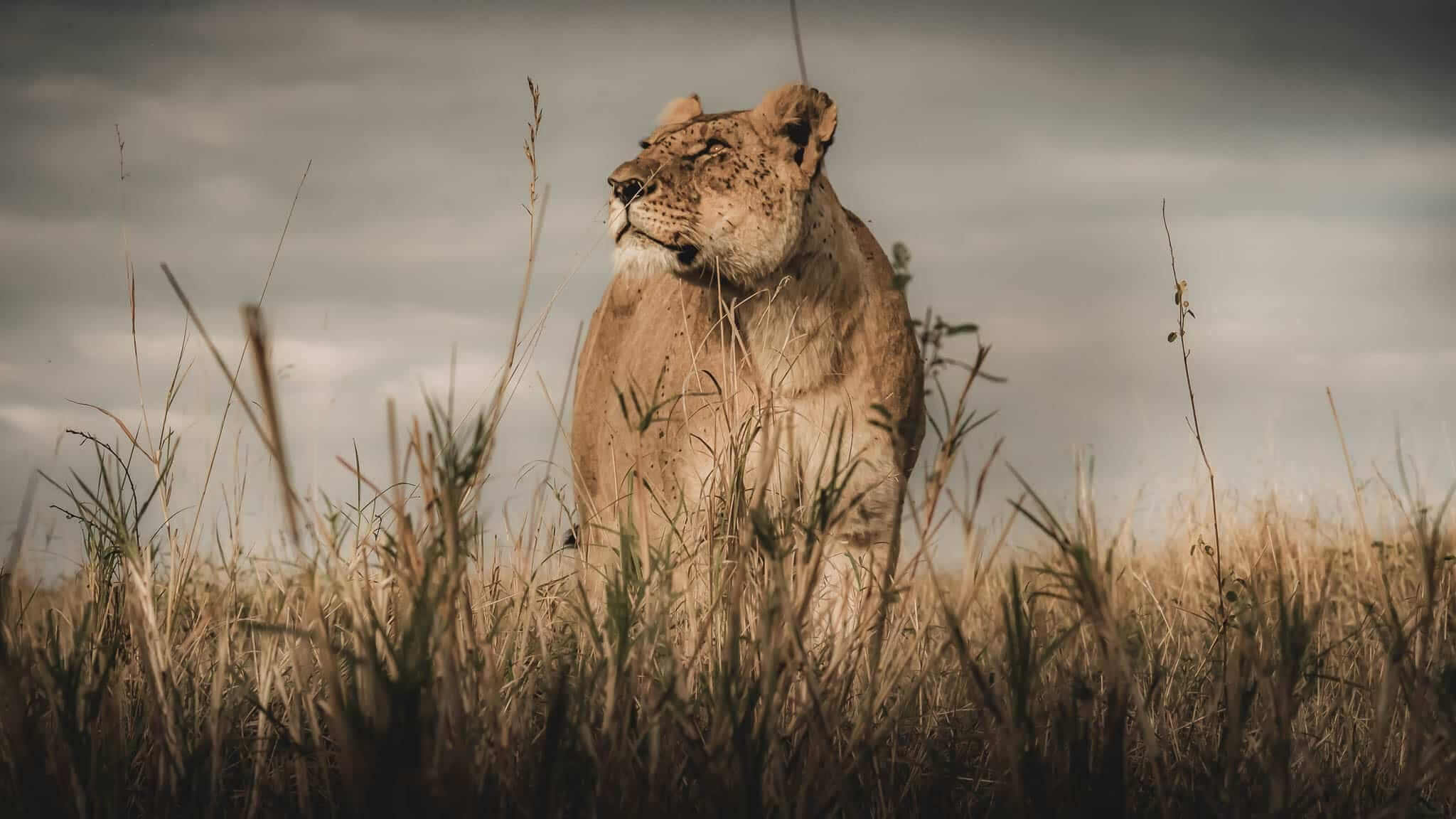
What January actually looks like
- Afternoon storms, clear mornings. The rain builds through the day and breaks late. Early starts are unaffected.
- Newborn animals. Springbok and other antelope calve in the green months, and predators follow them.
- The best skies of the year. Cloud, storm light and green country make far better photographs than the flat blue of midwinter.
- Water on the roads, not mud. Namibian gravel drains fast. What stops you is a river crossing running after a storm somewhere upstream — never drive into moving water.
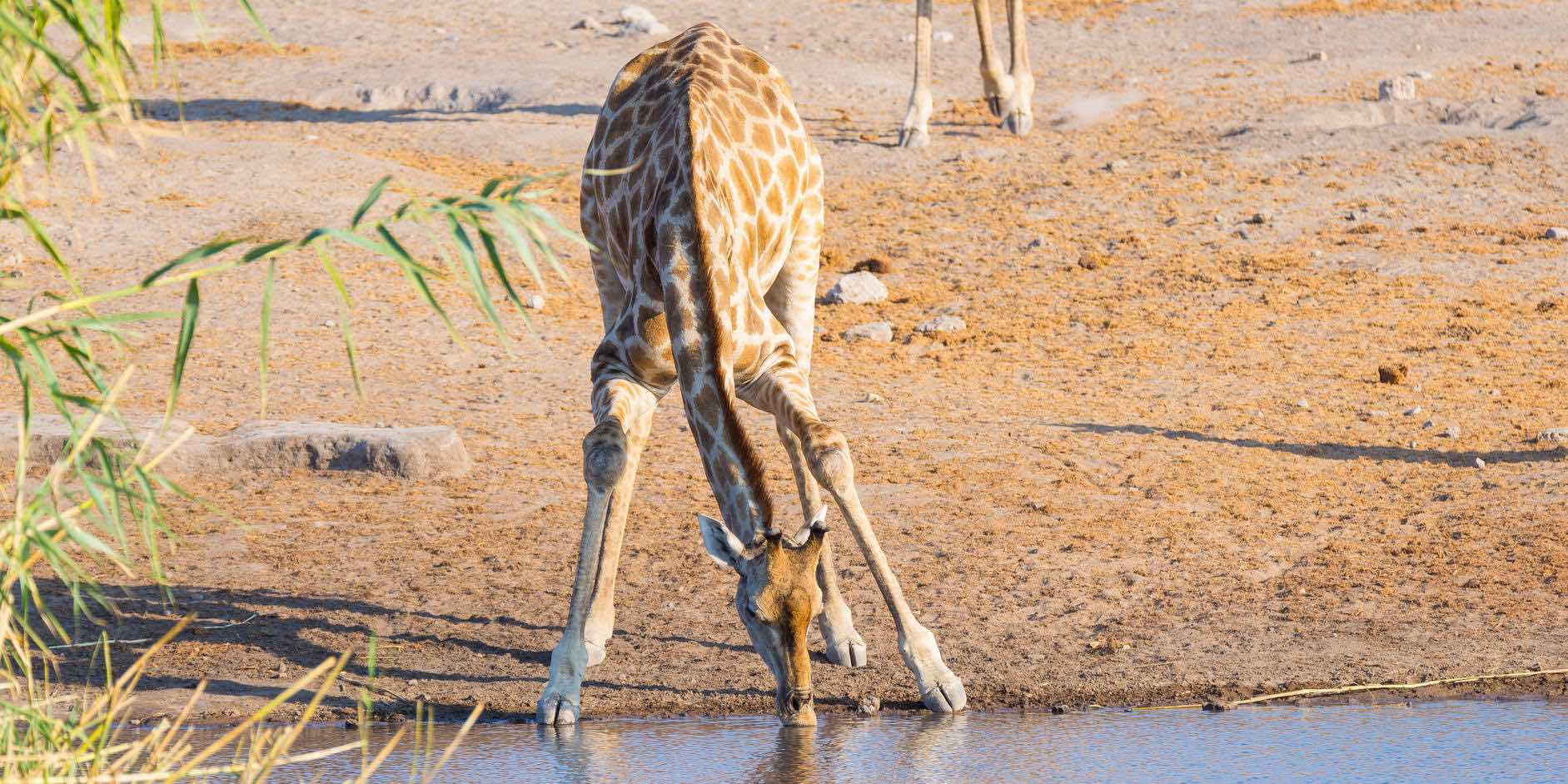
- Harder game viewing. With water everywhere, nothing has to walk to a waterhole, and the grass is tall.
Where to go in January
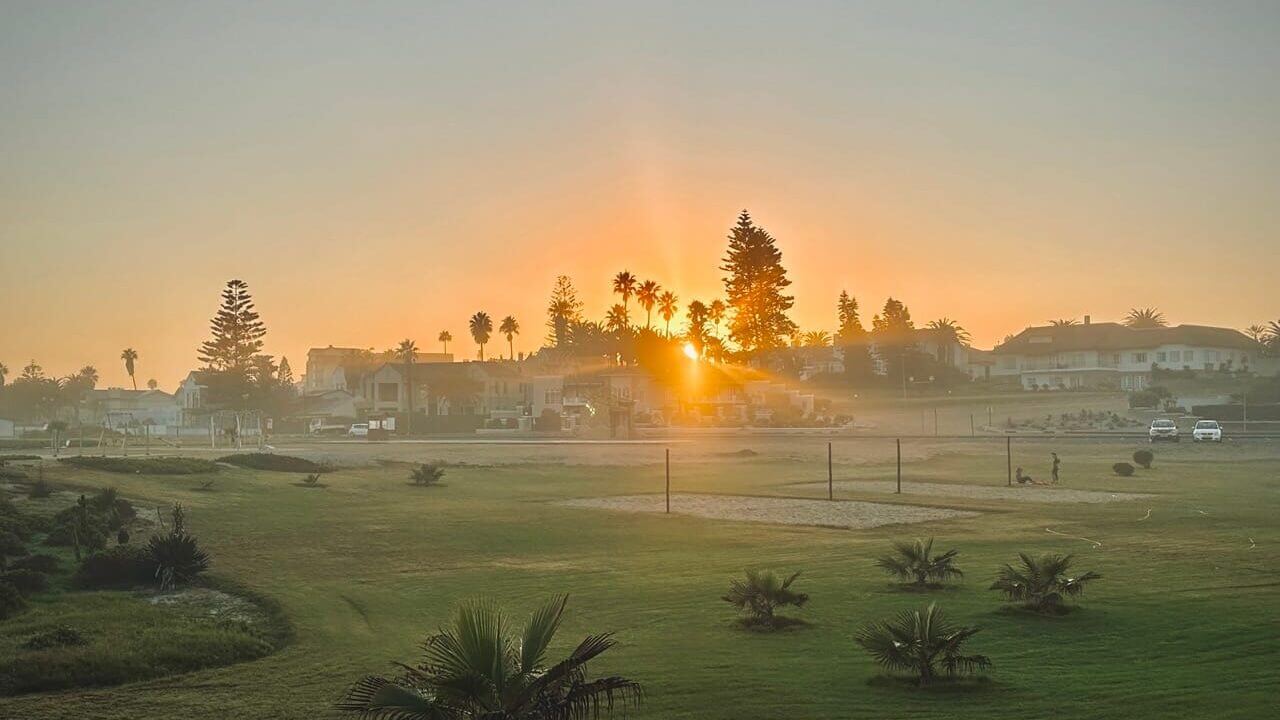
The coast is untouched by the rain and sits at 20°C, which makes Swakopmund and Walvis Bay the reliable spine of a January route. Sossusvlei and the Namib get very little rain and look extraordinary under summer cloud; in a strong year there is water in the pan. The Kalahari greens up and the light is superb. Where January is hardest is Etosha for game viewing, and the far north and Zambezi, which are wettest and inside the malaria window that runs roughly November to June.
Malaria matters in January. The risk sits in the north and north-east — Etosha’s fringes, Kavango, the Zambezi — and January is squarely inside the season. It is not a reason to avoid Namibia. It is a reason to see a travel clinic before you book rather than after.
February is the wetter, greener continuation of the same season, and our month-by-month weather guide sets all twelve side by side. For a green-season route built around the coast, the Namib and the Kalahari, our 18-day self-drive itinerary adapts well.
Frequently asked questions
Is January a good time to visit Namibia?
It is the cheapest and quietest of the good months, once the festive rush clears around the second week. Windhoek averages 32°C by day and 17°C at night with about 80mm of rain. You get green landscapes, storm skies and empty roads, and you give up the easy waterhole game viewing.
How hot is Namibia in January?
Windhoek averages 32°C by day and 17°C at night, and the north around Tsumeb runs 31°C. The coast is the outlier and stays near 20°C at Swakopmund, cool enough for a jersey in the mornings. January is one of the hottest months inland.
Does it rain every day in Namibia in January?
No. January is inside the rainy season and Windhoek averages about 80mm across the month, but it falls as afternoon thunderstorms rather than continuous rain. The north gets more — about 120mm — and the coast gets essentially none.
Desert Tracks arranges self-drive and fly-in itineraries across Namibia, Botswana and East Africa. January rewards a route built around where the rain is not — tell us your dates and we will build one. Tell us what you want out of the trip rather than when you can travel, and we will tell you honestly whether your dates fit — including when the answer is that they do not. Get in touch with Desert Tracks.