Walvis Bay Lagoon: 51,000 Flamingos, and Where They Go
The flamingos at Walvis Bay are the most photographed birds in Namibia and among the least explained. The number standing in that lagoon can fall by forty-five thousand between one count and the next, and the reason is four hundred kilometres inland.
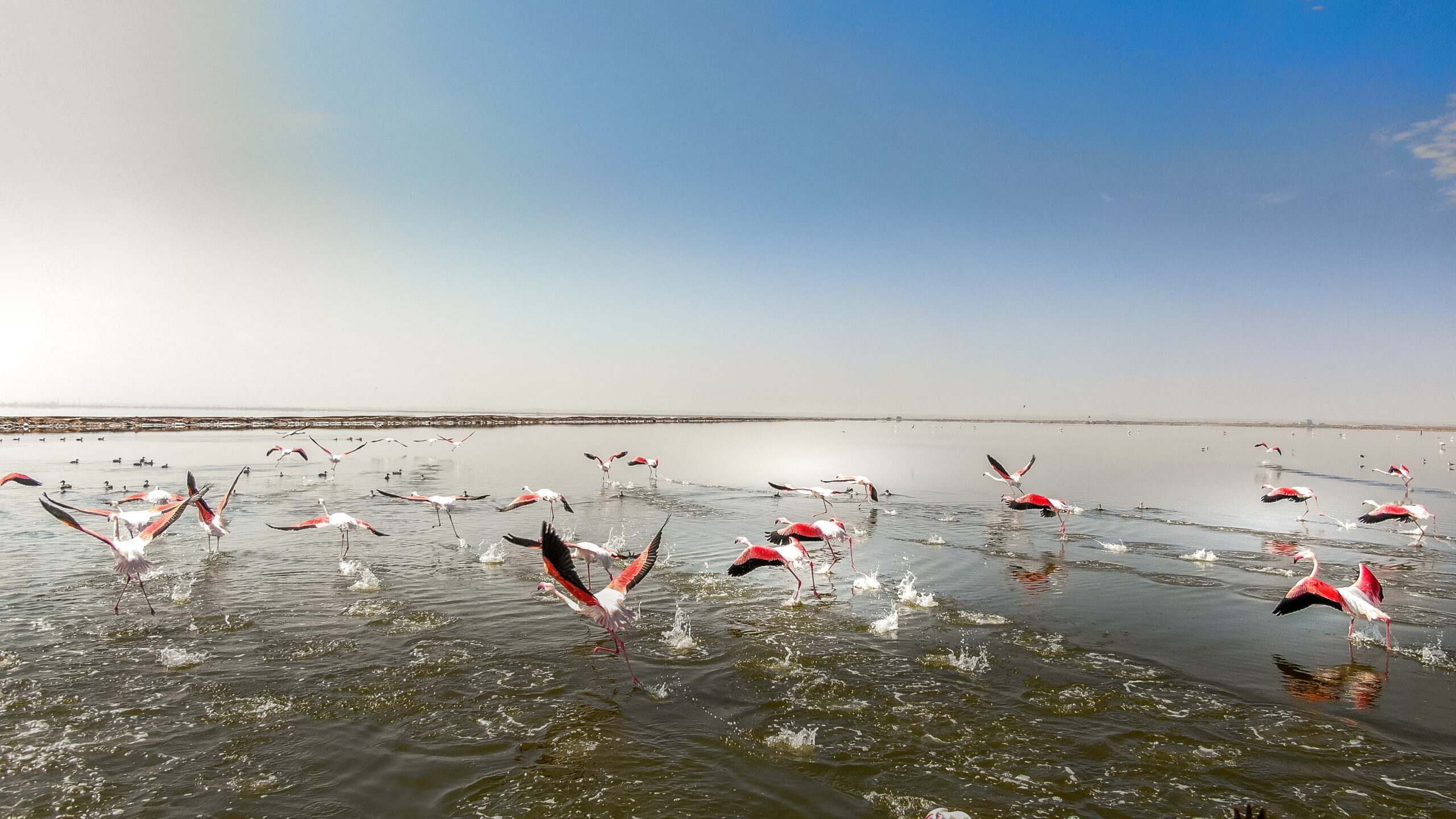
Walvis Bay lagoon is a Ramsar wetland of 12,600 hectares designated in 1995, holding between 80 and 90 per cent of the subregion’s flamingos. The end-of-August 2026 count found 87,000 birds including 51,000 flamingos; the summer count found 90,000 birds but only 5,500 flamingos, because the flamingos had moved inland to breed., the dry winter. Rainfall is near zero, wildlife concentrates at Etosha’s waterholes, and roads are at their best. July and August are the peak — and the coldest, near 6 °C at dawn.
The swing, and what causes it
Birds have been counted here every year since 1983, which makes this one of the longest wetland datasets in the country. The two 2026 counts tell the story better than any description: 87,000 birds in winter with 51,000 flamingos, and 90,000 in summer with 5,500. The total barely moved. The flamingo share collapsed.
When the inland pans fill — Etosha in Namibia, Makgadikgadi in Botswana — flamingos leave the coast to breed, and come back when the chicks can travel. That is the explanation given by the people who run the count, and it fits what is known about the species generally: lesser flamingos shift breeding sites when water levels make the usual one unsuitable. What does not exist, as far as we could find, is a tracking study following individual birds from this lagoon to a specific breeding event. It is a well-founded explanation, not a proven chain.

Two Ramsar sites, and people constantly confuse them
That last row is the one worth stopping on. Everyone comes to Walvis Bay for flamingos, and the bird that makes this lagoon globally irreplaceable is a small pale plover most visitors walk past. Sixty per cent of every chestnut-banded plover alive uses this site. Sixteen species here exceed the one per cent of biogeographic population threshold that gets a wetland listed at all.
Two flamingos, two bills
Both species are usually present and most people cannot tell them apart, and the Ramsar citation for the site records flamingos in particularly large concentrations among 37,000 to 79,000 wetland birds. The reliable field mark is the bill: the lesser flamingo’s carries much more black. Size works only when the two are side by side, which here they often are.
The bills are different because the food is. A lesser flamingo’s deep-keeled bill filters microscopic blue-green algae — Spirulina and its relatives — out of the water column. A greater flamingo feeds head-inverted, digging in the mud for brine shrimp, larvae, molluscs and diatoms with what has been described as the most sophisticated filter-feeding apparatus in any bird. Different mesh, different depth, different prey. We will leave the obvious conclusion about competition as an observation rather than a claim, because no source we could open states it outright for this lagoon.
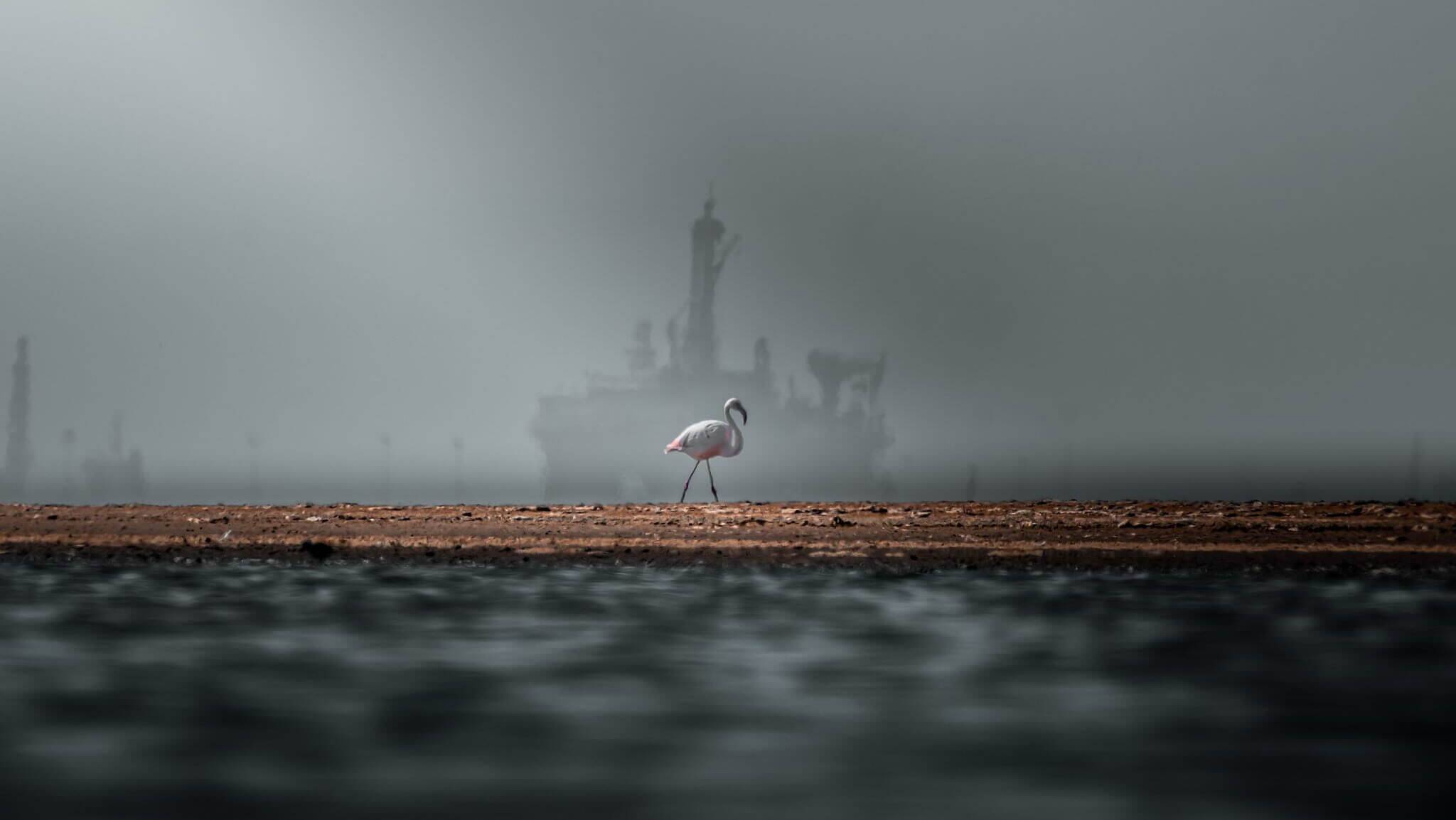
The salt works are not separate from the birds
Walvis Bay Salt Holdings has worked the Kuiseb delta since 1964. The operation covers 5,000 hectares and pushes 100 million cubic metres of seawater a year through its pans to produce over a million tonnes of salt. Those pans sit inside the Ramsar boundary, and the company states its pans support tens of thousands of flamingos and waders, and that it has backed the bird counts since 1983.
This is worth saying plainly because it cuts against the instinct that industry and wetland are opposites here. The artificial pans are part of the habitat the birds use. That does not make the site secure — the Ramsar citation itself names residential development along the lagoon and natural siltation as threats, the 1967 diversion of the Kuiseb is blamed for accelerating sand movement toward the lagoon, and Namibia’s port authority has funded an ecosystem-health monitoring programme running from 2025 to 2027 at N$3.7 million, precisely because port operations sit on top of it.
Seeing them, and one thing we do not do
The lagoon needs no permit and no guide. The shoreline road and the salt works approach put you within metres of feeding birds, and the light at either end of the day is what everyone is really after — our note on photographing Namibia applies. Sandwich Harbour is the opposite: guided 4×4 only, and after operators were documented flying low over the flamingos and cormorants several times a day, a minimum altitude of 1,000 metres is now enforced.
For the wider coast, what a Namibian beach holiday actually involves and what there is to do in Swakopmund cover the rest of it, and how wildlife survives on this coast explains the fog that makes the whole system work.
Frequently asked questions
How many flamingos are at Walvis Bay?
It depends entirely on the season. The end-of-August 2026 count found 87,000 birds of which 51,000 were flamingos. The summer 2026 count found 90,000 birds but only 5,500 flamingos — the flamingos had gone inland to breed.
When is the best time to see them?
Winter, if flamingos are the point. The birds are present year-round but the big concentrations are there when the inland pans are dry. Migratory shorebirds are a different calendar, arriving from about October.
Is Walvis Bay lagoon protected?
It is Ramsar site 742, designated on 23 August 1995, covering 12,600 hectares. Sandwich Harbour, 55 kilometres south, is a separate Ramsar site — number 743, 16,500 hectares, designated the same day.
What is the difference between a lesser and a greater flamingo?
Look at the bill, not the size. The lesser flamingo’s bill carries much more black. Size only helps when both species are standing together, which at Walvis Bay they often are.
Do you need a permit or a guide?
Not for the lagoon — the shoreline road and the salt works approach are open. Sandwich Harbour is different: it needs a guided 4×4 trip, and low-level flying over it is restricted to a minimum of 1,000 metres after operators were documented buzzing the birds.
Desert Tracks is based up the road in Swakopmund. Tell us what you want out of the trip rather than when you can travel, and we will tell you honestly whether your dates fit — including when the answer is that they do not. Get in touch with Desert Tracks.