Namibia in March – Warm Days, Green Landscapes, and Quiet Safaris
March in Namibia is warm, green and quiet. Windhoek averages 30°C by day and 16°C at night, with about 80mm of rain. The coast at Swakopmund sits near 20°C and gets none. It is the last month of the rains., the dry winter. Rainfall is near zero, wildlife concentrates at Etosha’s waterholes, and roads are at their best. July and August are the peak — and the coldest, near 6 °C at dawn.
March is the month people get talked out of, usually by someone who has never been. It is the tail of the rainy season, which sounds worse than it is: the rain comes in the afternoon, the mornings are clear, the country is green for the only stretch of the year, and the camps are half the price they will be in July. What you give up is the easy game viewing, and whether that trade is worth it depends entirely on what you came for.
Namibia in March: the numbers
These are long-term monthly averages from Climates to Travel, cross-checked against the Windhoek normals on Weather Atlas. The striking thing is how little the three columns have in common. Namibia is not one climate.
Swakopmund gets no rain in March and never rises much above 20°C. The cold Benguela current holds the whole coastline at jersey temperature all year while the interior bakes. Pack for both — people routinely get this wrong and spend three days cold.
What the rain actually does to your trip
- It falls in the afternoon. Thunderstorms build through the day and break late. Mornings, which is when you want to be driving and looking at animals anyway, are usually clear.
- The risk on gravel is water, not mud. Namibian gravel drains fast. What closes a road is a river crossing running after a storm upstream, sometimes under a blue sky where you are standing. Never drive into moving water.
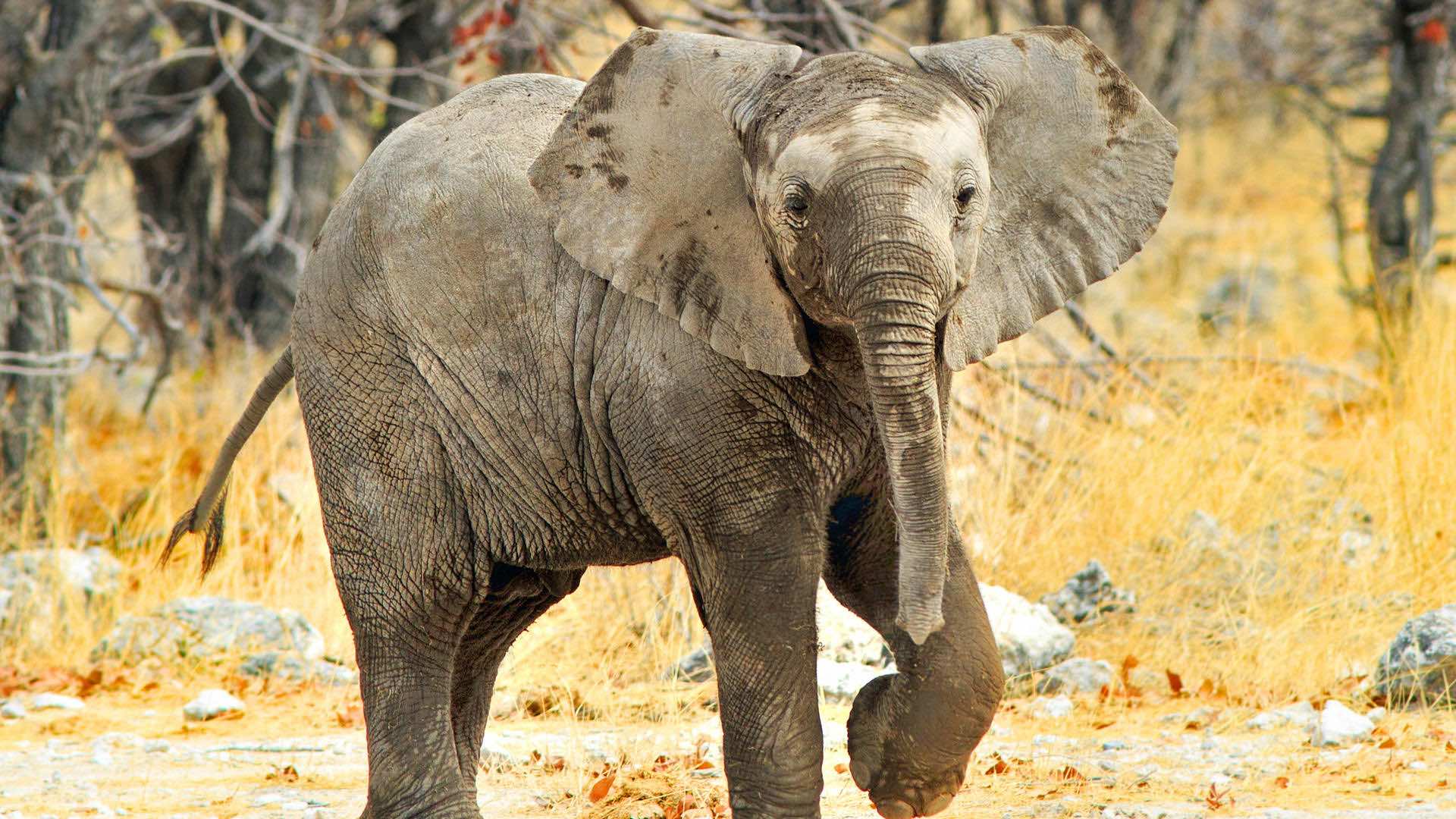
- Game viewing gets hard. With water everywhere, animals stop using the waterholes, and the grass is tall enough to hide most of them.
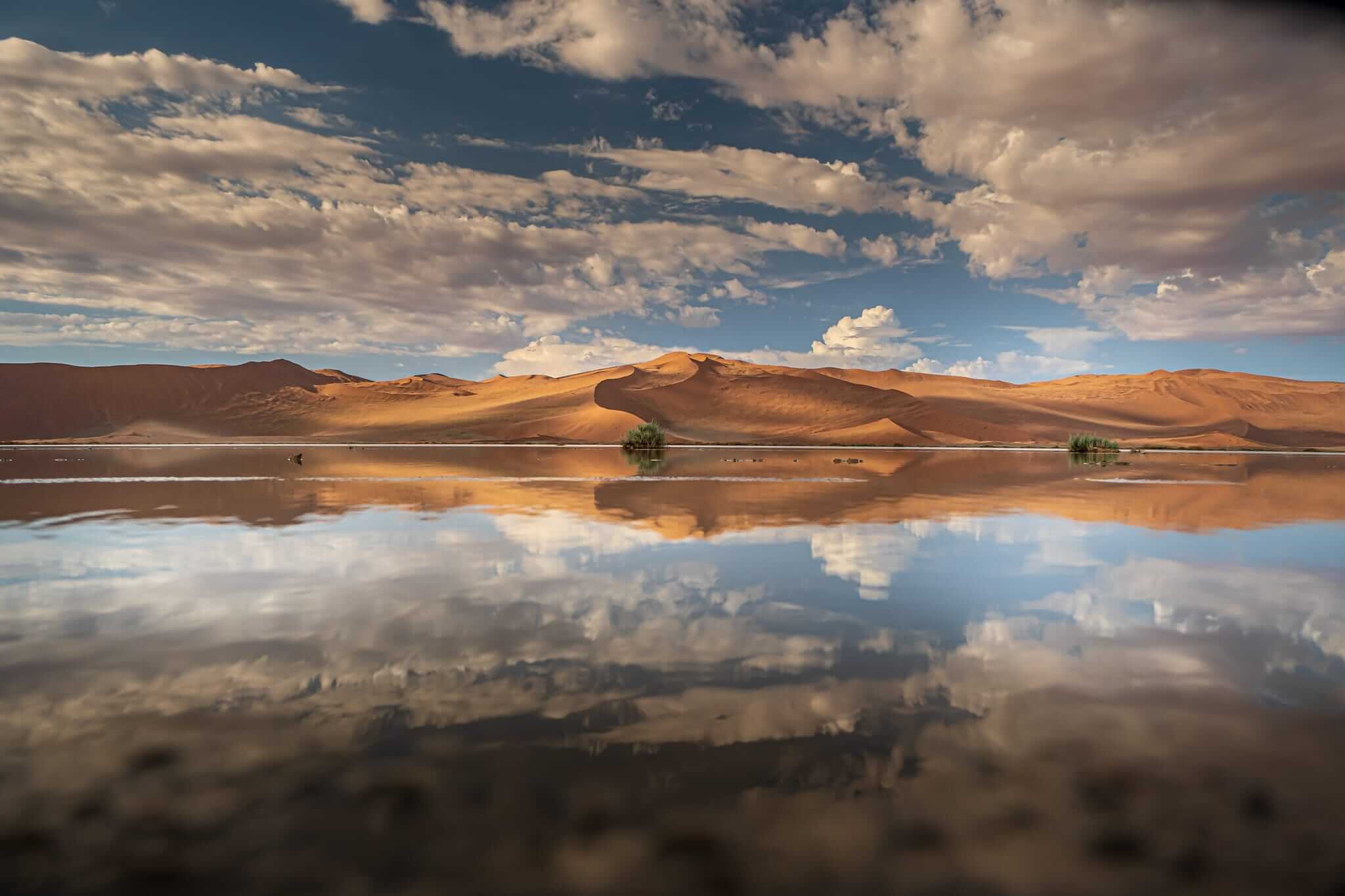
- The photography gets better. Cloud, storm light and green country are worth more to a camera than the flat blue of midwinter.
Where March works, and where it does not
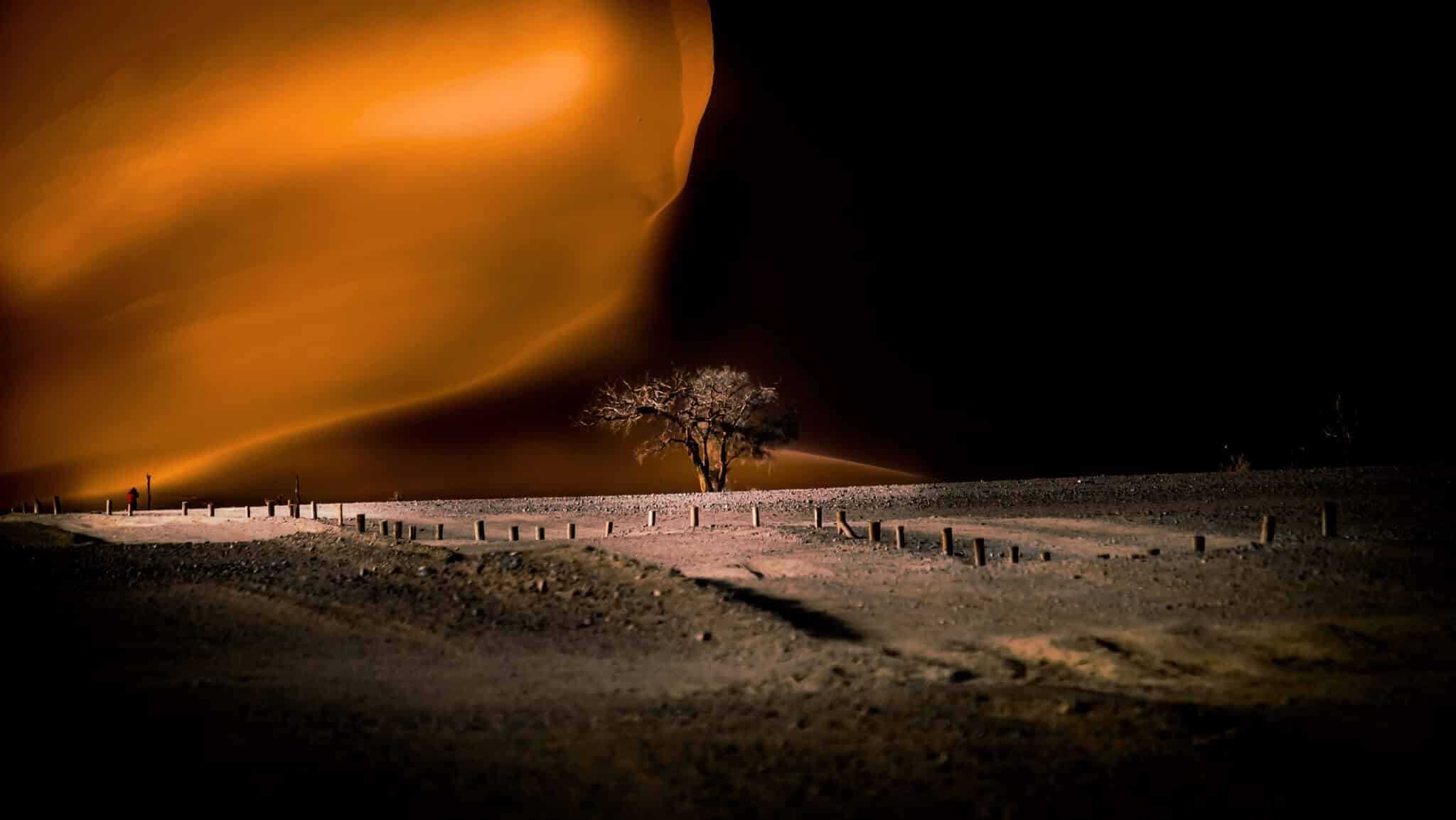
Sossusvlei and the Namib are at their best. Cloud over red dunes is a far better photograph than a clear sky, and in a strong year there is water in the pan. The Kalahari greens up and the light is superb. The coast is indifferent to the rain and carries on as normal. Where March struggles is Etosha, for the reasons above, and the far north and Zambezi, which are both wettest and inside the malaria window.
If the month is not fixed, our guide to the month-by-month weather guide sets all twelve side by side, and February is the greener, wetter, cheaper version of the same trip.
Malaria is a real consideration in March. The risk sits in the north and north-east — Etosha’s fringes, Kavango, the Zambezi — and runs roughly November to June, so March is inside the window. It is not a reason to avoid the country; it is a reason to see a travel clinic before you go rather than after you have booked.
What it costs, and how quiet it is
March sits inside the green season at most camps, and the difference is not marginal. Kwessi Dunes on the NamibRand publishes N$10,845 per person per night in green season against N$20,495 at peak; Wolwedans Dune Camp is N$13,550 against N$14,900. Roads, gates and viewpoints are correspondingly empty. One timing note: Namibia’s park entry fee rises to N$280 per foreign adult per day plus N$50 for the vehicle from 1 April 2026, so a March trip is the last of the old rate.
If a March trip appeals, we can build one around where the rain is not — the coast, the Namib and the Kalahari all carry a green-season itinerary well. Have a look at what we do with an 18-day self-drive route and we will move it to suit the month.
Frequently asked questions
Is March a good time to visit Namibia?
Yes if you want green landscapes, thunderclouds and low-season rates, and no if game viewing is the whole point of the trip. Windhoek averages 30°C by day and 16°C at night in March with around 80mm of rain, and the coast at Swakopmund stays dry near 20°C.
Does it rain all day in Namibia in March?
No. Namibian rain arrives as afternoon showers and thunderstorms rather than continuous drizzle, and mornings are usually clear. Around 80mm falls across the whole month inland, and effectively none on the coast.
Is Etosha worth visiting in March?
It is open and it is beautiful, but game viewing is at its hardest. Surface water sits everywhere after the rains, so animals have no reason to walk to a waterhole. If Etosha is the reason you are coming, August to October will show you far more.
Desert Tracks arranges self-drive and fly-in itineraries across Namibia, Botswana and East Africa. Tell us your dates and we will tell you honestly what the month will give you. Tell us what you want out of the trip rather than when you can travel, and we will tell you honestly whether your dates fit — including when the answer is that they do not. Get in touch with Desert Tracks.