5 Hidden Gems on a Namibia Safari, Beyond the Usual Stops
These five stops sit off Namibia’s main circuit but pass a strict access test: **graded gravel or tar, a normal vehicle, no permit bought in advance, no convoy**. All five fit inside a Damaraland leg without adding a driving day. What they do not have is reliably published fees, and we have flagged that where it applies., the dry winter. Rainfall is near zero, wildlife concentrates at Etosha’s waterholes, and roads are at their best. July and August are the peak — and the coldest, near 6 °C at dawn.
Most hidden gems lists are really just less-photographed places. Ours is built on what the road and the paperwork actually demand, because that is the part that decides whether a stop fits your trip or wrecks it.
The test we used
There are two honest ways to be off the beaten track in Namibia. One is difficulty of access — 4×4, convoy, permits, self-sufficiency. The other is simply that fewer people stop. This article is the second kind, and we have drawn the line mechanically: nothing here needs a permit obtained in advance, a convoy, or low-range gearing. MEFT’s own permit guidance is the reference — it names Welwitschia Drive and Sandwich Harbour as needing advance permits, and Khaudum as the one park requiring a convoy of two or more vehicles. Nothing below appears on either list.
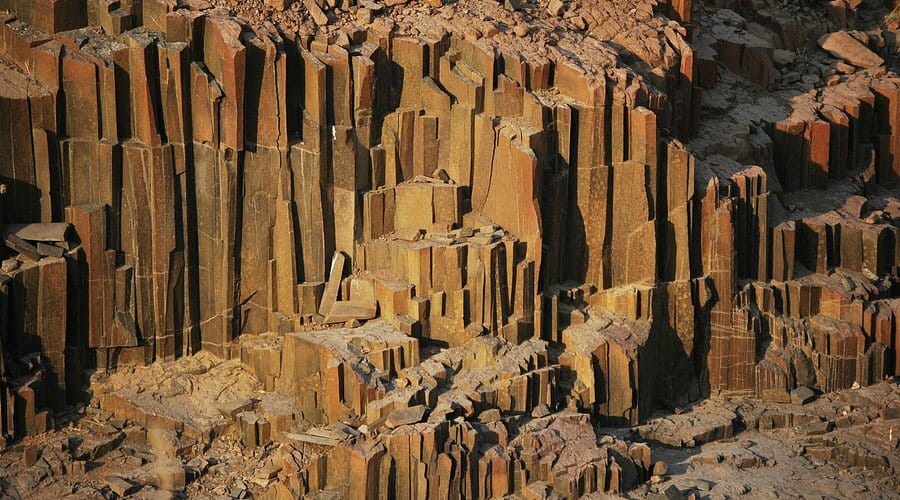
1. The Organ Pipes and Burnt Mountain
Both are signposted off the D2612, the road that takes you to Twyfelfontein, so they cost you almost nothing in driving time. The Organ Pipes are a cluster of tall dolerite columns in a small gorge, formed as molten rock cooled and cracked. Burnt Mountain is the blackened slope above. Access is 2WD, no guide is required, and no permit is involved.
One current travel reference lists both as free. The National Heritage Council’s April 2024 fee schedule lists them at N$250. We could not find a 2026 schedule to settle it, so carry cash and expect the possibility of a charge.
2. Vingerklip
A finger of rock standing high above the Ugab terraces, signposted from the C39 between Khorixas and Kamanjab. Reachable in a 2WD, with a nominal entrance fee reported at N$20 per person and no guide required. It is a twenty-minute stop that people end up building a whole afternoon around, and it sits neatly between Twyfelfontein and Etosha.
3. The Damara Living Museum
Near Twyfelfontein, community-run, open daily, and reachable in a 2WD. A visit runs roughly ninety minutes and the reported fee is about N$100 per person. This kind of stop either works or does not depending entirely on how it is run, and this one is run by the community whose culture is being shown, which is the part that matters.
It also sits alongside genuinely serious archaeology. The British Museum’s Africa Rock Art project records Twyfelfontein as the largest known discrete collection of engraved rock art in southern Africa, around 1,000 rock art sites at Brandberg, and thirty-seven recorded at Spitzkoppe. The living museum is a useful counterweight — a reminder that the people are not only in the past tense.
4. The tin-art workshops at Uis
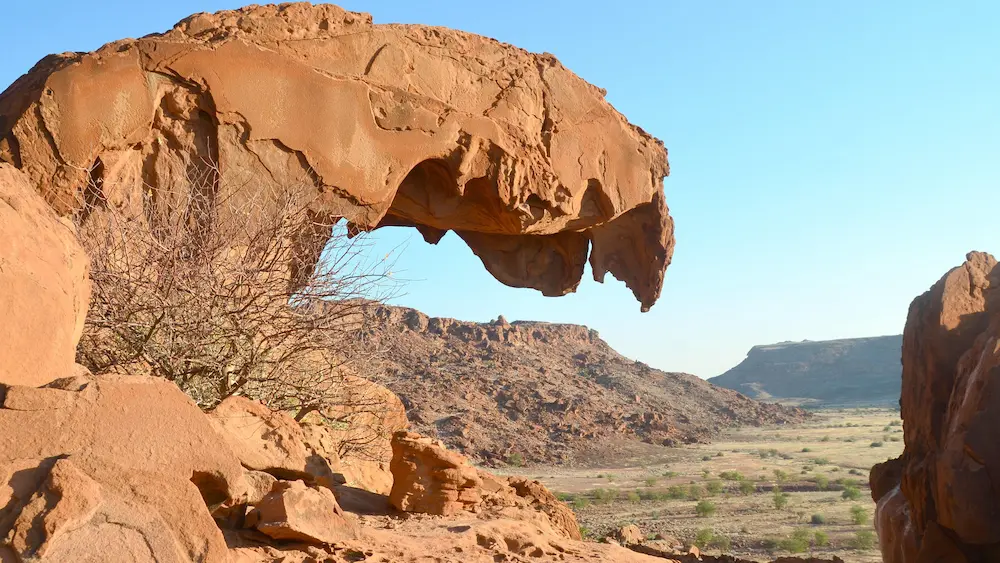
Uis is a former tin-mining town on the gravel road below the Brandberg, and its workshops turn scrap tin and wire into sculpture. They sit in the town centre on the main road, cost nothing to browse, and need no vehicle beyond whatever got you there. It is the least dramatic entry on this list and probably the one people write to us about most, because it is a real place doing real work rather than a viewpoint.
5. Palmwag
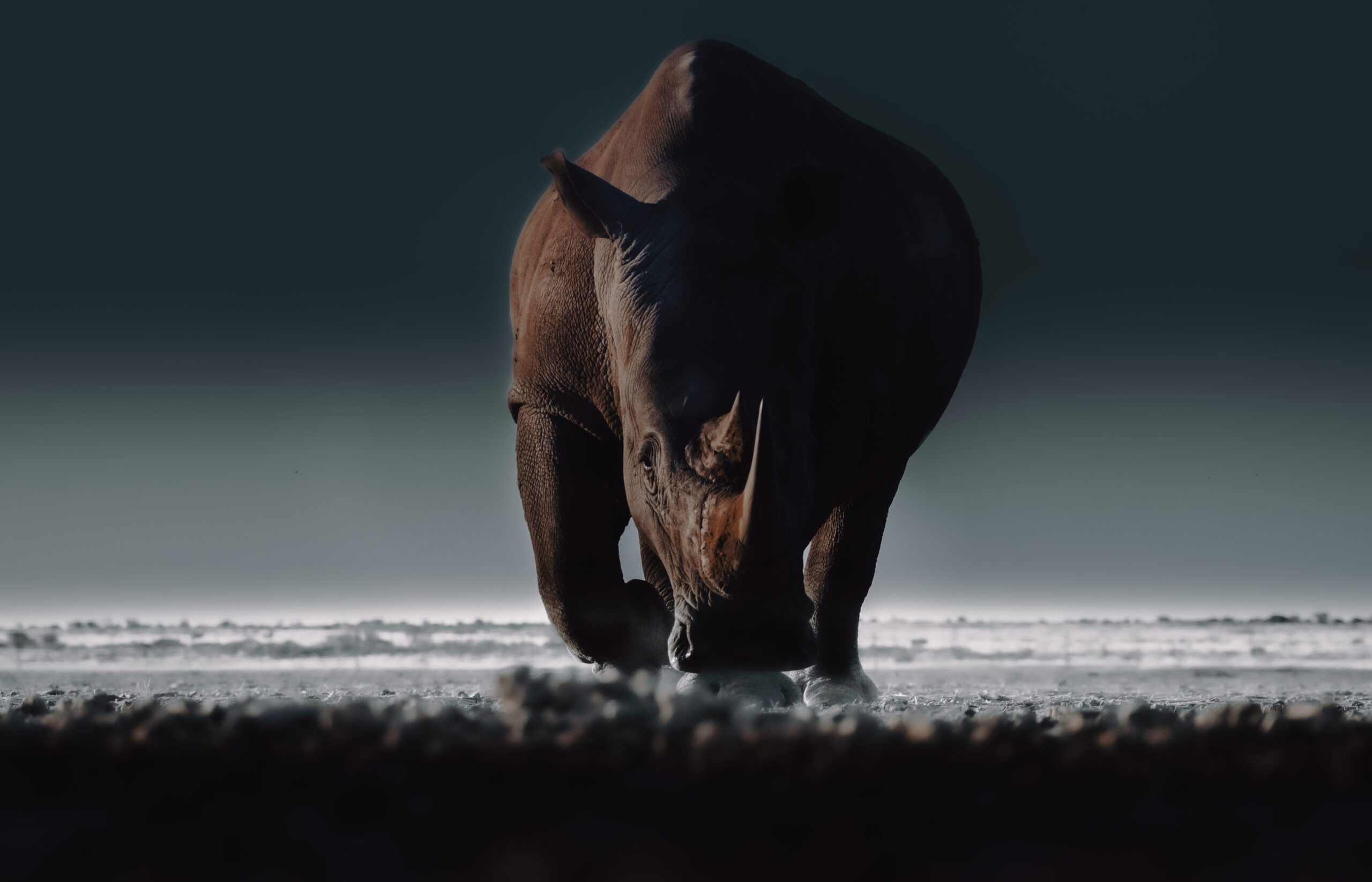
Reached on the C35 from Kamanjab on good gravel, 2WD to the lodge. Reported fees are N$100 per adult plus N$150 per vehicle. The concession itself is one of the more important pieces of conservation land in Namibia — Wilderness runs it as a joint venture with the Anabeb, Torra and Sesfontein community conservancies — and rhino tracking here is done with Save the Rhino Trust rangers or through the lodge.
Reaching Palmwag is easy. Driving the concession tracks is not, and that is 4×4 country with proper preparation. Do not confuse arriving at the lodge with having access to the concession.
Honourable mention, and one that did not qualify
Hobatere, signposted from the C35 north of Kamanjab, is also 2WD-accessible, with guiding arranged once you are there and fees included in lodge rates. It only missed the list because it works better as an overnight than a stop.
Welwitschia Drive and the Moon Landscape outside Swakopmund would have made this list on road terms — a 2WD with clearance handles the roughly 160-kilometre loop comfortably. It fails our test on paperwork: MEFT requires the permit in advance, from an office, during office hours. That single requirement is what separates a hidden gem from something genuinely off the beaten track, and it is worth understanding before you plan around it.
Fitting them in
Four of the five sit within an hour or so of each other in Damaraland, which means the realistic version is not five detours but one slightly slower leg between Twyfelfontein and Etosha. If you are assembling the route yourself, our guide to places to visit on a Namibia self-drive safari covers the main stops these hang off, and what Namibian roads are actually like covers the gravel, which is the only thing on this list that will genuinely slow you down.
Frequently asked questions
What counts as a hidden gem in Namibia?
We use an access test rather than a popularity one: reachable on graded gravel or tar in a normal vehicle, with no permit bought in advance, no convoy requirement and no compulsory guide to get you there. Anything with a documented 4×4, permit or convoy requirement belongs in a different article.
Do I need a 4×4 for any of these five?
No. All five sit on graded gravel or tar reachable in a 2WD with reasonable clearance in dry conditions. High clearance helps after rain, as it does everywhere in Namibia.
Do I need a permit for Welwitschia Drive?
Yes, and that is exactly why it is not on this list. MEFT requires an advance permit for Welwitschia Drive, bought at its offices in Swakopmund, Windhoek or Sesriem, not at a gate. On road terms it would qualify; on access terms it does not.
Can I visit the Palmwag concession in a normal car?
You can reach Palmwag Lodge itself on good gravel in a 2WD. The concession tracks beyond it are a different matter and are 4×4 territory, usually done as a guided activity with Save the Rhino Trust rangers or the lodge.
Are the entrance fees in this article reliable?
The access facts are well corroborated. Several of the fee figures come from a single commercial travel reference and carry no official confirmation, so we have said so each time rather than presenting them as settled.
All five of these fit inside a normal Damaraland leg without adding a day. Tell us which ones you want and we will build the driving around them rather than the other way round. Tell us what you want out of the trip rather than when you can travel, and we will tell you honestly whether your dates fit — including when the answer is that they do not. Get in touch with Desert Tracks.