Swakopmund Meaning: What the Name Actually Says
Swakopmund combines Tsoaxaub, the Khoekhoegowab name of the Swakop River, with the German Mund, meaning mouth. The widely repeated “excrement opening” translation rests on a single 1987 dictionary and does not appear in the main Namibian scholarly source., the dry winter. Rainfall is near zero, wildlife concentrates at Etosha’s waterholes, and roads are at their best. July and August are the peak — and the coldest, near 6 °C at dawn.
Search for what Swakopmund means and you will find the same answer everywhere, delivered with total confidence and a slight smirk: it means something like the anus or excrement opening, because the river dumps silt into the sea there. It is a great story. It is also thinner than it looks, and the real answer is more interesting.
Where the earthy translation comes from
The gloss traces to one place: Peter Raper’s Dictionary of Southern African Place Names, published in 1987. Every subsequent repetition appears to lead back to it, and the entry itself could not be independently examined for this article.
Set against that, the leading Namibian academic treatment of the country’s place names — published in the Journal of Namibian Studies in 2019, drawing on the linguist Kelly Aribeb — gives the components plainly as “Tsoaxaub = Swakop river” and “ams = mouth”, and stops there. It does not offer the earthy meaning. No Khoekhoegowab dictionary evidence could be found for tsoa meaning anus or xaub meaning excrement.
The name is a hybrid: an indigenous river name carried into German as Tsoaxaub-Mund, the mouth of the Tsoaxaub. Whether the river name itself once carried an earthy sense is a genuinely open question, not a settled fact. Treat the confident version you read elsewhere as one dictionary’s claim rather than established etymology.
The river the town is named after
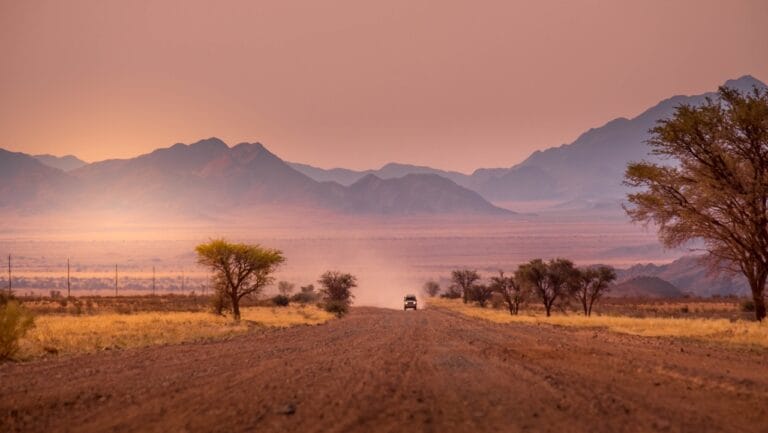
The Swakop runs about 460 kilometres and drains a catchment given variously as 30,100 or 29,409 square kilometres, depending on the source. It reaches the Atlantic on average about once every five years. Confirmed flow events include 2 April 2011 and 16 February 2022, and on the night of 1 April 2025 it cut a channel roughly 30 metres wide and nearly two metres deep on its way through to the sea.
That rhythm — dry for years, then a wall of brown water for a few days — is what a Namibian river is. It also explains the silt at the mouth that the popular etymology leans on, whether or not the etymology itself holds up.
Namibian place names that are properly documented
The same 2019 study gives well-sourced meanings for a number of other Namibian names, and they are a better guide to how the country actually names places than any list of colonial labels.
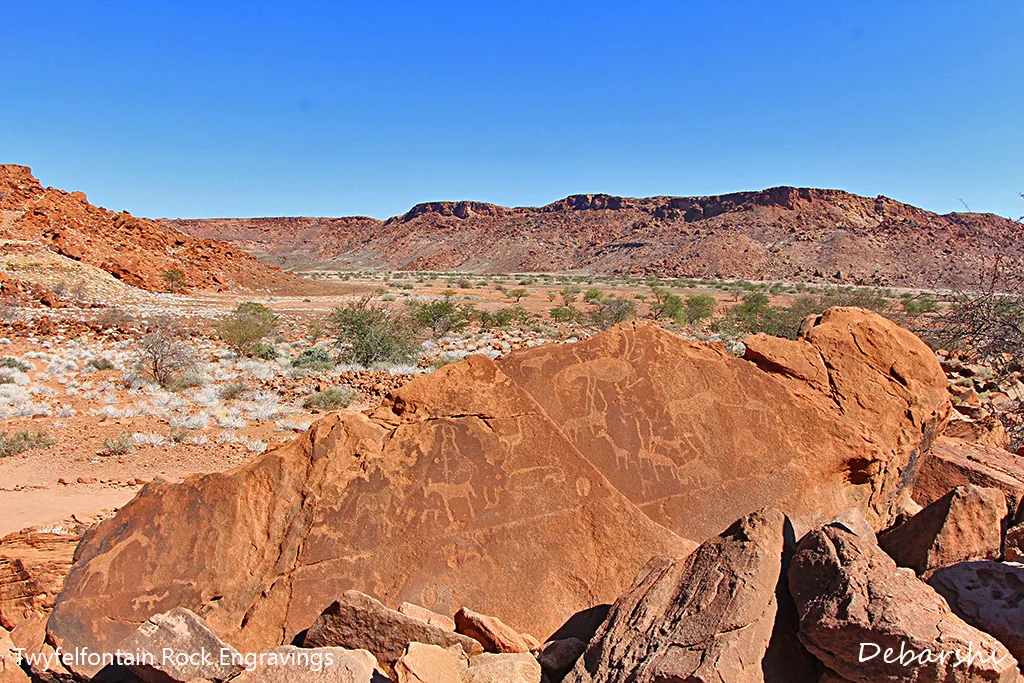
Twyfelfontein is the one place where the indigenous name has full official standing: UNESCO inscribed it as “Twyfelfontein or ǀUi-ǁaes” in 2007, carrying both names in the listing itself. Names for Sossusvlei, Etosha, the Kuiseb, the Naukluft, the Erongo, the Brandberg and the Spitzkoppe are repeated widely online but could not be traced to a reliable source, so they are left out here rather than guessed at.
Why so many Namibian names are unsettled
There is a structural reason the answers are this hard to pin down, and it is the most quotable fact in this whole subject: Namibia has no national geographical names authority. The National Place Names Committee was dissolved before independence and was never replaced. A policy in 2001 proposed establishing a new one, and it never happened. A working paper submitted to the United Nations Group of Experts on Geographical Names in 2009 set this out plainly.
So when a town has three names and no two sources agree on what any of them mean, that is not sloppiness on the part of the sources. There is no body whose job it is to decide. Renaming happens piecemeal instead — Kaiser-Wilhelm-Straße in Swakopmund became Sam Nujoma Avenue in 2001, and some residents repainted the old name in protest.
If you want the confident one-line answer, it is this: Swakopmund means the mouth of the Swakop River. Everything past that is contested, and anyone who tells you otherwise is quoting a single 1987 dictionary without saying so.
Names are a good way into this country, and a guide who knows a place by more than one of them changes what you see. A seventeen-day scenery and serenity route takes in Twyfelfontein and the coast in the same trip. For the town itself, Swakopmund’s German heritage covers what was built there and what happened there; and if you want to arrive able to greet people properly, how to say hello across Africa is the place to start.
Frequently asked questions
What does Swakopmund mean?
It combines Tsoaxaub, the Khoekhoegowab name of the Swakop River, with the German word Mund, meaning mouth. So: the mouth of the Tsoaxaub.
Does Swakopmund really mean “excrement opening”?
That gloss is widely repeated but rests on a single source, Peter Raper’s 1987 Dictionary of Southern African Place Names. The leading Namibian academic treatment of the country’s place names gives only “Tsoaxaub = Swakop river, ams = mouth” and does not offer the earthy meaning. No Khoekhoegowab dictionary evidence for it could be found.
How often does the Swakop River flow?
The Swakop runs about 460km and reaches the Atlantic roughly once every five years on average. Confirmed flow events include 2 April 2011, 16 February 2022 and the night of 1 April 2025, when it cut a channel around 30 metres wide and nearly two metres deep.
What does Windhoek mean?
Windhoek is Otjomuise in Otjiherero and ǀAe-ǁGams in Khoekhoegowab, both referring to the place of hot springs — a completely different idea from the Afrikaans-sounding name in use today.
Who decides place names in Namibia?
Nobody, formally. The National Place Names Committee was dissolved before independence and never replaced. A 2001 policy proposed a new authority and it was never established.
Desert Tracks builds Namibian journeys with guides who know the places by more than one name. Tell us what interests you and we will shape the route around it. Tell us what you want out of the trip rather than when you can travel, and we will tell you honestly whether your dates fit — including when the answer is that they do not. Get in touch with Desert Tracks.